|

The art of looking ahead

Sometimes there is an event that eclipses the normal ebb and flow of market dynamics. Think of the Black Friday sales, or Easter, Christmas, fireworks night, or even Valentine’s day. During Easter, chocolatiers sell more Easter eggs. On Fireworks night many retailers sell most of their fireworks. It is not a surprising thing. So, with the World Cup fast approaching, there is likely to be more demand for certain products.

The lure of the World Cup

One of the products that many football fans want is a big-screen television. The World Cup is one of the most viewed global events and many will want to time any television replacements/upgrades with this major sporting event. Other products that could receive a boost in demand could be from some of the main sponsors. Adidas, Coca-Cola, McDonald’s, Visa, and Budweiser are all other big-name sponsors for 2022.

Coca-Cola seasonals

In fact, Coca-Cola is also a stock that is expected to weather a recession well. Why? Simply because in a recession many consumers can still afford a relatively inexpensive drink like coke. The seasonals are quite strong for Coca-Cola too during November. From November 02 through to December 08 Coca-Cola has gained an average of 2.71%. So, does this, coupled with Coca-Cola’s World Cup sponsorship, make for a strong potential outlook for the company heading into the start of December?
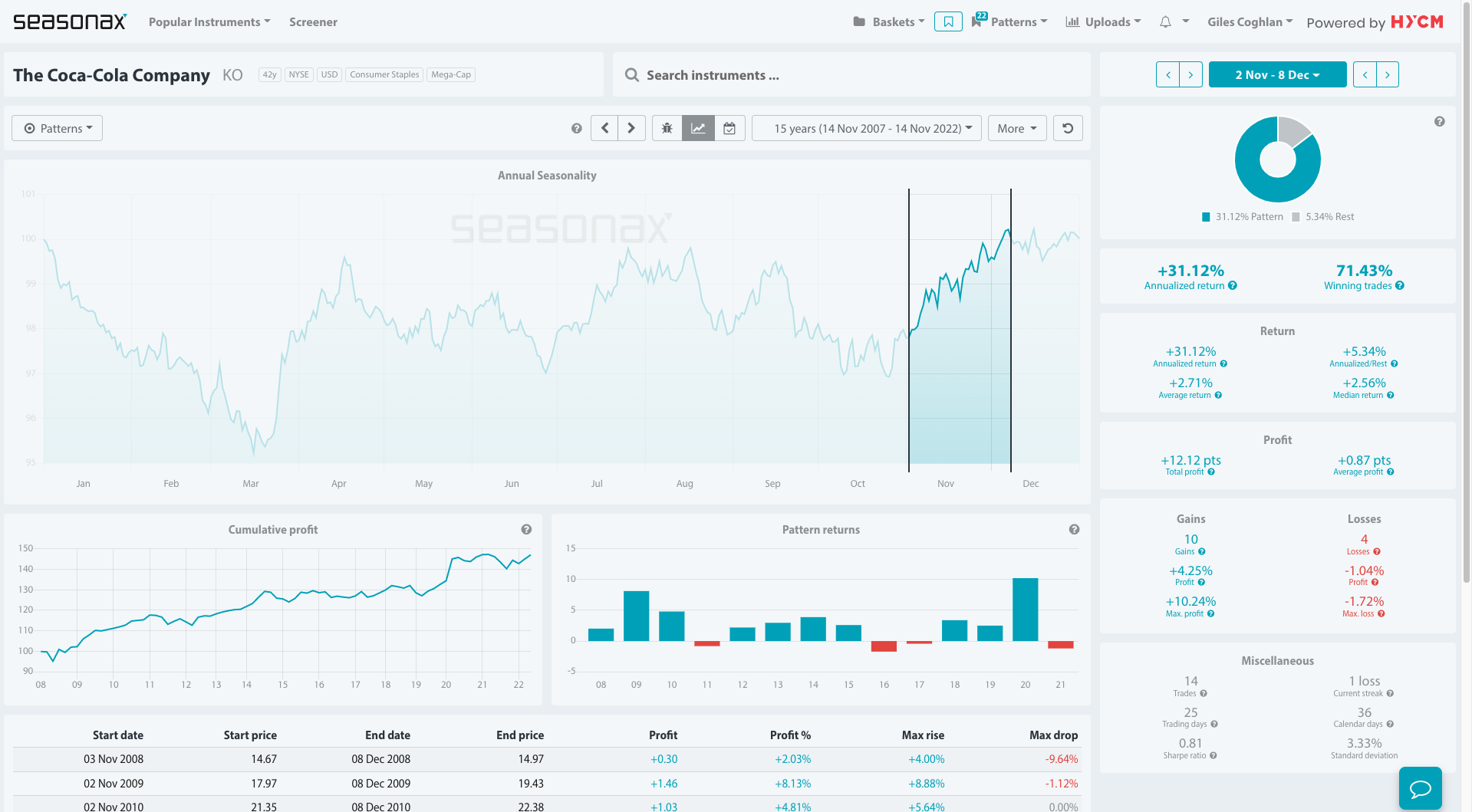
Chart

The main point of this post is to stimulate thought and get us thinking ahead. Which shift is coming that is going to increase demand for certain products? Here is another example of a longer-term shift that is expected to impact the copper markets.


Learn more about HYCM


Author

Giles Coghlan LLB, Lth, MA

Giles is the chief market analyst for Financial Source. His goal is to help you find simple, high-conviction fundamental trade opportunities. He has regular media presentations being featured in National and International Press.


More from Giles Coghlan LLB, Lth, MA
Share:

Editor's Picks

EUR/USD holds losses near 1.1850 as US, China holidays keep trade muted

EUR/USD opens the week on a softer note, trading near 1.1860 during the Asian session on Monday. Activity is likely to remain muted, with United States markets closed for the Presidents’ Day holiday, while Mainland China is also shut for the week-long Lunar New Year break.

GBP/USD flat lines as traders await key UK macro data and FOMC minutes

The GBP/USD pair kicks off a new week on a subdued note and oscillates in a narrow range, just below mid-1.3600s, during the Asian session. Moreover, the mixed fundamental backdrop warrants some caution for aggressive traders as the market focus now shifts to this week's important releases from the UK and the US.

Gold remains below $5,050 despite Fed rate cut bets, uncertain geopolitical tensions

Gold edges lower after registering over 2% gains in the previous session, trading around $5,030 per troy ounce during the Asian hours on Monday. However, the non-interest-bearing Gold could further gain ground following softer January Consumer Price Index figures, which reinforced expectations that the Federal Reserve could cut rates later this year.

Week ahead: Data blitz, Fed Minutes and RBNZ decision in the spotlight

The US jobs report for January, which was delayed slightly, didn’t do the dovish Fed bets any favours, as expectations of a soft print did not materialize, confounding the raft of weak job indicators seen in the prior week.

Global inflation watch: Signs of cooling services inflation

Realized inflation landed close to expectations in January, as negative base effects weighed on the annual rates. Remaining sticky inflation is largely explained by services, while tariff-driven goods inflation remains limited even in the US.

Ripple Price Forecast: XRP potential bottom could be in sight

Ripple edges up above the intraday low of $1.35 at the time of writing on Friday amid mixed price actions across the crypto market. The remittance token failed to hold support at $1.40 the previous day, reflecting risk-off sentiment amid a decline in retail and institutional sentiment.












