S&P 500 (SPX) has 4,000 reasons to fall
- S&P 500 falls on Wednesday as Fed members speak hawkishly.
- Bond yields rise at the front end of the curve as inversion deepens.
- Retail earnings mixed as rally begins to stall.


The equity market rally has begun to run out of steam as we have been posting for much of this week. We have identified how this rally has clear features of the summer rally. We have similar readings in the recovery of stocks trading above the 50, 100, and 200-day moving averages, and the length and size of the rally are close to the summer peak. The key bullish reasoning – "this time is different" – is now under threat. To be fair, it usually never is!
S&P 500 (SPX) news
Earnings were getting bulls excited, but then Target (TGT) dumped on them. Fed members put the brakes on thoughts of rate hikes, and so all we are left with for this rally are hopes for seasonality and CTA squeezes. The latest data on CTAs shows that the equity covering may be complete, but perhaps short Euro and short bond strategies may have more room to run. That could see yields struggle to gain, but the risk-reward still looks challenging with regard to entering fresh longs in equities up here.
This rally has been categorized by a continued move to value with tech and growth underperforming. Unprofitable tech continues to underperform. Energy and financials have seen the biggest gains, and in the short term energy looks challenged, having rallied over 30% and oil struggling for momentum.
S&P 500 (SPX) forecast
Friday's options expiry sees big interest in the 4,000 strikes. A move to 4,100 is possible, but dealer gamma would then be negative at such levels, according to the latest option data I track. (Tier 1). 3,946 remains my short-term pivot with 3,859 the medium-term version. The 200-day resistance sits at 4,061.
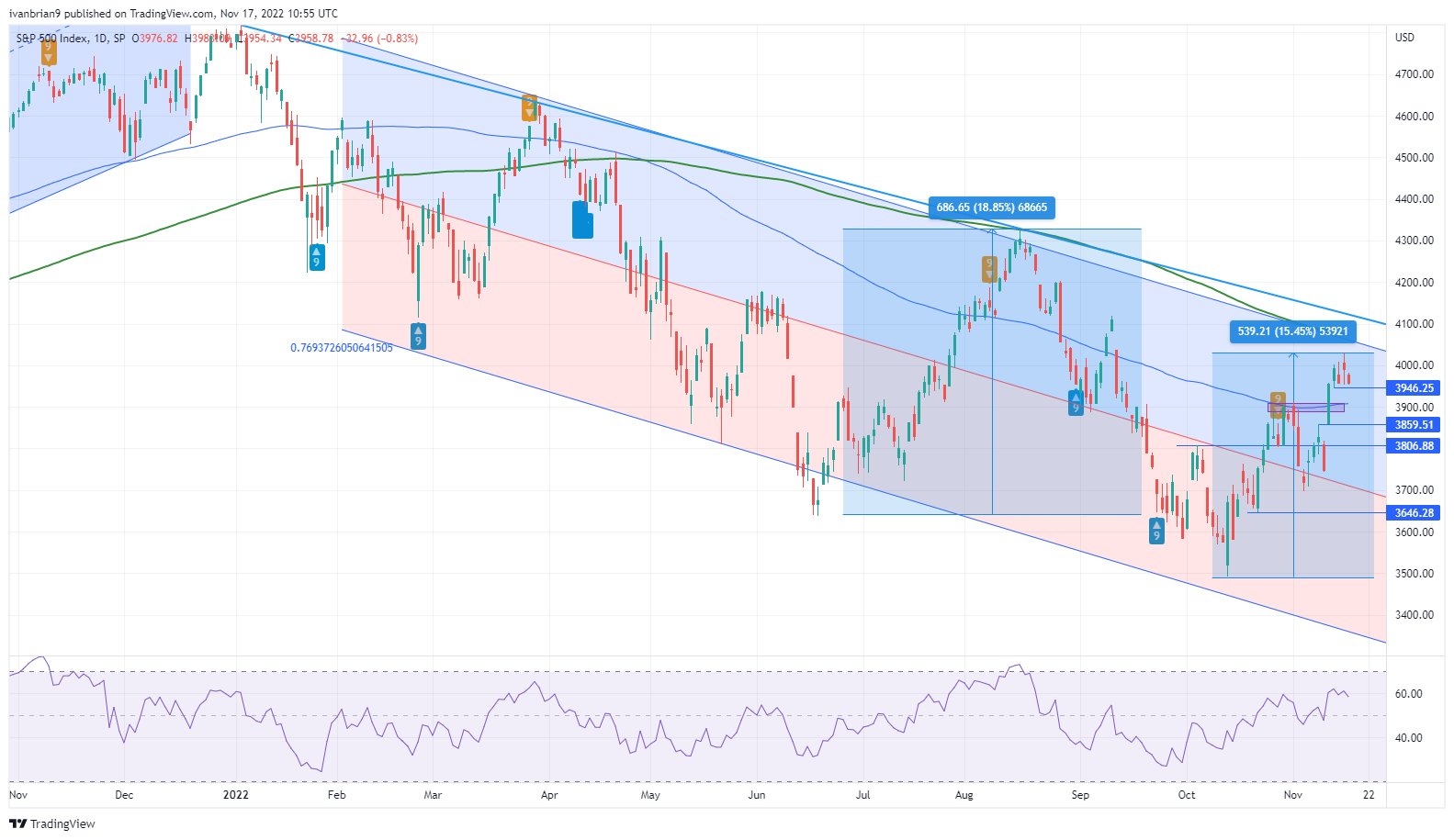
SPX daily chart
Premium
You have reached your limit of 3 free articles for this month.
Start your subscription and get access to all our original articles.
Author
Ivan Brian
FXStreet
Ivan Brian started his career with AIB Bank in corporate finance and then worked for seven years at Baxter. He started as a macro analyst before becoming Head of Research and then CFO.