SNB holds Deposit Rate steady at 1.75%, as expected
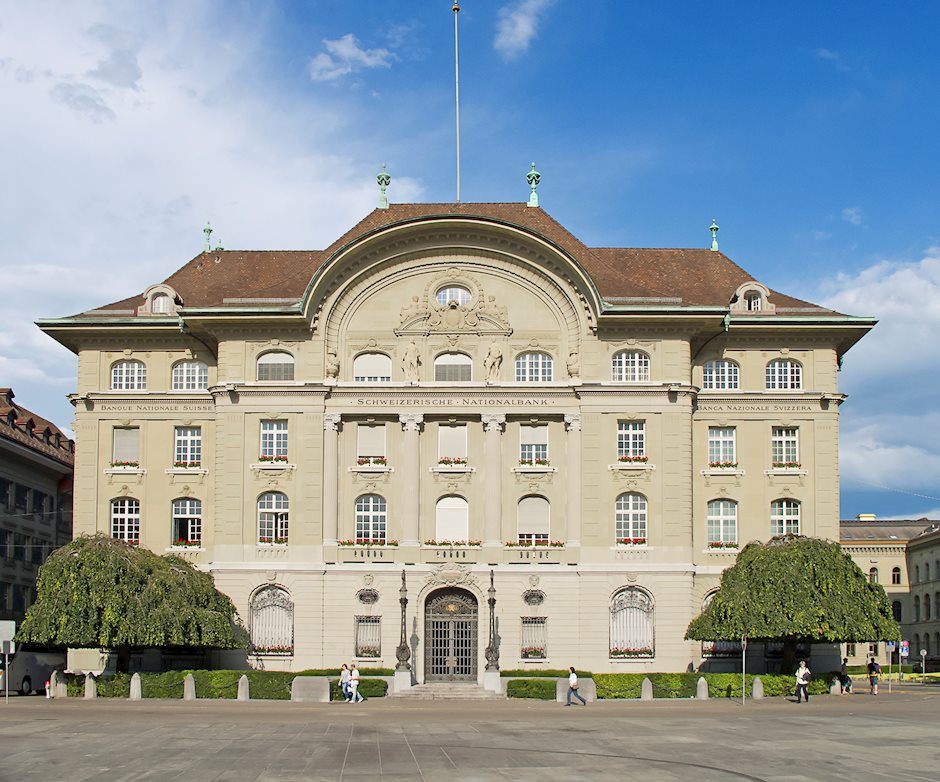

The Swiss National Bank (SNB) board members decided to maintain the benchmark Sight Deposit Rate at 1.75%, following its quarterly monetary policy assessment meeting on Thursday.
The rate decision was in line with the market expectations, as the SNB extended the pause into the second consecutive meeting.
Summary of the SNB policy statement
Will adjust its monetary policy if necessary to ensure inflation remains within the range consistent with price stability over the medium term.
Momentum on the mortgage and real estate markets has weakened noticeably in recent quarters. However, the vulnerabilities in these markets remain.
Forecast for Switzerland, as for the global economy, is subject to high uncertainty.
The main risk is a more pronounced economic slowdown abroad.
Unemployment is likely to continue to rise gradually, and the utilisation of production capacity should decline somewhat further.
It cannot be ruled out that global growth momentum will weaken more significantly than assumed.
Market reaction to the SNB interest rate decision
In a knee-jerk reaction to the expected SNB pause decision, the USD/CHF pair tumbled nearly 30 pips to 0.8678 before reversing sharply to 0.8730, where it now wavers. The spot is up 0.18% on the day.
SNB FAQs
What is the Swiss National Bank?
The Swiss National Bank (SNB) is the country’s central bank. As an independent central bank, its mandate is to ensure price stability in the medium and long term. To ensure price stability, the SNB aims to maintain appropriate monetary conditions, which are determined by the interest rate level and exchange rates. For the SNB, price stability means a rise in the Swiss Consumer Price Index (CPI) of less than 2% per year.
How does the Swiss National Bank interest-rate policy affect the Swiss Franc?
The Swiss National Bank (SNB) Governing Board decides the appropriate level of its policy rate according to its price stability objective. When inflation is above target or forecasted to be above target in the foreseeable future, the bank will attempt to tame excessive price growth by raising its policy rate. Higher interest rates are generally positive for the Swiss Franc (CHF) as they lead to higher yields, making the country a more attractive place for investors. On the contrary, lower interest rates tend to weaken CHF.
Does the Swiss National Bank intervene in the forex market?
Yes. The Swiss National Bank (SNB) has regularly intervened in the foreign exchange market in order to avoid the Swiss Franc (CHF) appreciating too much against other currencies. A strong CHF hurts the competitiveness of the country’s powerful export sector. Between 2011 and 2015, the SNB implemented a peg to the Euro to limit the CHF advance against it. The bank intervenes in the market using its hefty foreign exchange reserves, usually by buying foreign currencies such as the US Dollar or the Euro. During episodes of high inflation, particularly due to energy, the SNB refrains from intervening markets as a strong CHF makes energy imports cheaper, cushioning the price shock for Swiss households and businesses.
When does the Swiss National Bank Governing Council decide on monetary policy?
The SNB meets once a quarter – in March, June, September and December – to conduct its monetary policy assessment. Each of these assessments results in a monetary policy decision and the publication of a medium-term inflation forecast.
Author
Dhwani Mehta
FXStreet
Residing in Mumbai (India), Dhwani is a Senior Analyst and Manager of the Asian session at FXStreet. She has over 10 years of experience in analyzing and covering the global financial markets, with specialization in Forex and commodities markets.