Silver Price Forecast: XAG/USD holds losses near $78.00 as safe-haven demand wanes
- Silver plunges after Trump’s nomination of Kevin Warsh as Fed Chair signaled a more cautious approach to easing.
- Silver’s safe-haven appeal fades as geopolitical tensions ease following US–Iran negotiations.
- Safe-haven demand for Silver also weakens amid cautious Fed commentary.
Silver price (XAG/USD) extends its losses after declining by 28.45% in the previous session, trading around $77.80 per troy ounce during the European hours on Monday. The non-interest-bearing Silver plunged after US President Donald Trump’s nomination of Kevin Warsh as the next Federal Reserve (Fed) Chair.
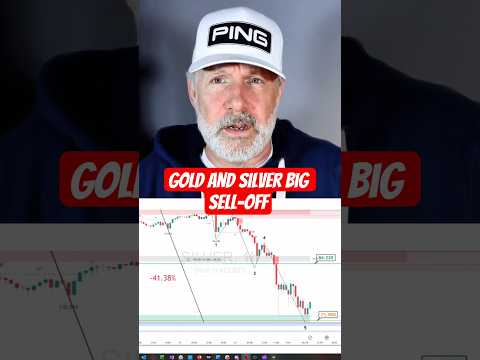
Markets interpreted Warsh’s appointment as signaling a more disciplined and cautious approach to monetary easing. Traders also booked profits after a relentless rally that had pushed Silver to historic highs.
The safe-haven metals, including Silver, lose shine amid fading geopolitical concerns following the United States (US)–Iran negotiations. Over the weekend, US President Donald Trump said the United States “hopefully” would reach a deal with Iran, after Supreme Leader Ayatollah Ali Khamenei warned that a US attack could trigger a wider regional conflict.
The safe-haven demand for Silver also weakens amid cautious Fedspeak. St. Louis Fed President Alberto Musalem noted that additional rate cuts are unnecessary at this stage, describing the current 3.50%–3.75% policy rate range as broadly neutral. Echoing this sentiment, Atlanta Fed President Raphael Bostic called for patience, emphasizing that policy should remain somewhat restrictive. Risk sentiment improved after the US Senate reached an agreement to advance a government funding package, thereby averting a shutdown.
Silver prices could extend gains on a structural market deficit and the debasement trade, as investors shift from currencies and bonds into physical assets amid rising government debt concerns. Momentum buying amplified the rally, with heavy purchases by Chinese speculators adding froth before a sharp reversal intensified the sell-off.
Silver FAQs
Silver is a precious metal highly traded among investors. It has been historically used as a store of value and a medium of exchange. Although less popular than Gold, traders may turn to Silver to diversify their investment portfolio, for its intrinsic value or as a potential hedge during high-inflation periods. Investors can buy physical Silver, in coins or in bars, or trade it through vehicles such as Exchange Traded Funds, which track its price on international markets.
Silver prices can move due to a wide range of factors. Geopolitical instability or fears of a deep recession can make Silver price escalate due to its safe-haven status, although to a lesser extent than Gold's. As a yieldless asset, Silver tends to rise with lower interest rates. Its moves also depend on how the US Dollar (USD) behaves as the asset is priced in dollars (XAG/USD). A strong Dollar tends to keep the price of Silver at bay, whereas a weaker Dollar is likely to propel prices up. Other factors such as investment demand, mining supply – Silver is much more abundant than Gold – and recycling rates can also affect prices.
Silver is widely used in industry, particularly in sectors such as electronics or solar energy, as it has one of the highest electric conductivity of all metals – more than Copper and Gold. A surge in demand can increase prices, while a decline tends to lower them. Dynamics in the US, Chinese and Indian economies can also contribute to price swings: for the US and particularly China, their big industrial sectors use Silver in various processes; in India, consumers’ demand for the precious metal for jewellery also plays a key role in setting prices.
Silver prices tend to follow Gold's moves. When Gold prices rise, Silver typically follows suit, as their status as safe-haven assets is similar. The Gold/Silver ratio, which shows the number of ounces of Silver needed to equal the value of one ounce of Gold, may help to determine the relative valuation between both metals. Some investors may consider a high ratio as an indicator that Silver is undervalued, or Gold is overvalued. On the contrary, a low ratio might suggest that Gold is undervalued relative to Silver.
Author

Akhtar Faruqui
FXStreet
Akhtar Faruqui is a Forex Analyst based in New Delhi, India. With a keen eye for market trends and a passion for dissecting complex financial dynamics, he is dedicated to delivering accurate and insightful Forex news and analysis.