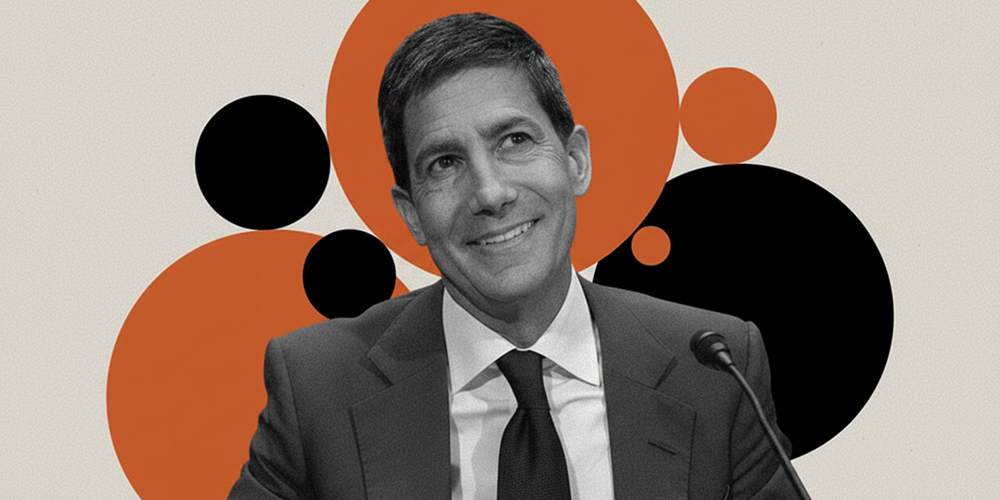
RBNZ lowers interest rate by 25 bps to 3.5% as expected

The Reserve Bank of New Zealand (RBNZ) announced on Wednesday that it cut the Official Cash Rate (OCR) by 25 basis points (bps) from 3.75% to 3.5% after concluding the April monetary policy meeting.
The decision aligned with the market expectations.
The RBNZ has cut the official cash rate by 200 bps since August 2024.
Summary of the RBNZ Monetary Policy Statement (MPS)
- Further reduction in OCR is appropriate.
- As extent of tariffs becomes clearer committee has scope to lower the OCR further
- Global trade barriers weaken outlook for global growth.
- Create downisde risks for the NZ economy.
- Having CPI close to middle of band puts committee in best position to respond to developments.
Minutes of the RBNZ interest rate meeting
- As the extent and effect of tariff policies become clearer, the committee has scope to lower the OCR further as appropriate.
- Future policy decisions will be determined by the outlook for inflationary pressure over the medium term.
- Committee noted that the preceding cuts to the OCR have yet to have their full effect on the economy.
- Monetary policy response to tariffs will focus on the medium-term implications for inflation.
- Implications of increased tariffs for global and domestic inflation are more ambiguous.
- Substantial spare productive capacity remains in the economy.
- Committee noted that the impact of increased tariffs on global inflation is unclear at this point.
NZD/USD reaction to the RBNZ interest rate decision
The New Zealand Dollar caught a fresh bid in an immediate reaction to the RBNZ interest rate decision. The NZD/USD pair currently trades around 0.5550, up 0.25% on the day.
New Zealand Dollar PRICE Today
The table below shows the percentage change of New Zealand Dollar (NZD) against listed major currencies today. New Zealand Dollar was the strongest against the US Dollar.
| USD | EUR | GBP | JPY | CAD | AUD | NZD | CHF | |
|---|---|---|---|---|---|---|---|---|
| USD | -0.62% | -0.56% | -0.55% | -0.37% | -0.70% | -0.33% | -0.42% | |
| EUR | 0.62% | 0.06% | 0.06% | 0.23% | -0.03% | 0.28% | 0.18% | |
| GBP | 0.56% | -0.06% | 0.02% | 0.18% | -0.09% | 0.23% | 0.14% | |
| JPY | 0.55% | -0.06% | -0.02% | 0.14% | -0.11% | 0.19% | 0.10% | |
| CAD | 0.37% | -0.23% | -0.18% | -0.14% | -0.16% | 0.05% | -0.04% | |
| AUD | 0.70% | 0.03% | 0.09% | 0.11% | 0.16% | 0.31% | 0.22% | |
| NZD | 0.33% | -0.28% | -0.23% | -0.19% | -0.05% | -0.31% | -0.10% | |
| CHF | 0.42% | -0.18% | -0.14% | -0.10% | 0.04% | -0.22% | 0.10% |
The heat map shows percentage changes of major currencies against each other. The base currency is picked from the left column, while the quote currency is picked from the top row. For example, if you pick the New Zealand Dollar from the left column and move along the horizontal line to the US Dollar, the percentage change displayed in the box will represent NZD (base)/USD (quote).
This section below was published on Tuesday at 21:15 GMT as a preview of the Reserve Bank of New Zealand (RBNZ) interest rate decision.
- The Reserve Bank of New Zealand is set to lower the interest rate by 25 bps to 3.5% on Wednesday.
- In February, the RBNZ left the door open for further cuts, anticipating the negative impact of US tariffs.
- The New Zealand Dollar could experience intense volatility following the RBNZ's policy announcements.
The Reserve Bank of New Zealand (RBNZ) is on track to deliver a 25 basis point (bps) cut to the Official Cash Rate (OCR), bringing down the key policy rate from 3.75% to 3.50% following its April monetary policy meeting on Wednesday. The decision is fully priced in and will be announced at 02:00 GMT.
Therefore, the language in the RBNZ’s policy statement will be closely scrutinized for fresh insights on future rate cuts, which could significantly impact the performance of the New Zealand Dollar (NZD).
What to expect from the RBNZ interest rate decision?
The RBNZ has already cut by 175 basis points since August last year, with the former Governor Adrian Orr having left the door open for rate cuts in April and May while addressing his post-policy meeting press conference in February.
At its February meeting, the central bank said that “there is a risk of increased trade barriers and broader geoeconomic fragmentation,” adding that “an increase in trade restrictions is likely to reduce economic activity in New Zealand.”
Earlier this month, United States (US) President Donald Trump announced his long-awaited reciprocal tariffs, with China hit by additional 34% levies while New Zealand faces 10% tariffs. The Pacific Nation said it will not retaliate. China leads the US as New Zealand’s top export market.
Although the direct impact of US tariffs on New Zealand’s economy is likely to be limited, the tariffs will probably lower growth in the country's main trading partners, including Australia and China, eventually acting as a headwind to the South Pacific Island nation.
The gloomier outlook on global growth could prompt the bank to retain its easing bias, with markets now expecting the OCR to bottom out at 2.75%, compared to 3% a week ago.
How will the RBNZ interest rate decision impact the New Zealand Dollar?
The NZD/USD pair is recovering from five-year troughs near 0.5500 in the run-up to the RBNZ showdown.
The short-covering or profit-booking rally in the pair could gather steam following the RBNZ’s expected 25 bps rate decision.
The Kiwi Dollar could built on its recent recovery if the RBNZ warns of higher inflation due to tariffs, sounding cautious on the scope of future rate cuts.
However, amidst escalating US-China trade war and the associated risks to New Zealand’s economy, should the RBNZ surprise with a 50 bps rate cut, the New Zealand Dollar (NZD) will likely crumble against the US Dollar (USD).
“The NZD/USD pair remains exposed to downside risks as the 14-day Relative Strength Index (RSI) remains well below the 50 level, despite the latest uptick. If the downtrend resumes, the initial support is at the five-year low of 0.5506, below which the March 2020 low of 0.5470 will be targeted. If the selling pressure intensifies, the last line of defense for buyers is seen at the 0.5450 psychological level.”
Any recovery attempt in the pair will require acceptance above the critical confluence resistance around the 0.5700 region, where the 21-day Simple Moving Average (SMA), the 50-day SMA, and the 100-day SMA converge. Further up, the April 4 high of 0.5803 will be tested en route to the 200-day SMA at 0.5894,” Dhwani adds.
RBNZ FAQs
The Reserve Bank of New Zealand (RBNZ) is the country’s central bank. Its economic objectives are achieving and maintaining price stability – achieved when inflation, measured by the Consumer Price Index (CPI), falls within the band of between 1% and 3% – and supporting maximum sustainable employment.
The Reserve Bank of New Zealand’s (RBNZ) Monetary Policy Committee (MPC) decides the appropriate level of the Official Cash Rate (OCR) according to its objectives. When inflation is above target, the bank will attempt to tame it by raising its key OCR, making it more expensive for households and businesses to borrow money and thus cooling the economy. Higher interest rates are generally positive for the New Zealand Dollar (NZD) as they lead to higher yields, making the country a more attractive place for investors. On the contrary, lower interest rates tend to weaken NZD.
Employment is important for the Reserve Bank of New Zealand (RBNZ) because a tight labor market can fuel inflation. The RBNZ’s goal of “maximum sustainable employment” is defined as the highest use of labor resources that can be sustained over time without creating an acceleration in inflation. “When employment is at its maximum sustainable level, there will be low and stable inflation. However, if employment is above the maximum sustainable level for too long, it will eventually cause prices to rise more and more quickly, requiring the MPC to raise interest rates to keep inflation under control,” the bank says.
In extreme situations, the Reserve Bank of New Zealand (RBNZ) can enact a monetary policy tool called Quantitative Easing. QE is the process by which the RBNZ prints local currency and uses it to buy assets – usually government or corporate bonds – from banks and other financial institutions with the aim to increase the domestic money supply and spur economic activity. QE usually results in a weaker New Zealand Dollar (NZD). QE is a last resort when simply lowering interest rates is unlikely to achieve the objectives of the central bank. The RBNZ used it during the Covid-19 pandemic.
Author

FXStreet Team
FXStreet
Composed of a group of economic journalists and FX experts, the FXStreet content team produces and oversees all content published on FXStreet. It provides a purely journalistic approach to the Forex market.