RBA minutes: Board discussed scenarios for both lowering and raising interest rates
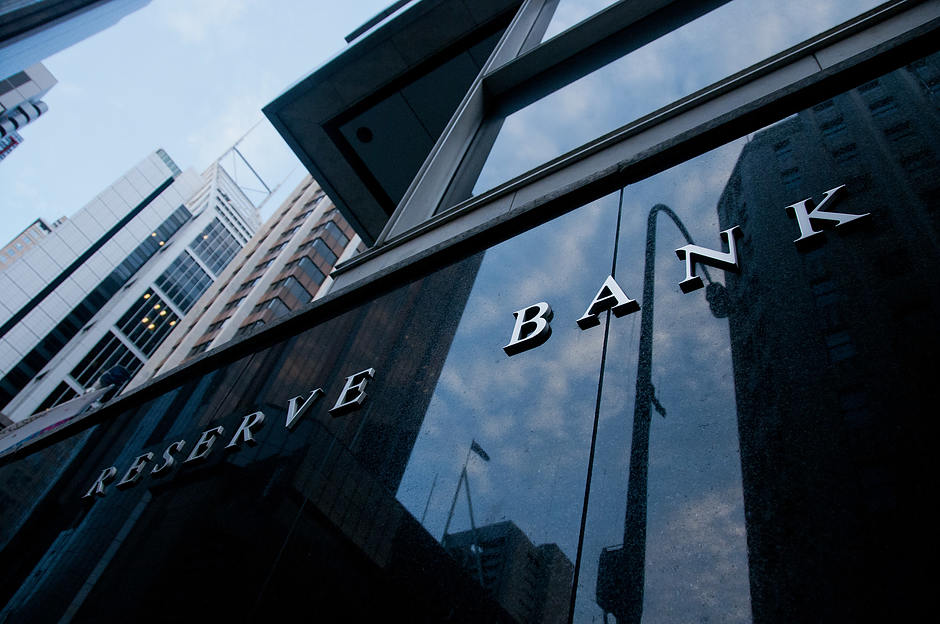

The Reserve Bank of Australia (RBA) published the Minutes of its September monetary policy meeting on Tuesday, highlighting that the board members discussed scenarios for lowering and raising interest rates in the future.
Key takeaways
Board discussed scenarios for lowering and raising interest rates in the future.
Board members felt not enough had changed from previous meetings, and that the current cash rate best balanced risks to inflation and the labor market.
Future financial conditions might need to be tighter or looser than at present to achieve the Board's objectives.
Scenarios for lowering, holding, and raising rates are all conceivable given the considerable uncertainty about the economic outlook.
Policy could be held restrictive if consumption growth picks up materially.
Policy could be tightened if present financial conditions are insufficiently restrictive to return inflation to target.
Policy could be eased if the economy proves significantly weaker than expected.
It is not necessary for the cash rate to evolve in line with policy rates in other economies.
The Board remained vigilant to upside risks to inflation.
Underlying inflation is still too high.
Risks around the outlook for Australia's exports had shifted to the downside since the previous meeting.
Many households are still experiencing financial pressure, but only a small share of households and firms are unable to service loans.
Policy will need to remain restrictive until Board members are confident inflation is moving sustainably toward the target range.
It is not possible to rule in or out future changes in the cash rate target at this time.
The Board discussed a staff review of the Term Funding Facility, and the TFF should remain an option for unconventional monetary policy.
Market reaction to the RBA minutes
At the time of writing, the AUD/USD pair is trading near 0.6765, holding higher while adding 0.11% on the day.
RBA FAQs
The Reserve Bank of Australia (RBA) sets interest rates and manages monetary policy for Australia. Decisions are made by a board of governors at 11 meetings a year and ad hoc emergency meetings as required. The RBA’s primary mandate is to maintain price stability, which means an inflation rate of 2-3%, but also “..to contribute to the stability of the currency, full employment, and the economic prosperity and welfare of the Australian people.” Its main tool for achieving this is by raising or lowering interest rates. Relatively high interest rates will strengthen the Australian Dollar (AUD) and vice versa. Other RBA tools include quantitative easing and tightening.
While inflation had always traditionally been thought of as a negative factor for currencies since it lowers the value of money in general, the opposite has actually been the case in modern times with the relaxation of cross-border capital controls. Moderately higher inflation now tends to lead central banks to put up their interest rates, which in turn has the effect of attracting more capital inflows from global investors seeking a lucrative place to keep their money. This increases demand for the local currency, which in the case of Australia is the Aussie Dollar.
Macroeconomic data gauges the health of an economy and can have an impact on the value of its currency. Investors prefer to invest their capital in economies that are safe and growing rather than precarious and shrinking. Greater capital inflows increase the aggregate demand and value of the domestic currency. Classic indicators, such as GDP, Manufacturing and Services PMIs, employment, and consumer sentiment surveys can influence AUD. A strong economy may encourage the Reserve Bank of Australia to put up interest rates, also supporting AUD.
Quantitative Easing (QE) is a tool used in extreme situations when lowering interest rates is not enough to restore the flow of credit in the economy. QE is the process by which the Reserve Bank of Australia (RBA) prints Australian Dollars (AUD) for the purpose of buying assets – usually government or corporate bonds – from financial institutions, thereby providing them with much-needed liquidity. QE usually results in a weaker AUD.
Quantitative tightening (QT) is the reverse of QE. It is undertaken after QE when an economic recovery is underway and inflation starts rising. Whilst in QE the Reserve Bank of Australia (RBA) purchases government and corporate bonds from financial institutions to provide them with liquidity, in QT the RBA stops buying more assets, and stops reinvesting the principal maturing on the bonds it already holds. It would be positive (or bullish) for the Australian Dollar.
Author
Lallalit Srijandorn
FXStreet
Lallalit Srijandorn is a Parisian at heart. She has lived in France since 2019 and now becomes a digital entrepreneur based in Paris and Bangkok.