Powell testimony before house spurs market higher
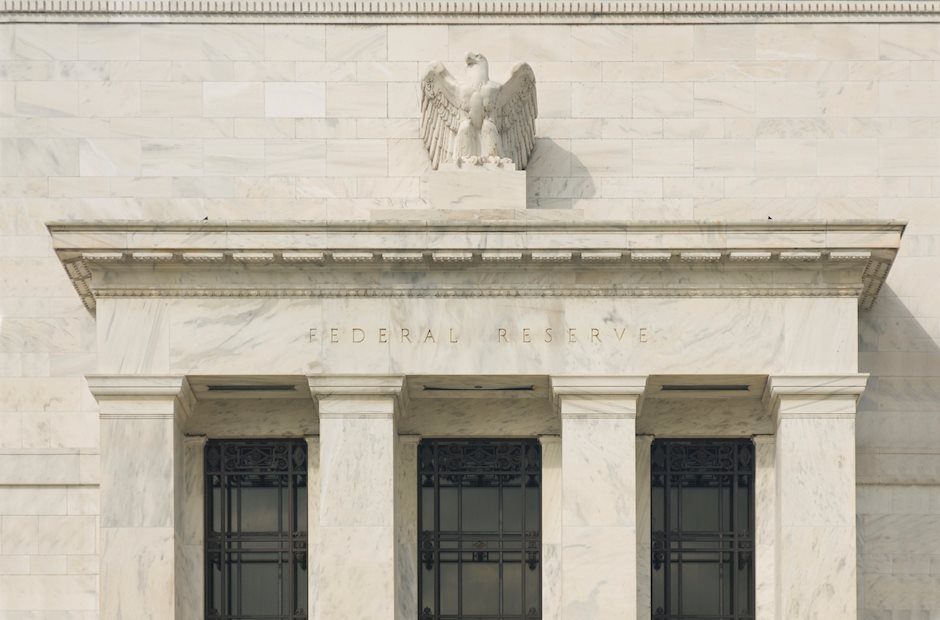

Federal Reserve Chairman Jerome Powell testified before Congress on Wednesday, delivering his Semiannual Monetary Policy Report before the House Financial Services Committee. We’re now about two weeks from the Federal Open Market Committee (FOMC)’s next scheduled meeting, and investors are perhaps hoping for a sneak peek at what the Fed might do about interest rates.
During his testimony today, Powell did offer some insights into where the central bank stands heading into the March FOMC meeting, and the market responded favorably. The major indexes were all trending higher on Wednesday as the S&P 500 rose about 44 points (0.9%), the Dow Jones Industrial Average gained 217 points (0.6%), and the Nasdaq Composite rose 166 points (1%) in midday trading.
Fed on track to dial back rates
Powell made quite a few remarks that could be construed by investors as reiterating that the Fed remains on course to lower interest rates this year. The big question is when.
In his prepared remarks before the committee, Powell said that with inflation nearing their 2% target without significantly impacting unemployment or economic growth, “our policy rate is likely at its peak for this tightening cycle. If the economy evolves broadly as expected, it will likely be appropriate to begin dialing back policy restraint at some point this year.”
However, he added that reducing rates “too soon or too much could result in a reversal of progress we have seen in inflation and ultimately require even tighter policy to get inflation back to 2%. At the same time, reducing policy restraint too late or too little could unduly weaken economic activity and employment.”
That doesn’t necessarily mean rates will start easing in March. As Powell said, the committee “does not expect that it will be appropriate to reduce the target range until it has gained greater confidence that inflation is moving sustainably toward 2%.”
Personal consumption expenditures (PCE), a key measure of inflation that the Fed relies on, was down to 2.4% in January from 2.6% in December. It may take another month or two of the PCE going down to trigger a rate cut.
The February PCE report is due to come out on March 29, so don’t expect any action until the Apr. 30 – May 1 meeting at the absolute earliest. However, it is more likely that we could see some action at the June 11-12 meeting — if the current trends continue.
Later, in the question-and-answer segment with members of the House Financial Services Committee, Powell indicated growing confidence that the economy is on track.
“We think because of the strength in the economy and the strength in the labor market and the progress we’ve made, we can approach that step carefully and thoughtfully and with greater confidence,” Powell said. “When we reach that confidence, the expectation is we will do so sometime this year. We can then begin dialing back that restriction on our policy.”
No sign of recession
The other positive that the collective market seemed to take from Powell’s remarks was his outlook on the economy. For months, investors have been hearing about an economic slowdown in 2024, a sputtering stock market, and perhaps even a recession.
However, the stock market is up by about 7%, and the economy has grown faster than expected, with the gross domestic product (GDP) up 3.3% in the fourth quarter and 3.1% for all of 2023. When asked about the economy, Powell said he expects it to continue expanding at a robust pace in 2024.
“I will say there’s no evidence or no reason to think that the U.S. economy is in, or in some kind of, short-term risk of falling into a recession,” Powell said during the Q&A session. “Having said that though, there’s always a meaningful possibility that an economy will fall into recession. I don’t think that possibility is elevated at the current time.”
Technology stocks, which are typically the most resistant to high rates, were up the most on Wednesday, as the Nasdaq jumped more than 1% on the day.
Powell is scheduled to speak again before the committee on Thursday, and then the FOMC is set to meet on March 19 and 20. Investors will no doubt be tuned in for more clues.
Author
Jacob Wolinsky
ValueWalk
Jacob Wolinsky is the founder of ValueWalk, a popular investment site. Prior to founding ValueWalk, Jacob worked as an equity analyst for value research firm and as a freelance writer. He lives in Passaic New Jersey with his wife and four children.