Pound Sterling exposes to downside as hawkish Baily commentary deepens recession fears
- Pound Sterling skids below the crucial support of 1.2700 ahead of BoE’s interest-rate policy.
- A fat rate hike announcement by the BoE would elevate recession fears in the United Kingdom.
- UK’s 12-month consumer inflation expectations soften to 4.3%.
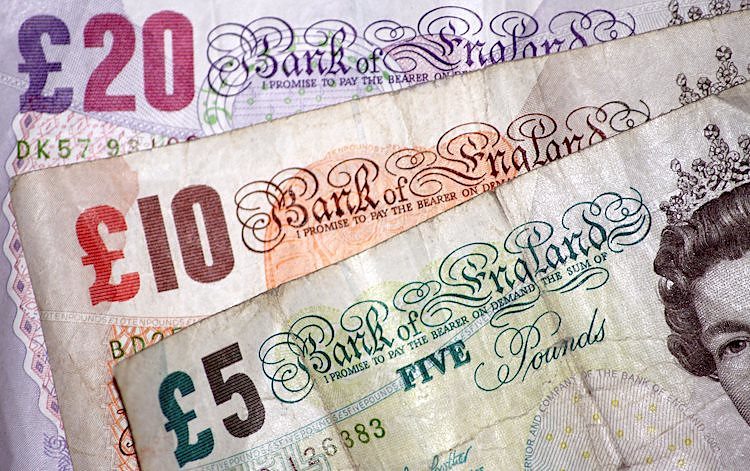

The Pound Sterling (GBP) turns extremely volatile as the Bank of England (BoE) raises interest rates by 25 basis points (bps) to 5.25%. Out of the nine-member Monetary Policy Committee (MPC) team, eight members vote for an interest-rate hike while policymaker Swati Dhingra supports an unchanged interest rate decision. While BoE's Haskel and BoE's Mann supported a 50 bps interest rate hike. The GBP/USD pair remains under pressure due to bearish market sentiment and fears of a deep recession in the United Kingdom as the central bank raises interest rates consecutively for the 14th time.
BoE Governor Andrew Bailey commented that the bank rate will stay "sufficiently restrictive for sufficiently long" to return to the inflation target. Regarding the inflation outlook, the central bank believes that inflation will fall around 5% in October.
Investors were mixed about the pace at which interest rates will be raised by the BoE. Inflationary pressures in the United Kingdom economy are highest among G7 economies and households face the heavy burden of a squeeze on their real income. Consideration of a fat interest rate hike by the BoE would dampen the economic outlook.
Daily Digest Market Movers: Pound Sterling looks fragile as BoE remains hawkish
- Pound Sterling dropped toward 1.2600 as the Bank of England announced an interest rate hike by 25 bps to 5.25%.
- This is the 14th consecutive interest-rate hike by the BoE. Out of a nine-member committee, eight policymakers favored further policy tightening while one favored a steady interest rate policy.
- The option of a second consecutive 50 bps rate push wasn't taken by the BoE despite knowing that inflation in the United Kingdom economy is four times the required rate of 2%.
- Further tightness in the monetary policy is going to build more burden on inflationary pressures.
- Going forward, the recent recovery in oil prices and resilient consumer spending could force BoE policymakers to continue hiking interest rates further.
- Meanwhile, a survey from Citi/YouGov shows that one-year forward consumer inflation expectations drop sharply to 4.3% vs. former expectations of 5.0%.
- Apart from the interest rate decision, the outlook on inflation and the economy, and policy guidance for the remaining 2023 will be in focus.
- Also, investors would like to know whether UK PM Rishi Sunak would meet his promise of halving inflation to 5% by year-end.
- UK’s housing sector and factory activities face the heat of an aggressive rate-tightening cycle by the central bank. Factory activities have been contracting for several months due to weak global demand and higher unsold inventory.
- Britain’s mortgage lender Nationwide reported on Tuesday that housing prices fell by the most in July since 2009 on an annual basis. The reasoning behind the decline in housing demand is the lower affordability power of first-time buyers due to higher borrowing costs.
- The market mood is extremely cautious as Fitch downgrades the United States government, citing concerns over rising fiscal spending in coming years.
- US Treasury Secretary Janet Yellen said that the Fitch downgrade to the US economy is ‘entirely unwarranted’ as the economy is resilient due to a tight labor market and continued growth.
- Along with Yellen, JPMorgan chief executive Jamie Dimon told CNBC on Wednesday that the United States government's long-term debt rating downgrade was "ridiculous," saying "It doesn't really matter". The Fitch downgrade is based on those economic indicators that are already known.
- The US Dollar Index continued its five-day winning spell on Thursday as upbeat Automatic Data Processing (ADP) Employment Change data set a positive undertone for Friday’s Nonfarm Payrolls (NFP) and the Federal Reserve’s (Fed) September monetary policy.
- Before US NFP, Services PMI for July will be reported by the Institute of Supply Management (ISM). Unlike factory activities, the service sector is expanding but the July reading is expected to remain lower at 53.0 against June’s figure of 53.9.
Technical Analysis: Pound Sterling drops below 1.2700
Pound Sterling retraced almost 80% from its July high of 1.3140 on Thursday. The Cable came under severe pressure after slipping below the 20 and 50-day Exponential Moving Averages (EMAs). The asset delivers a breakdown of the Rising Channel chart pattern but needs to pass through more filters for confirmation.
Pound Sterling FAQs
What is the Pound Sterling?
The Pound Sterling (GBP) is the oldest currency in the world (886 AD) and the official currency of the United Kingdom. It is the fourth most traded unit for foreign exchange (FX) in the world, accounting for 12% of all transactions, averaging $630 billion a day, according to 2022 data.
Its key trading pairs are GBP/USD, aka ‘Cable’, which accounts for 11% of FX, GBP/JPY, or the ‘Dragon’ as it is known by traders (3%), and EUR/GBP (2%). The Pound Sterling is issued by the Bank of England (BoE).
How do the decisions of the Bank of England impact on the Pound Sterling?
The single most important factor influencing the value of the Pound Sterling is monetary policy decided by the Bank of England. The BoE bases its decisions on whether it has achieved its primary goal of “price stability” – a steady inflation rate of around 2%. Its primary tool for achieving this is the adjustment of interest rates.
When inflation is too high, the BoE will try to rein it in by raising interest rates, making it more expensive for people and businesses to access credit. This is generally positive for GBP, as higher interest rates make the UK a more attractive place for global investors to park their money.
When inflation falls too low it is a sign economic growth is slowing. In this scenario, the BoE will consider lowering interest rates to cheapen credit so businesses will borrow more to invest in growth-generating projects.
How does economic data influence the value of the Pound?
Data releases gauge the health of the economy and can impact the value of the Pound Sterling. Indicators such as GDP, Manufacturing and Services PMIs, and employment can all influence the direction of the GBP.
A strong economy is good for Sterling. Not only does it attract more foreign investment but it may encourage the BoE to put up interest rates, which will directly strengthen GBP. Otherwise, if economic data is weak, the Pound Sterling is likely to fall.
How does the Trade Balance impact the Pound?
Another significant data release for the Pound Sterling is the Trade Balance. This indicator measures the difference between what a country earns from its exports and what it spends on imports over a given period.
If a country produces highly sought-after exports, its currency will benefit purely from the extra demand created from foreign buyers seeking to purchase these goods. Therefore, a positive net Trade Balance strengthens a currency and vice versa for a negative balance.
Author
Sagar Dua
FXStreet
Sagar Dua is associated with the financial markets from his college days. Along with pursuing post-graduation in Commerce in 2014, he started his markets training with chart analysis.