Pound Sterling Price News and Forecast: GBP/USD remains steady as the US Dollar undergoes a slight correction

GBP/USD holds steady above 1.2900 due to a technical pullback in US Dollar
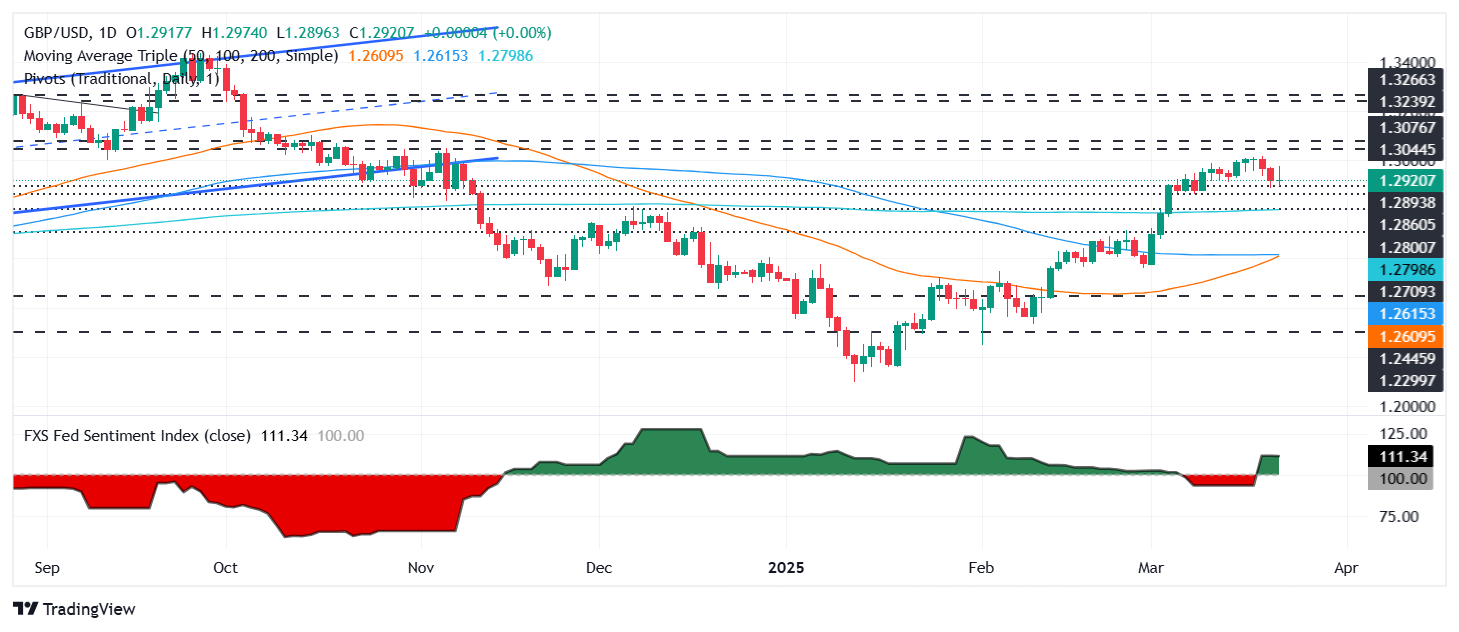
GBP/USD remains stable around 1.2920 during Tuesday’s Asian session after gains in the previous session. However, the pair holds ground amid a downward correction in the US Dollar (USD). The Greenback strengthened, supported by robust S&P Services PMI data and cautious remarks from Federal Reserve officials.
The S&P Global Services PMI surged to 54.3 in March, a three-month high, up from 51.0 in February and exceeding market expectations of 50.8. The service sector rebounded sharply from its 15-month low, while the Composite PMI rose to 53.5, marking its strongest expansion since December 2024. Read more...
GBP/USD cools momentum as Pound traders weigh next options
GBP/USD rankled on Monday, kicking off the new week with a fresh bout of indecision as the pair floats near the 1.2900 handle. Economic data from both the UK and the US came in mixed on Monday, as surveyed businesses waffle on their Purchasing Managers Index (PMI) expectations.
US President Donald Trump has again hit investors with a fresh batch of on-again, off-again tariff threats. Investors have latched onto the suggestion that Donald Trump might be looking at tariff exemptions for his own trade policy “strategy”, bolstering market sentiment enough to keep the Greenback under wraps. Read more...
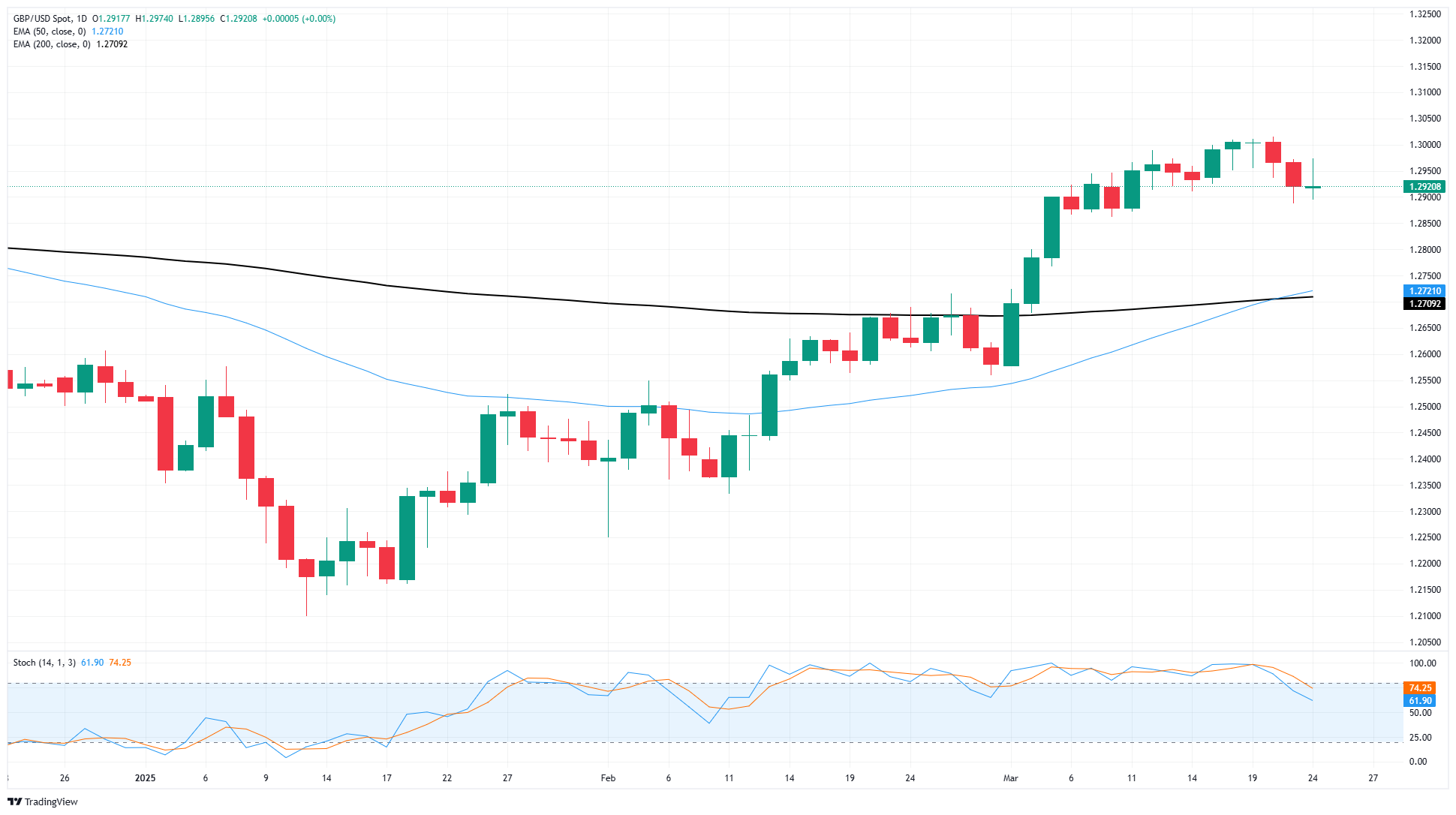
GBP/USD holds gains as mixed PMIs stir tariff jitters, eyes on UK inflation
The Pound Sterling (GBP) is trimming some of its earlier gains versus the US Dollar (USD) on Monday and begins the week on an upbeat mood after Flash PMIs in both sides of the Atlantic came mixed. At the time of writing, GBP/USD trades at 1.2933, up 0.16%.
The market mood improved as traders seemed relieved that the United States (US) reciprocal tariffs will be targetted to certain countries. Read more...
Author

FXStreet Team
FXStreet
Composed of a group of economic journalists and FX experts, the FXStreet content team produces and oversees all content published on FXStreet. It provides a purely journalistic approach to the Forex market.