|

Pound Sterling Price News and Forecast: GBP/USD remains depressed for the second straight day

GBP/USD hangs near weekly low, below mid-1.2900s ahead of UK Retail Sales

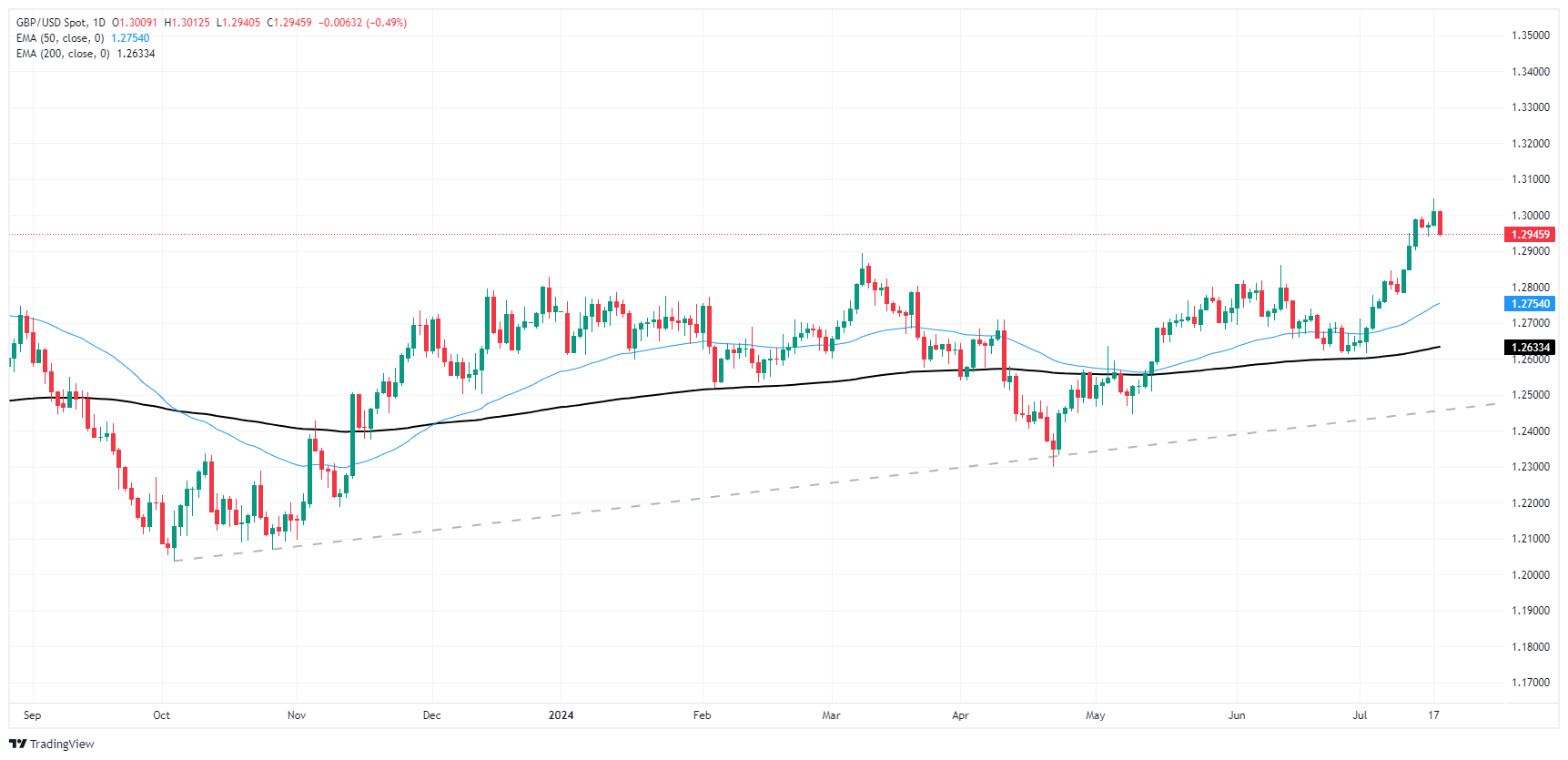
The GBP/USD pair prolongs its corrective decline from a one-year peak, around the 1.3045 region touched earlier this week and drifts lower for the second successive day on Friday. Spot prices drop to the 1.2935-1.2930 area, or a fresh weekly low during the Asian session amid some follow-through US Dollar (USD) buying, albeit lack bearish conviction.

Concerns over a renewed trade war between the US and China, along with persistent geopolitical tensions, temper investors' appetite for riskier assets. This led to the overnight slump in the US equities and led to a downfall across Asian markets, which assists the safe-haven buck to build on its recovery from nearly a four-month low and acts as a headwind for the GBP/USD pair. That said, dovish Federal Reserve (Fed) expectations might hold back the USD bulls from placing aggressive bets and lend some support to the currency pair. Read more...

GBP/USD settles back below 1.30 as Greenback selling abates

GBP/USD has settled back below the 1.3000 key level on Thursday as Greenback short pressures eases. Investors are taking a breather after a hard rally through the early trading week as market sentiment surged on Federal Reserve (Fed) rate cut expectations getting pinned to the ceiling.

UK data came in mostly as expected on Thursday, with a slightly better-than-expected but still lower print in unemployment claims. Meanwhile, US Initial Jobless Claims rose as rate-cut-hungry markets got further signs of a slowdown that will help bully the Fed into rate cuts beginning in September. Read more...
Author

FXStreet Team

Composed of a group of economic journalists and FX experts, the FXStreet content team produces and oversees all content published on FXStreet. It provides a purely journalistic approach to the Forex market.


More from FXStreet Team
Share:

Editor's Picks

AUD/USD eyes 0.7150 barrier nine-day EMA

AUD/USD inches higher after registering modest losses in the previous day, trading around 0.7130 during the Asian hours. The technical analysis of the daily chart indicates that the pair is moving sideways within the rectangle pattern, suggesting a consolidation as neither the bulls nor the bears have enough momentum to take control of the market.

USD/JPY trades below 160.00 intervention threshold; bullish bias intact

The USD/JPY pair attracts some sellers during the Asian session amid fears that authorities will step in again to prop up the Japanese Yen. Furthermore, the Israel-Lebanon truce prompts some profit-taking around the US Dollar and exerts downward pressure on the currency pair.

Gold puts its 200-day SMA to the test near $4,420

Gold keeps the bullish stance in place in the latter part of Thursday’s session, although a convincing break above the key $4,500 mark per troy ounce still remains elusive. The precious metal’s advance comes amid the resurgence of some selling interest around the Greenback, improving risk sentiment, and declining US Treasury yields across the board.

Bitcoin’s massive storm is back: Why the sell-off is far from over

Bitcoin price action over the last few weeks has felt less like a normal, healthy correction and more like a slow grinding crash that continues to wreak havoc on holdings and trading accounts. And everything suggests that the dramatic crash isn’t over.

Nonfarm payrolls: Testing the limits of Fed policy patience

The upcoming nonfarm payrolls report for May will provide the final update on the US labor market before Kevin Warsh attends his first policy meeting as the new Fed Chair later this month.

Recession on paper: What really moves the Canadian Loonie now?

Statistics Canada handed the headline writers a gift and the analysts a headache. Real GDP shrank 0.1% on an annualized basis in the first quarter, and with the fourth quarter of 2025 revised down to a 1.0% contraction, that is two negative quarters in a row, the textbook definition of a technical recession and Canada's first since the pandemic.