|

Pound Sterling Price News and Forecast: GBP/USD backslid after UK and US CPI inflation fell below expectations

GBP/USD backslid after UK and US CPI inflation both fell below expectations

GBP/USD pulled back and declined below 1.28500 on Wednesday after Consumer Price Index (CPI) inflation eased lower on both sides of the Atlantic. Cable has snapped a four-day win streak, and heads into the back half of the trading week on the backfoot with UK Gross Domestic Product (GDP) growth figures and US Retail Sales on the docket. Read More...
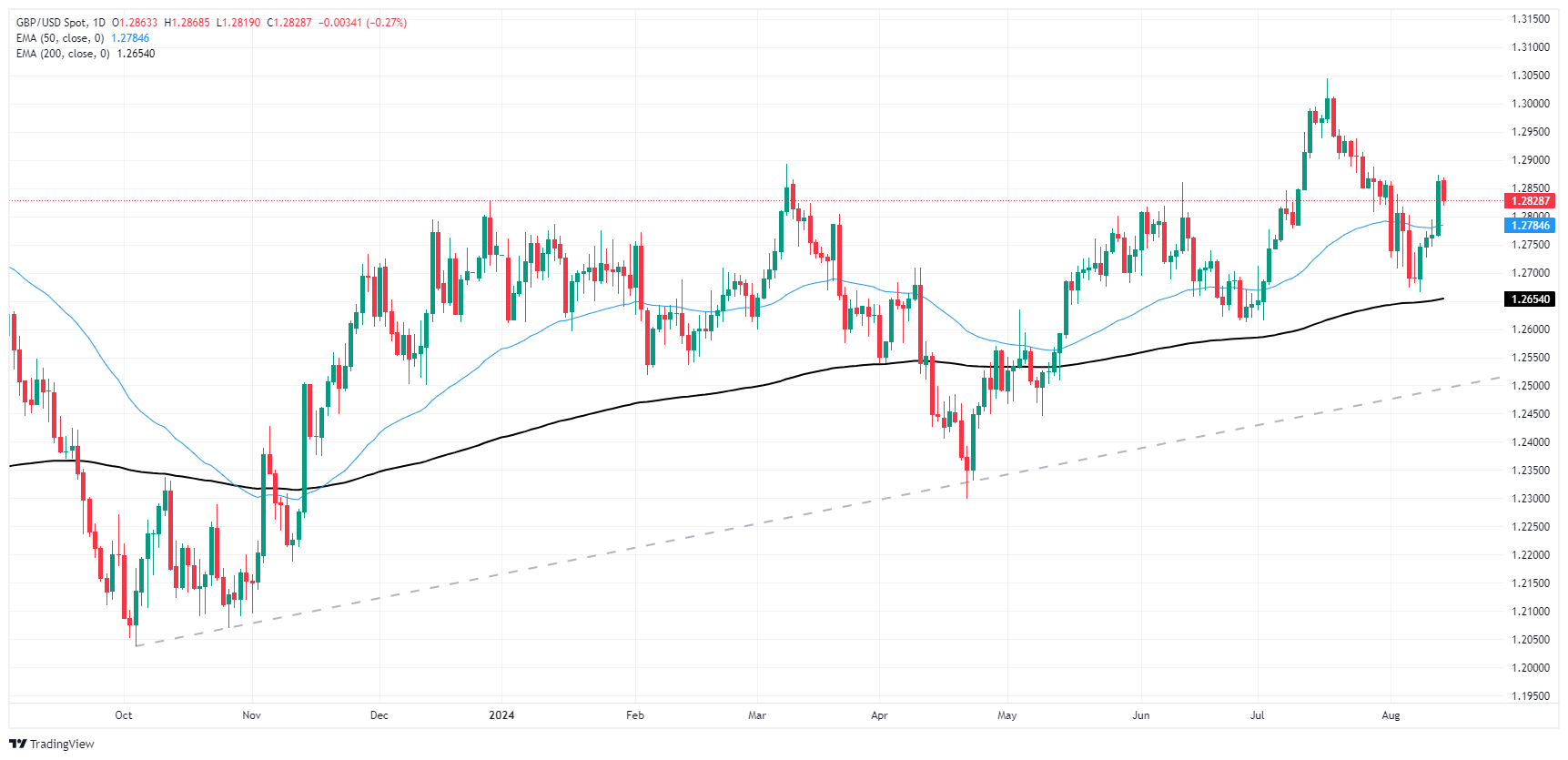
Pound Sterling recovers losses against US Dollar as US inflation slows expectedly

The Pound Sterling (GBP) recovers its intraday losses to a two-week high at 1.2870 against the US Dollar (USD) in Wednesday’s North American session. The GBP/USD pair rebounds as the US Dollar (USD) falls after the United States Consumer Price Index (CPI) report showed that price pressures declined expectedly in July. The US Dollar Index (DXY), which tracks the Greenback’s value against six major currencies, hovers near a fresh weekly low around 102.30. Read More...
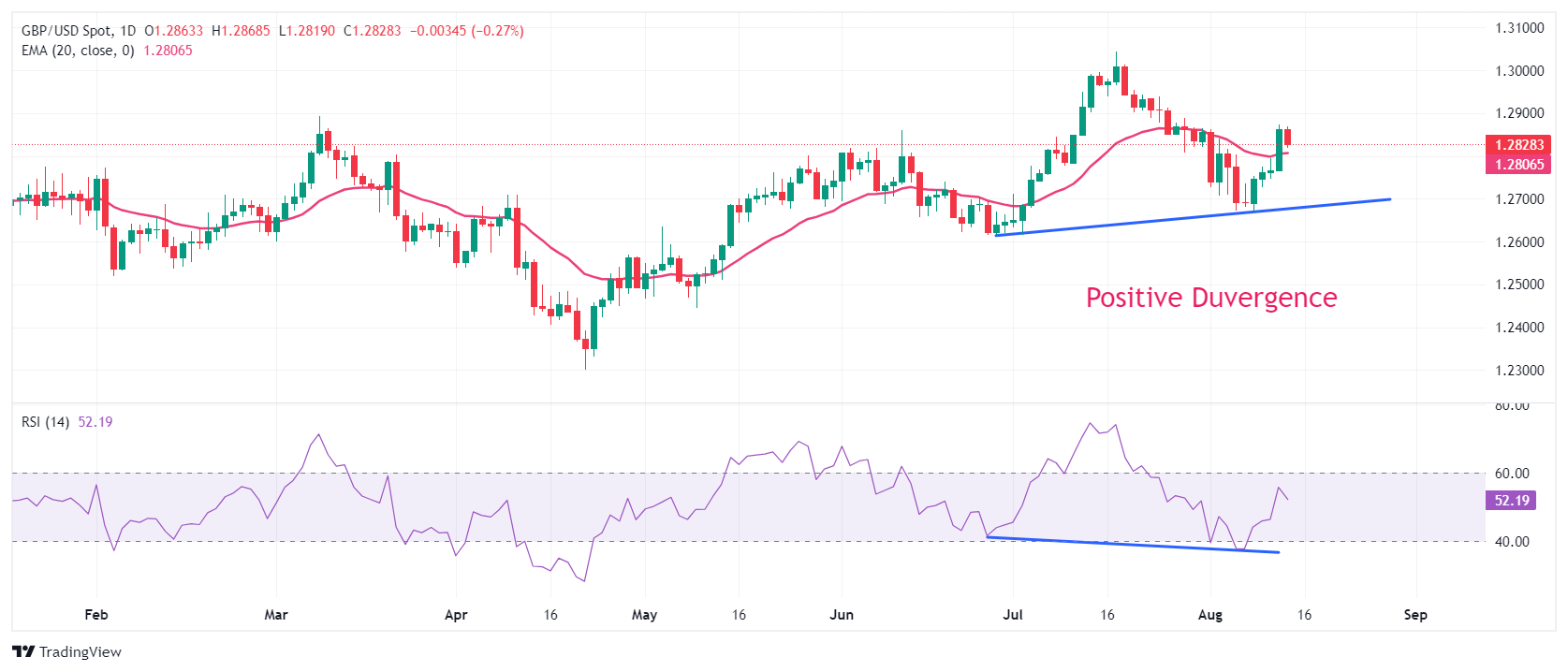
GBP/USD consolidates in a range above mid-1.2700s ahead of inflation data from UK and US

The GBP/USD pair ticks lower during the Asian session on Wednesday and moves away from over a two-week high, around the 1.2870-1.2875 region touched the previous day. The downside, however, remains cushioned as traders keenly await the release of the latest consumer inflation figures from the UK and the US. Read More...


Author

FXStreet Team

Composed of a group of economic journalists and FX experts, the FXStreet content team produces and oversees all content published on FXStreet. It provides a purely journalistic approach to the Forex market.

More from FXStreet Team

Share:

Editor's Picks

GBP/USD advaces towards 1.3450 after BoE decision, US Q2 GDP

GBP/USD gains positive momentum on Thursday, approaching 1.3450 and trading at fresh multi-week highs. The Bank of England decided to maintain the benchmark rate unchanged at 3.75%. The MPC voted 6-3 to keep rates on hold, with the 3 dissenters favoring a rate hike. US Q2 GDP missing expectations helped the pair advance, while renewed US Dollar weakness across the FX board pushes the pair further up ahead of the monthly close.

EUR/USD jumps above 1.1500, highest in six weeks

The EUR/USD pair trades north of 1.1500 in the American session on Thursday, reaching fresh six-week highs. The US Dollar is in sell-off mode, with multiple factors weighing on the American currency. Not only did the Federal Reserve vote divided to keep rates on hold on Wednesday, creating doubts about a September hike, but US Q2 GDP missed expectations. A suspected JPY intervention adds pressure on the Greenback.

Gold recovers the $4,100 level as US Dollar weakens further

Gold trades just above $4,100 amid a US Dollar sell-off. The Greenback enjoyed some near-term demand following Wednesday's post-FOMC downfall, but was unable to retain its gains. The preliminary estimate of the US Q2 GDP showed the economy grew at an annual rate of 1.5%, missing the market's expectations of 2.1%.

Ripple Price Forecast: XRP builds recovery momentum as whales increase exposure
Ripple (XRP) rises toward the pivotal $1.10 resistance on Thursday, marking three consecutive days of gains. This neutral-to-slightly bullish outlook follows the Federal Reserve (Fed) decision to leave interest rates unchanged in the 3.50%-3.75% range.
The FOMC: Rates left on hold; dollar falls as Warsh fails to vote for hike
The Fed kept interest rates on hold today, defying a 30% chance in the Fed Funds Futures market that rates would rise. The Committee voted 9-3 to keep rates on hold, with governors Kashkari, Hammack and Logan all voting to hike rates due to concerns about inflation. The immediate market reaction has been a sharp drop in the USD on a broad basis.
US Dollar mid-year outlook: Exceptional currency, exceptional risks?
The US Dollar enters the second half of 2026 in a markedly different position from a year ago. The King currency has recovered, reflecting persistent US inflation, changing expectations for Fed policy, geopolitical tensions and renewed demand for defensive assets.