|

NZD/JPY Price Analysis: On the bear's watchlist as price holds below 4-HR resistance

  • NZD/JPY bears looking into prospects below the support structure.
  • The monthly chart also offers upside potential still as well as downside from current resistance.

NZD/JPY is dipping in and out of bearish 4-hour technical readings and testing both a critical resistance and support level of the consolidation channel in doing so.

The following is a bearish assessment which offers the prospects of a short on the break of the support structure.

In a top-down analysis, we can see that there is too much risk of a continuation of the broader bullish trend to anything with the pair until a bearish environment has been confirmed. 

Monthly chart
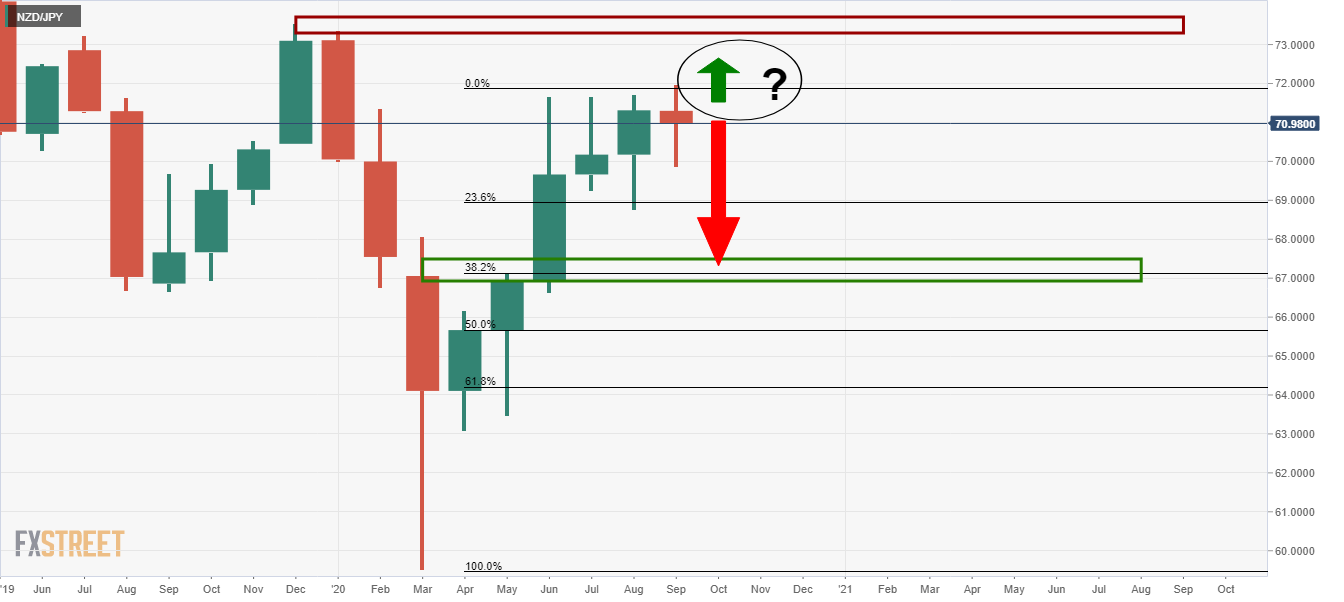
There could still be some more upside to go yet, so the prudent thing to do is monitor for price action signals and a confirmation of a bearish environment on the short term charts. 

Weekly chart

The weekly outlook could develop a similar price action pattern as illustrated above towards bearish targets 1 and 2.

Daily chart

There is a 1,2,3 set up and it would appear that the current resistance is holding up, creating the prospects for wave 3 to the downside.

4HR chart

While the price holds above the support structure, there is not a strong enough bias to sell the pair until the structure is broken. 

However, a short taken at market protected by a stop loss placed above structure is offering a 2.5 risk to reward.

Although, the same could be achieved with more conviction once the price is below the 21 moving average and on a break and restest of the support structure turning into new resistance. 

Update: Sell limit in
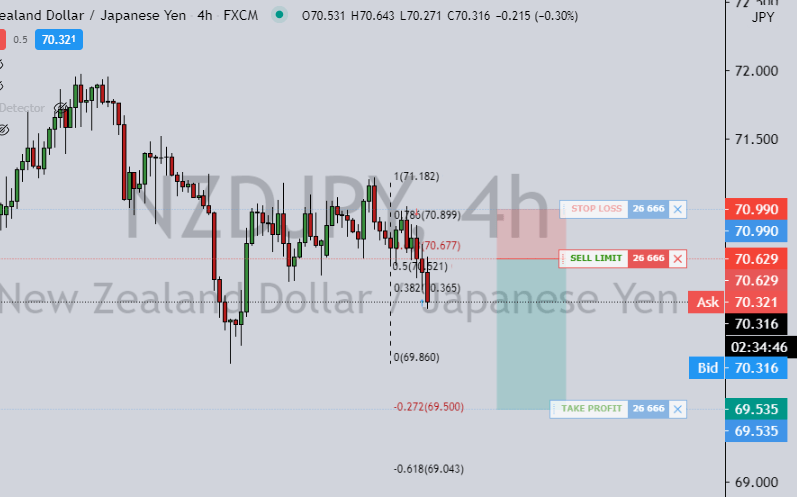
Update: Target moved to breakeven

There has been a sharp move to the downside breaking structure which invalidates the trade.

Author

Ross J Burland

Ross J Burland, born in England, UK, is a sportsman at heart. He played Rugby and Judo for his county, Kent and the South East of England Rugby team.


More from Ross J Burland
Share:

Editor's Picks

AUD/USD dips under 0.6850 as Fed-RBA policy divergence widens

The Australian Dollar lost 0.27% against the US Dollar on Wednesday as market participants priced in further Federal Reserve tightening, amid a light economic docket in Australia and the US. The AUD/USD trades below 0.6850.

USD/JPY remains capped below 159.00 amid looming intervention risks

USD/JPY struggles to build on the previous day’s strong gains to a near one-month top as intervention risk supports the Japanese Yen while hopes of a US-Iran peace deal cap the safe-haven US Dollar. That keeps the pair's upside limited below 159.00, for now.

Gold puts the $4,000 mark to the test

Gold now accelerates its daily correction, challenging the key $4,000 mark per troy ounce on Wednesday. The precious metal’s continuation of the downward trend comes against the backdrop of a robust performance of the US Dollar, rising US Treasury yields across the board and rising bets of extra rate hikes by the Fed.

Bitcoin Bull Score falls to 20 as USDT supply shrinks – CryptoQuant
Bitcoin's (BTC) market indicators have turned bearish at the same time, raising concerns that the top crypto could face a deeper correction despite historical similarities to previous market bottoms. In a report published Wednesday, CryptoQuant noted that its Bull Score Index dropped from 90 on October 13 to 20 in less than four weeks, reflecting a sharp deterioration in market conditions.
The Japanese Yen is doing something it hasn't done in ten weeks

USD/JPY climbs above the 159.00 resistance level, extending its advance on Wednesday, and bringing the Japanese Yen back toward its weakest levels in ten weeks amid renewed strength in the US Dollar. The move reflects a sharp repricing of Federal Reserve interest rate expectations following hawkish comments from Fed Governor Christopher Waller and stronger-than-expected US consumer inflation data.

What the US CPI headline doesn’t tell you about inflation

Brent crude has fallen about a third since mid-October on hopes the Iran war is ending, but diesel, freight and fertiliser costs haven't followed. Those costs reach US consumer prices in stages through 2027 and could keep inflation high after gasoline gets cheaper.