|

Natural Gas Price Analysis: 50-SMA prods XNG/USD bulls around $2.35

  • Natural Gas prints mild gains while poking 50-SMA amid three-day uptrend.
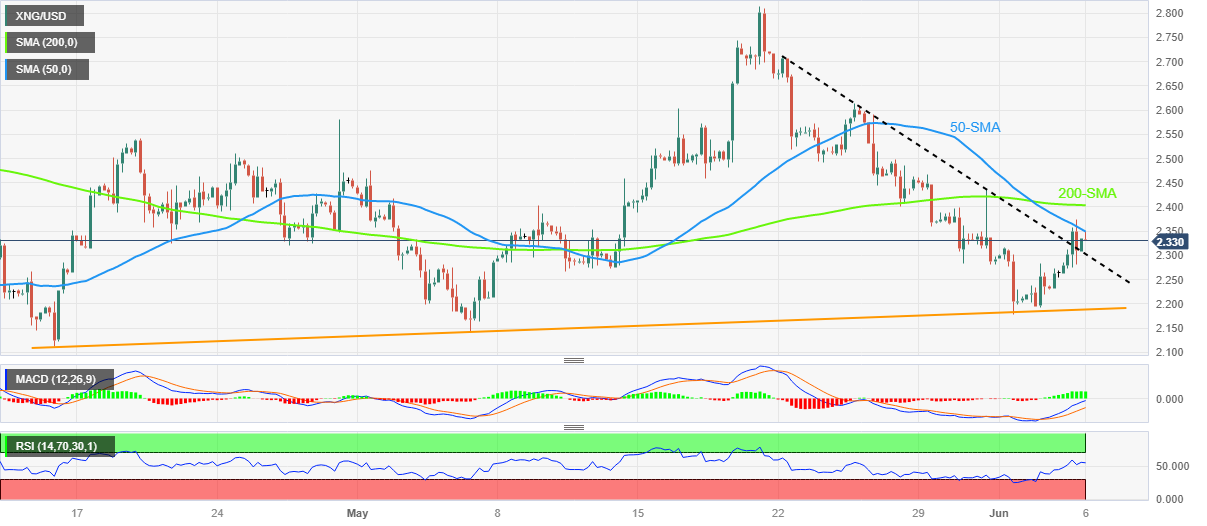
  • Clear break of fortnight-old resistance line, upbeat oscillators keep XNG/USD buyers hopeful.
  • Natural Gas bears remain off the table unless breaking of seven-week-old support line.

Natural Gas (XNG/USD) price remains mildly bid near $2.33 amid early Tuesday morning, up for the third consecutive day by the press time.

In doing so, the energy asset justify the previous week’s rebound from an upward-slopping support line from the mid-April, as well as an upside break of a fortnight-long resistance-turned-support. Adding strength to the upside bias are the bullish MACD signals and the upbeat RSI (14) line, not overbought.

However, the 50-SMA challenges the XNG/USD bulls around $2.35, a break of which highlights the 200-SMA hurdle surrounding $2.40.

In a case where the Natural Gas Price remains firmer past $2.40, tops marked during late May around $2.60 may act as the last defense of the bears before directing traders toward the previous monthly peak of around $2.82.

Meanwhile, XNG/USD pullback from the 50-SMA needs validation from the previous resistance line, near $2.30 at the latest.

Even so, an upward-sloping support line from April 14, close to $2.18 by the press time, appears a tough nut to crack for the Natural Gas bears and can restrict the commodity’s further downside.

Following that, a slump towards refreshing the yearly low, currently around $2.11 can’t be ruled out.

Natural Gas: Four-hour chart
Trend: Further upside expected

Author

Anil Panchal

Anil Panchal

FXStreet

Anil Panchal has nearly 15 years of experience in tracking financial markets. With a keen interest in macroeconomics, Anil aptly tracks global news/updates and stays well-informed about the global financial moves and their implications.


More from Anil Panchal
Share:

Editor's Picks

AUD/USD hangs near three-week low, below 0.6950 as traders await US NFP report

AUD/USD hits a three-week low during the Asian session on Friday as the RBA’s dovish shift and a rout in equity markets weigh on the risk-sensitive Aussie. However, the recent slump in US bond yields to a two-month low keeps US Dollar bulls on the back foot and limits losses for the currency pair as traders look to the US NFP report for a fresh impetus.

USD/JPY bounces off three-week low; keeps the red near 157.65 as focus remains on US NFP

USD/JPY bounces off the weekly low set during the Asian session, as bears turn cautious ahead of the US NFP report due later this Friday. The upside seems limited as the recent slump in US bond yields and hopes of Iran war de-escalation undermine the US Dollar. Moreover, a hawkish BoJ and intervention risks support the Japanese Yen, capping the pair.

Gold loses the grip; $4,000 comes next on the downside

Gold sets aside two daily advances in a row on Friday, opening the door to a potential test of the key $4,000 mark per troy ounce. The precious metal’s retracement follows a decent improvement in the sentiment surrounding the US Dollar, solid NFP data and higher US Treasury yields across the board.

Democrats win House and Senate in US midterms: Why isn’t all bad news for crypto

The biggest story this week was Tuesday’s US midterm elections, which saw Democrats win control of both the House and the Senate in a clear blue wave. This political shift in the US has triggered sharp price swings across the cryptocurrency market.

Week ahead – Inflation and geopolitics in focus as US political landscape shifts

Post-midterm election euphoria fizzles out as risk aversion prevails. US CPI, PPI and Fedspeak on the radar as Fed hike bets remain supported. Oil retreat pauses on mixed hopes about the ongoing conflicts.

US Dollar breaks below 101.50 as Democrats sweep Congress
The US Dollar (USD) comes under heavy selling pressure on Wednesday, with the US Dollar Index (DXY) falling around 0.5% to trade near 101.35 after sliding below the 101.50 level. The Greenback retreats to its lowest level in four weeks as investors reassess the political and economic outlook following the Democratic Party's sweeping victory in the United States (US) midterm elections.















