|premium|

Marine Petroleum Trust (MARPS) Stock News and Forecast: Why does it keep going up?

  • MARPS stock rises 32% on Friday and 69% on Monday.
  • MARPS stock is up another 78% in Tuesday's premarket session.
  • MARPS is a US royalty trust within the oil and gas sector.

Marine Petroleum Trust stock remains high on the watch list of retail traders this morning as early gains in Tuesday's premarket see it add to impressive gains made on Friday and Monday.

Marine Petroleum Trust is a royalty trust with the purpose of providing payments from certain oil and natural gas leases in the Gulf of Mexico offshore of Louisiana. Approximately 60% of Marine’s royalty revenues come from oil and 40% come from natural gas. This is not an exploration company, so the funds are not being reinvested in looking for fresh wells. This is a depleting asset. 

MARPS Stock News

The company release below gives a snapshot of its fortunes. It is not exactly a large-cap, and its performance is consistent with some of the small-cap energy stocks that were targeted yesterday by retail traders on the back of the spike at oil prices. The stock is a tiny one with a market cap of $24 million. However, that still makes it look overvalued given the revenue figures below. We do note that the average selling price for a barrel of oil was near $40 for MARPS in 2021, so there is room for significant upside. Even then it is a struggle to justify recent moves. Going back to 2019, the average price for oil was $66.85, but in 2019 MARPS stock ranged between $2 to $3 for most of the year.
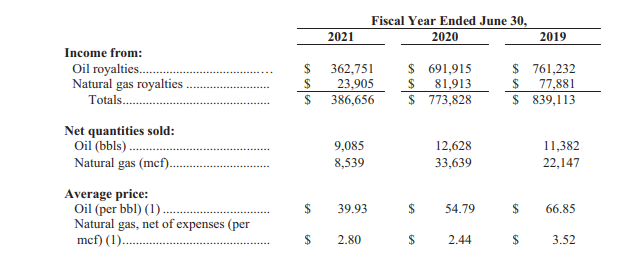
Source: maps-marine.com

MARPS Stock Forecast

If you are trading this one, please know what it is and adjust your risk accordingly. This is momentum trading. This is not based on technicals or fundamentals in our view. 
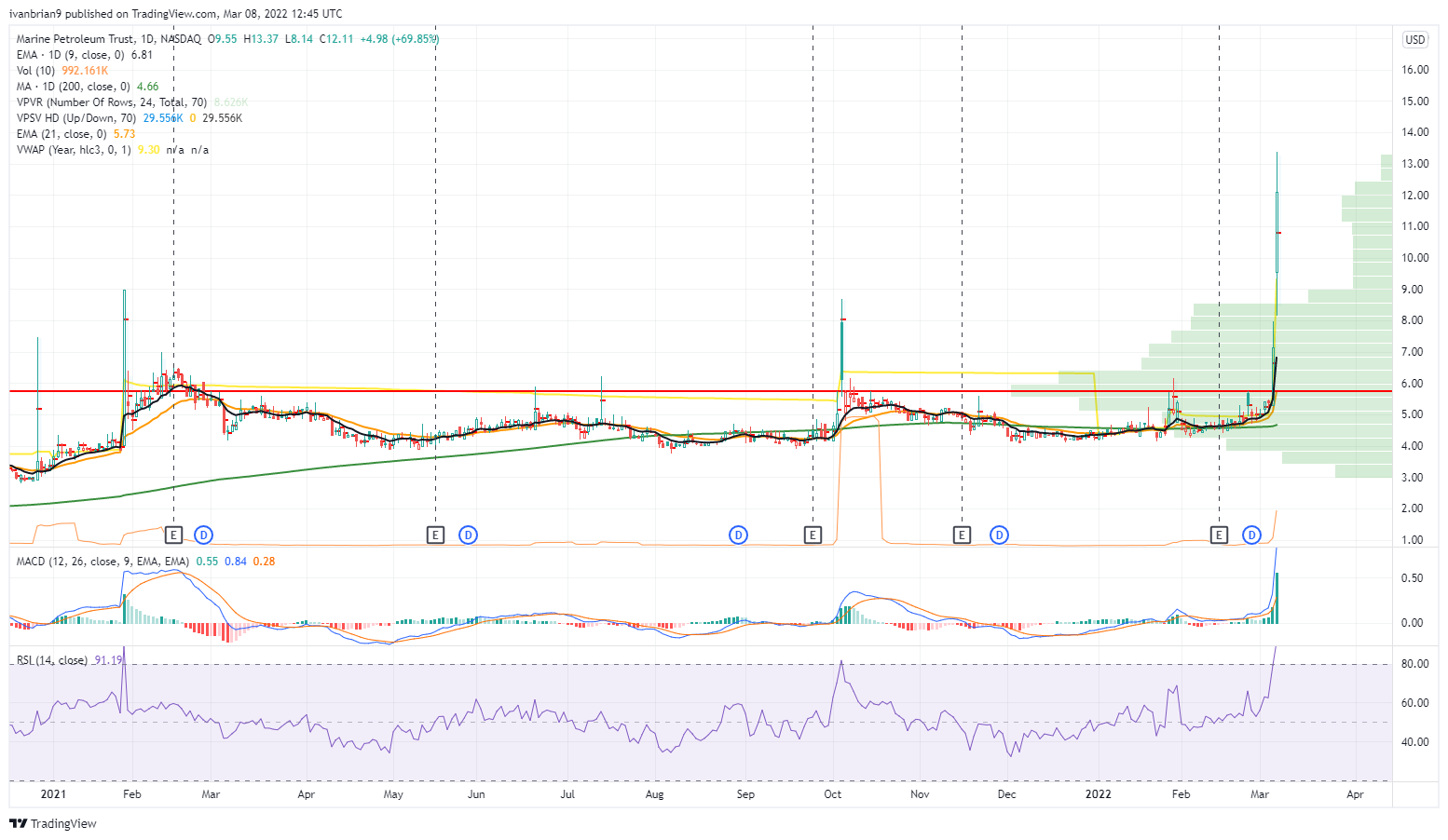
MARPS chart, daily

Premium

You have reached your limit of 3 free articles for this month.

Start your subscription and get access to all our original articles.

Subscribe to PremiumSign In

Author

Ivan Brian

Ivan Brian

FXStreet

Ivan Brian started his career with AIB Bank in corporate finance and then worked for seven years at Baxter. He started as a macro analyst before becoming Head of Research and then CFO.


More from Ivan Brian
Share:

Editor's Picks

GBP/USD corrects lower after testing 1.3400

Following Monday's advance, GBP/USD touched its highest level since mid-June slightly above 1.3400 early Tuesday but lost its bullish momentum. The pair trades marginally lower on the day at around 1.3380 as investors adopt a cautious stance following news of Iran targeting commercial ships attempting to pass through the Strait of Hormuz.

EUR/USD holds above 1.1400 as markets focus on Middle East news

EUR/USD struggles to gain traction and trades in a narrow channel above 1.1400 on Tuesday after failing to reclaim 1.1450. The pair's upside remains capped amid a modest recovery in the safe-haven US Dollar, as renewed tensions in the Strait of Hormuz and Asian tech sell-off fuel risk aversion.

Gold recovers above $4,150 following earlier decline

Gold stages a rebound after dropping toward $4,100 earlier Tuesday and trades above $4,150 in the American session. Crude oil prices edge higher amid renewed tensions in the Strait of Hormuz, reviving inflationary concerns. This, in turn, triggers a fresh leg up in US Treasury bond yields, offering some support to the US Dollar, and making it difficult for the yellow metal to gain traction.

Bonk extends correction after $20 million hack from BonkDAO treasury

Bonk remains under pressure, trading below $0.0000044 after losing over 10% in the previous day. Monday’s correction occurred as Bonk Decentralized Autonomous Organization announced a governance exploit that resulted in the theft of $20 million worth of BONK tokens from its treasury.

Bye, forward guidance: How to trade when central banks choose silence
Central banks have spent years telling markets what might come next. Now, traders face the possibility that they say a lot less. From the Federal Reserve to the European Central Bank and the Bank of England, policymakers are pushing back against forward guidance, arguing that the current world demands more flexibility.
Bye, forward guidance: How to trade when central banks choose silence

Central banks have spent years telling markets what might come next. Now, traders face the possibility that they say a lot less. From the Federal Reserve to the European Central Bank and the Bank of England, policymakers are pushing back against forward guidance.