Gold rallies into blue skies as US yields drop to lowest since 2017
- Spot gold has rallied to the highest levels since 2013 on the FOMC's dovish outcome.
- On a technical basis, its blue skies from here but a pull-back to 1364 could be on the cards.

Gold has rallied in Tokyo following a dovish outcome overnight from the FOMC meeting. US yields have now dropped to the lowest levels since the start of Sep 2017 levels, extending the downside from overnight and in the aftermath of the Federal Reserve with a reading in Tokyo as low as 2.004%; US yields were as high as 2.098% ahead of the Fed overnight. Gold prices have subsequently rallied to the highest levels since 2013, just about surpassing the 2014 highs by a few bucks. The high, so far, has been $1,394, but at the time of writing, the yellow metal has pulled back to $1,381.
FOMC outcome
The Federal Reserve chose to leave monetary policy unchanged, as expected, but the members of the committee chose to signal to the market an easing bias by dropping language saying it would be 'patient' on future policy adjustments. There was one member, James Bullard, the St Louis Fed President, who actually voted for an immediate 25bp rate cut.
The FOMC Statement comparisons:
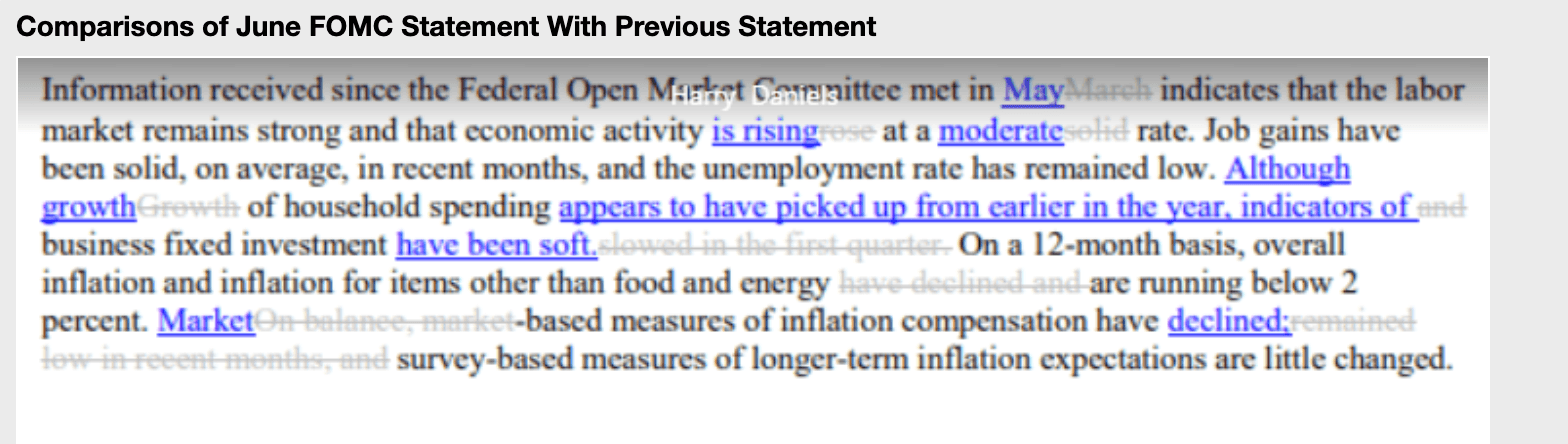
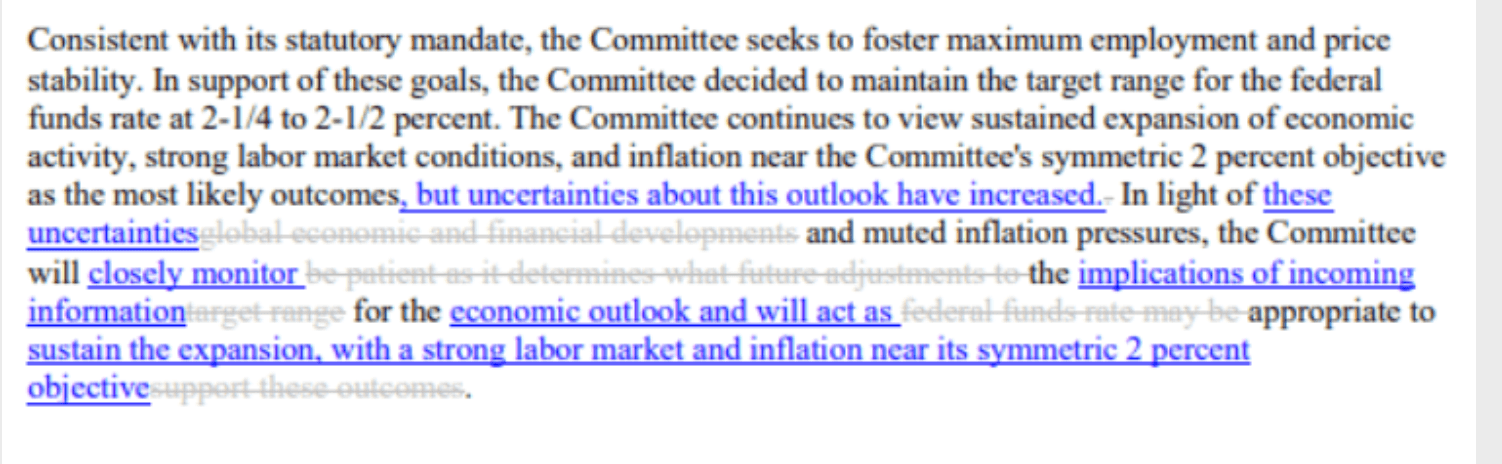
The FOMC meeting main takeaways:
- Interest rate on excess reserves unchanged at 2.35%.
- Benchmark interest rate unchanged; target range stands at 2.25-2.50%.
- Drops language saying it would be 'patient' on future policy adjustments.
- Uncertainties have increased regarding outlook for sustained economic expansion.
- 9:1 policy vote, Fed's Bullard dissented because he wanted a rate cut
- To act as appropriate to sustain econ. expansion with a strong labour market, inflation near target
- Economic activity is rising at a moderate rate
- Household spending appears to have picked up but business fixed investment has been soft
Press conference:
Analysts at TD Securities summaries the event as follows:
- "Powell highlighted increased uncertainty and muted inflation pressures as the key reasons for the shift in the Fed's tone.
- While admitting that the economy is doing reasonably well, he noted that "crosscurrents" have reemerged due to trade uncertainty, a drop in business confidence, and the potential for these to translate into weaker data. The fear of a sustained shortfall in inflation also led the Fed to sound more cautious, opening the door to an imminent rate cut.
- We believe that Powell signaled a shift in the reaction function, citing research suggesting that when a central bank is closer to the effective lower bound, it is wise to ease preemptively in order to prevent softness from turning into a prolonged weakening.
- As Powell put it, "an ounce of prevention is worth a pound of cure." The Chair also highlighted that balance sheet policy remains unchanged as it is scheduled to end in September."
The Dot Plot
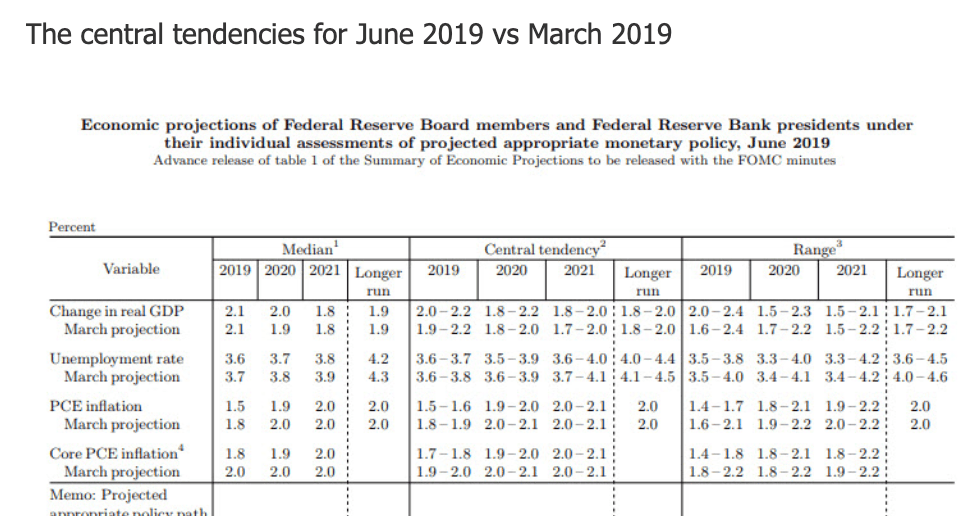
"The dot plot was unequivocally dovish across the board. There was a significant shift in the 2019 dots, with 8 members now projecting cuts this year (7 of whom are projecting 50bp of cuts). Despite this shift, the median 2019 dot remained unchanged at 2.375%, which reflects the split among officials as 9 didn't pencil in any easing for 2019. There were also notable downward shifts in the distributions for 2020 and 2021 dots, with the medians dropping to 2.125% and to 2.375%, respectively. Also importantly, the long-run dot was revised 25bp lower to 2.50%," analysts at TD Securities explained.
Gold levels
Gold has rallied way above the July 2016 highs at of 1375s and is taking on 2013 territories. However, while the outlook is bullish, a pullback in a 50% mean reversion of the move opens 1364 as a key target. An 127% fibo extension opens the 1411s ahead of the summer 2013 highs of the 1432s.
Author

Ross J Burland
FXStreet
Ross J Burland, born in England, UK, is a sportsman at heart. He played Rugby and Judo for his county, Kent and the South East of England Rugby team.