|

GBP/USD Price Analysis: 1:2 risk to reward trade setup in the making

  • GBP/USD bears seeking a break of current support and a downside extension. 
  • The 1-hour and 15-min time frames offering a 1:2 risk to reward scenario. 

In an ongoing analysis of the Brexit noise-related volatility in GBP/USD, the following is an update to the prior analysis according to the subsequent live price action. 

For a recap, the price has developed from the last analysis, GBP/USD Price Analysis: Bears about to re-engage at critical 15-min resistance? and now offers prospects for a downside extension from a 1-hour and 15 min chart perspective as follows:

1-hour chart
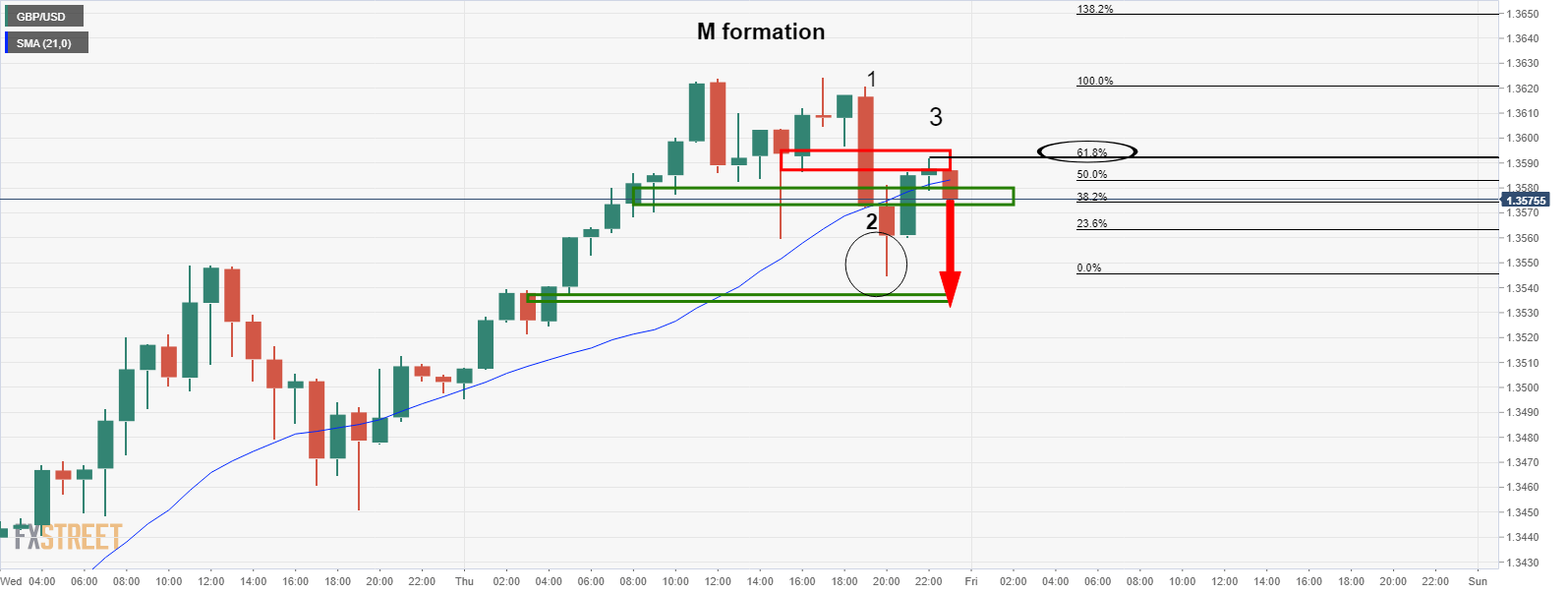
The 1-hour chart's M-formation has drawn in the bids back to test the neckline of the pattern.

The correction has completed a 61.8% Fibonacci retracement of the Brexit noise sell-off from the New York session. 

Downside extensions can be expected as a result for the print of a lower low. 

The -0.272% Fibonacci retracement of the correction is located at 1.3532 which meets prior structure. 

15-min chart
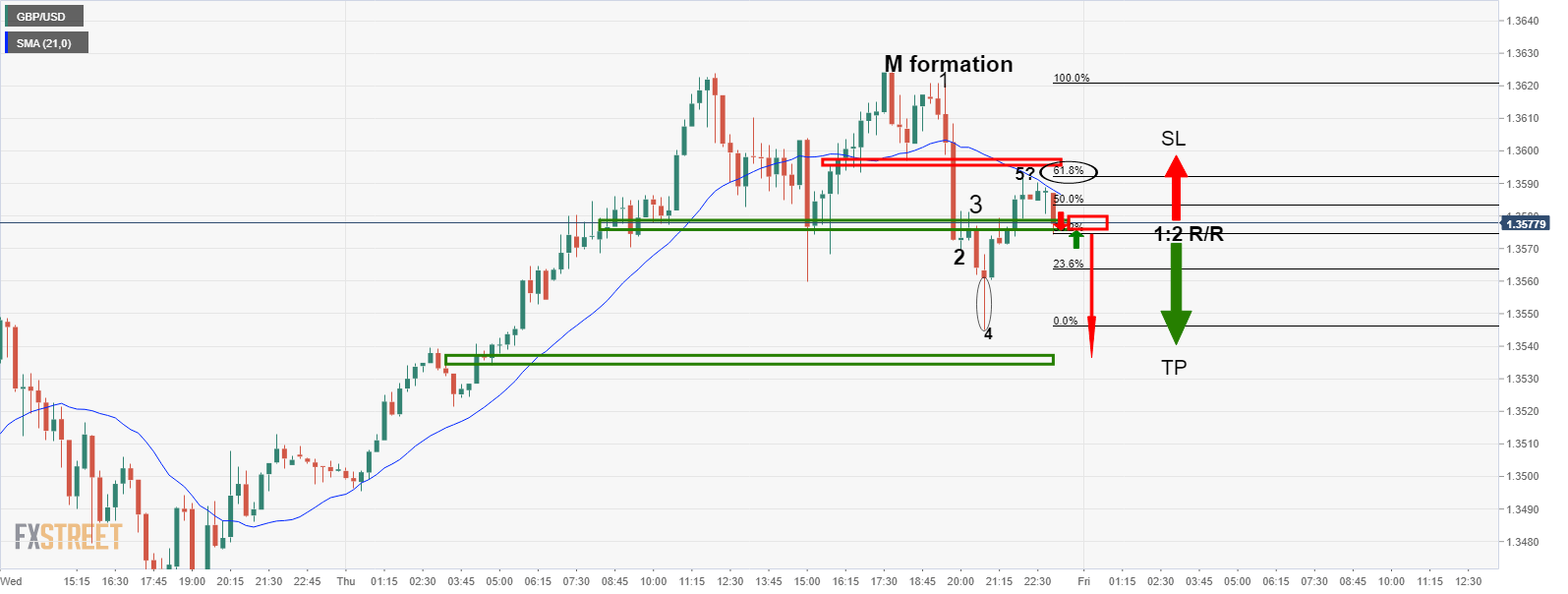
With bearish technical conditions on the 15-min time frame, a trade setup would entail a break of current support and a subsequent entry on a restest of that old support which would be expected to act as resistance. 

A stop-loss above the corrections' highs offers a 1:2 risk to reward scenario. 

The stop loss can be moved to breakeven as soon as there is new resistance structure formed from bearish price action post entry. 

1:2 R/R target achieved

Author

Ross J Burland

Ross J Burland, born in England, UK, is a sportsman at heart. He played Rugby and Judo for his county, Kent and the South East of England Rugby team.


More from Ross J Burland
Share:

Editor's Picks

USD/JPY consolidates near 160.50 intervention zone ahead of FOMC decision

USD/JPY remains close to the 160.50 intervention zone during the Asian session on Wednesday. Despite the BoJ's rate hike to its highest level since 1995, Japan's borrowing costs remain significantly lower than those of peer nations such as the US. Moreover, the BoJ's more cautious stance on bonds undermines the Japanese Yen and supports the currency pair. Meanwhile, the US Dollar remains on the back foot amid the optimism over the US-Iran peace deal and ahead of the Fed policy decision, capping spot prices.

AUD/USD holds steady above 0.7050; looks to Fed decision for fresh impetus

AUD/USD is seen consolidating above mid-0.7000s during the Asian session as traders await the outcome of a two-day FOMC meeting later this Wednesday. In the meantime, the optimism over an interim peace deal between the US and Iran keeps the US Dollar bulls on the defensive. This, along with the RBA's hawkish pause on Tuesday, acts as a tailwind for the currency pair.

Gold remains below 200-SMA as traders await FOMC rate decision

Gold preserves weekly gains registered over the past two days, though it remains below a technically significant 200-day SMA through the Asian session on Wednesday. Traders now seem hesitant and are keenly awaiting the highly anticipated Fed rate decision before placing fresh directional bets. In the meantime, the US-Iran interim peace agreement keeps the US Dollar bulls on the defensive, which might continue to act as a tailwind for the bullion.

Coinbase outlines 'Everything Exchange' vision with planned tokenized stocks and AI advisor

Crypto exchange Coinbase unveiled a broad slate of new products on Tuesday, outlining plans to expand into tokenized equities and AI-powered investment tools in its pursuit of becoming an "Everything Exchange." A centerpiece of the roadmap is Coinbase's planned launch of tokenized US equities for customers outside the United States.

1% rate, 160 Yen: Why Japan’s historic hike changed little
The Bank of Japan (BoJ) pushed its short-term policy rate to 1% on Tuesday, the highest setting since 1995 and a 31-year milestone in a normalization cycle barely two years old. It is the kind of number that should mark a turning point for the Yen, and it did almost nothing.
Why a hawkish RBA is no longer enough to lift the Australian Dollar

The Reserve Bank of Australia delivered more than what markets expected: a hawkish hold that should have supported the Aussie. But markets widely ignored it, focusing instead on slowing economic growth and proving that central bank messaging alone isn’t always enough to drive currencies.