|

Fed's Williams: Fed needs more rate rises to cool inflation

Reuters reported that Federal Reserve Bank of New York President John Williams said on Thursday the US central bank has more rate hikes ahead and sees signs inflationary pressures might be starting to cool off from torrid levels.

“With inflation still high and indications of continued supply-demand imbalances, it is clear that monetary policy still has more work to do to bring inflation down to our 2% goal on a sustained basis,” Williams said in the text of a speech to be delivered before the Fixed Income Analysts Society in New York.

“Bringing inflation down is likely to require a period of below-trend growth and some softening of labour market conditions,” Williams warned.

Key comments and notes

US inflation is still too high, the Fed has more work to do on rate rises.

Lowering inflation will need a period of slower growth, a softer job market.

Fed must stay the course until inflation is brought back to 2%.

Balance sheet reduction is going well.

Williams sees signs inflation pressures starting to moderate. 

Williams expects inflation to cool to 3% this year.

Williams expects US growth of 1% this year.

He expects US Unemployment to rise to 4.5% this year.

He said it is very important for the public to understand Fed's desire to lower inflation.

He explained market pricing is roughly consistent with Fed's rate outlook.

Made sense for the Fed to slow rate rises in December.

Won't prejudge the size of a rate rise at the upcoming FOMC meetings.

Fed still has a ways to go on rate rises.

The hike cycle stopping point is dependent on data. 

The jobs market is more resilient than expected. 

US Dollar update
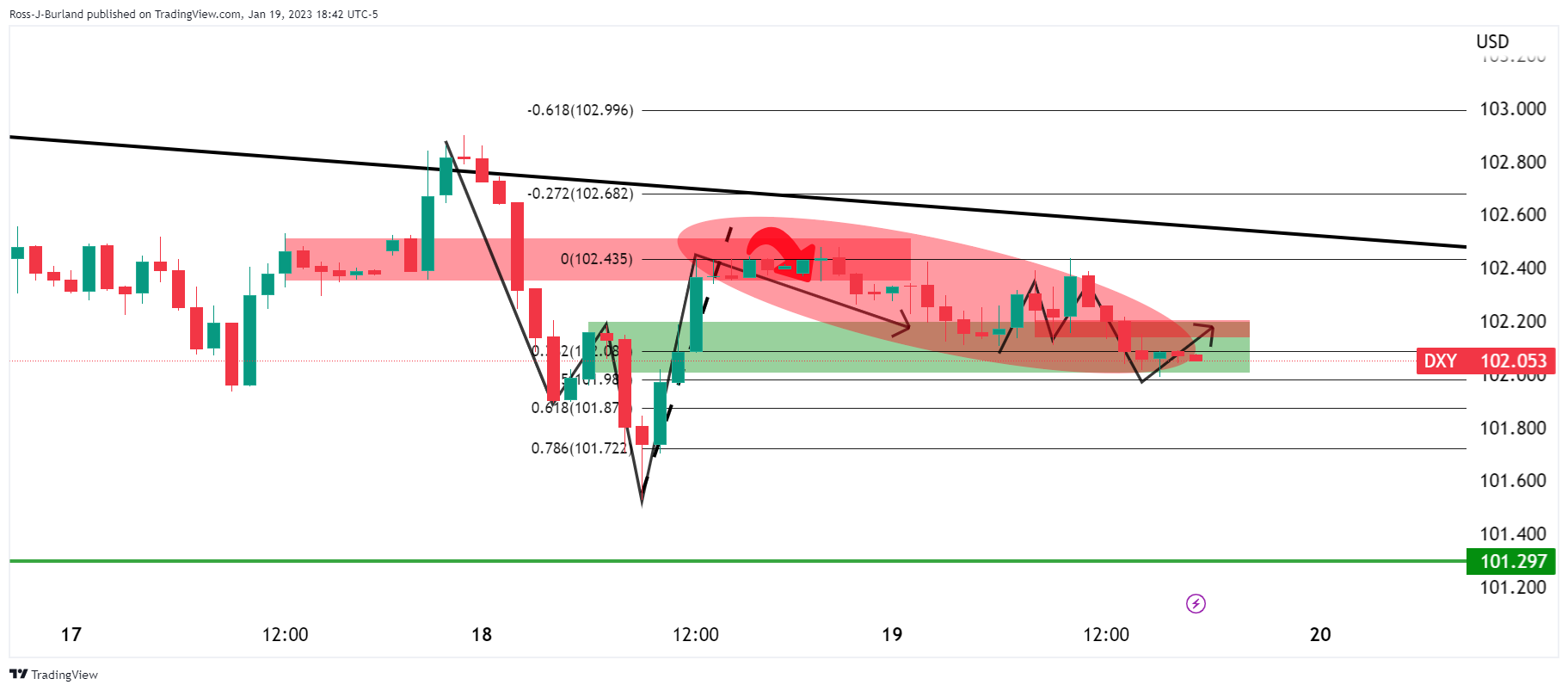
The price of the DXY index moved into the W-formation's neckline and has since stalled in the support. The new M-formation is the next compelling phenomenon on the charts that may serve to pull the price higher. If the neckline breaks, then 102.20 will be important. 

Author

Ross J Burland

Ross J Burland, born in England, UK, is a sportsman at heart. He played Rugby and Judo for his county, Kent and the South East of England Rugby team.


More from Ross J Burland
Share:

Editor's Picks

AUD/USD bounces back toward 0.6950 on fresh USD supply

AUD/USD bounces back toward 0.6950 in the Asian session on Friday. The US Dollar retreats from 17-month highs as traders take profits off the table ahead of the all-important US Nonfarm Payrolls report. Meanwhile, the Australian Dollar draws support from reviving expectations of a November interest rate hike amid elevated global yields and inflation risks.


USD/JPY struggles near 158.00 as USD retreats ahead of NFP

USD/JPY is struggling for fresh impetus near 158.00, moving away from the top end of its weekly range in the Asian session on Friday, after hotter-than-expected Tokyo CPI and amid a broad US Dollar retreat. Traders reposition themselves ahead of US Nonfarm Payrolls.

Gold fades the earlier optimism; back below $4,200

Gold could not sustain the post-NFP bull run past the $4,200 mark per troy ounce, receding toward the $4,180 region at the end of the week. The precious metal’s inconclusive price action comes amid fresh selling pressure hurting the US Dollar as investors assess the latest NFP data.

Crypto Today: Bitcoin, Ethereum and XRP gains reinforce bullish outlook

Cryptocurrency prices are broadly recovering on Friday, led by Bitcoin moving above $86,000. Ethereum has reaffirmed its bullish outlook, rising above $2,700 while the immediate area at $2,800 caps upside. Meanwhile, Ripple hovers near $1.54.

Week ahead – Fed minutes in the spotlight amid bond market rout

Energy crisis and soaring bond yields to stay in driver’s seat in quiet week. Fed minutes eyed after drop in October rate hike bets. ISM services PMI and Treasury auctions to be watched too. Canadian employment, Japanese wages and ECB minutes also on tap.

The Euro is near a one-year low: Inflation could trigger its rebound, not its fall

EUR/USD has fallen to its lowest level since May 2025. The pair hit 1.1312 on Wednesday and trades well below the January peak of 1.2082. The decline reflects a powerful combination of US Dollar strength, geopolitical uncertainty and renewed concerns about Europe's exposure to higher energy prices.















