|

Evergrande updates helping risk sentiment, RBA Debelle addresses risks

Risk sentiment has improved with China's Evergrande main unit Hengda Real Estate group announcing that it will make a coupon payment for onshore bond due September 23, according to Reuters. 

In the same theme, we have the Reserve Bank of Australia's deputy speaking who has stated that the central bank is addressing the issue. 

Guy Debblle said that he expects Chinese authorities could allow Evergrande to default. 

Additionally, ADB has trimmed developing Asia's 2021 growth forecast to 7.1% (prev 7.2%) and keeps 2022 growth forecast at 5.4%. It says that the Evergrande debt problem ‘warrants careful monitoring’.

Earlier in the day, ''the International Monetary Fund on Tuesday said it is closely following developments surrounding China Evergrande Group (3333.HK), but believes Beijing has the tools to prevent the situation from turning into a systemic crisis,'' Reuters reported. 

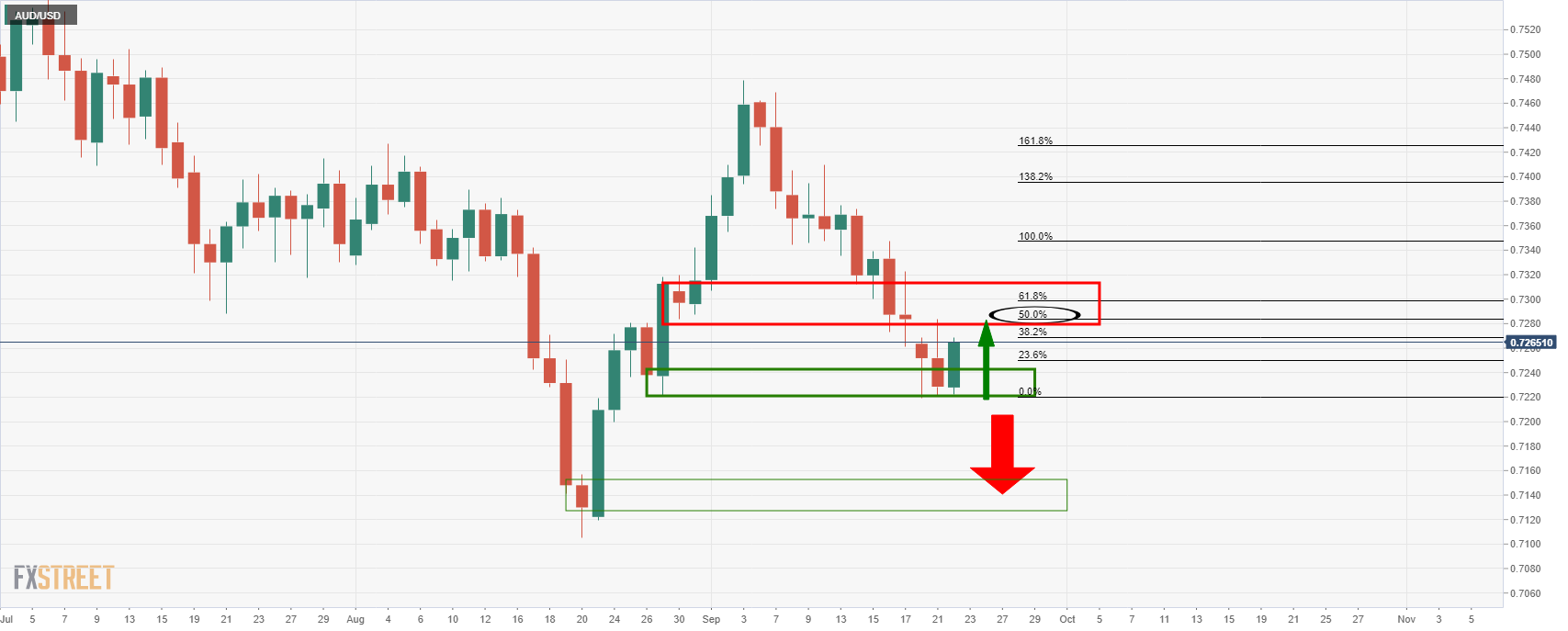
Meanwhile,  AUD/USD bulls are stepping and the price would be expected to continue higher in a bullish correction as illustrated in the following prior analysis, AUD/USD bulls eye a bull correction as Evergrande risks start to abate:
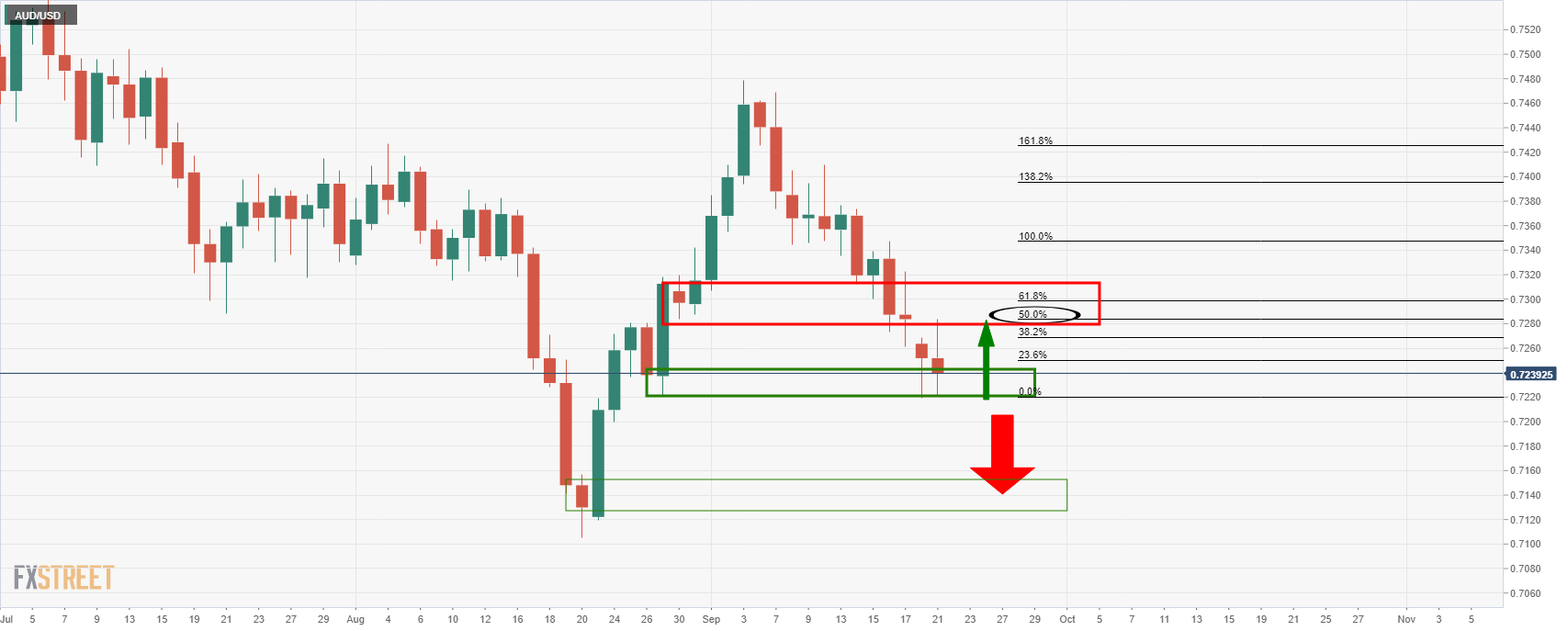
''The daily wick as illustrated in the prior daily chart was filled into the target and now the bulls could well see value here. A run back to a 50% mean reversion that meets old structure could be targetted near 0.7280. However, failures below 0.7220 open risk of a retest of the mid-Aug lows and 071 the figure.''

AUD/USD live market
Author

Ross J Burland

Ross J Burland, born in England, UK, is a sportsman at heart. He played Rugby and Judo for his county, Kent and the South East of England Rugby team.


More from Ross J Burland
Share:

Editor's Picks

AUD/USD hangs near two-month low as RBA bets counter easing Iran tensions

AUD/USD drifts lower during the Asian session on Tuesday, though it manages to hold above a nearly two-month low touched the previous day amid mixed cues. Diminishing odds of a near-term RBA rate hike act as a headwind for the Aussie, while the US Dollar draws some support from hawkish Fed expectations. However, easing tensions in the Middle East keeps US Dollar bulls on the defensive and should limit losses for the currency pair ahead of US inflation figures.

USD/JPY consolidates above 160.00 amid intervention fears, Israel-Iran ceasefire

USD/JPY holds steady above 160.00 during the Asian session on Tuesday as expectations that authorities will step in again to prop up the Japanese Yen hold back bulls from placing fresh bets. Moreover, a de-escalation of tensions between Israel and Iran undermines the safe-haven US Dollar, capping the currency pair. Traders also seem hesitant and opt to wait for the release of the latest US inflation figures on Wednesday and Thursday.

Gold remains depressed as hawkish Fed bets offset softer USD

Gold struggles to attract any meaningful buyers and remains close to its lowest level since March 23, touched the previous day. Expectations of more hawkish central banks, including the US Fed, continue to undermine demand for the non-yielding bullion. Meanwhile, a halt in fighting between Israel and Iran keeps the US Dollar bulls on the defensive, which should act as a tailwind for the precious metal as traders await the latest US inflation figures, due on Wednesday and Thursday.

Strategy resumes BTC accumulation with 1,550 Bitcoin purchase, adjusts STRC dividend schedule

Bitcoin treasury firm Strategy bought 1,550 BTC last week for roughly $101.3 million, according to a Form 8-K filing on Monday. The purchase, made at an average price of $65,332 per Bitcoin, was funded through proceeds from the company's at-the-market equity offering program.

$1.75 trillion: Is SpaceX the most popular IPO in history, or the most engineered?

On June 12, the largest initial public offering (IPO) in history is set to hit the tape, and almost nobody is asking whether the price is right, because almost everybody already wants in.

The US economy defies the rules: 100 days into the Oil shock and the recession signal is still missing

More than three months after the start of the Iran war and the resulting disruption to global energy markets, the US economy continues to display remarkable resilience. The conflict has triggered a sharp rise in Oil prices, reignited inflationary pressures and fueled widespread concerns about a potential economic slowdown.