|

EUR/USD Price Analysis: Breakout traders triggered long, bears looking to pounce

  • EUR/USD bearish W-formation is in focus. 
  • Bulls could find themselves trapped in trying to break out through recent highs.
  • US CPI red news event could be the catalyst for a sizeable downside move. 

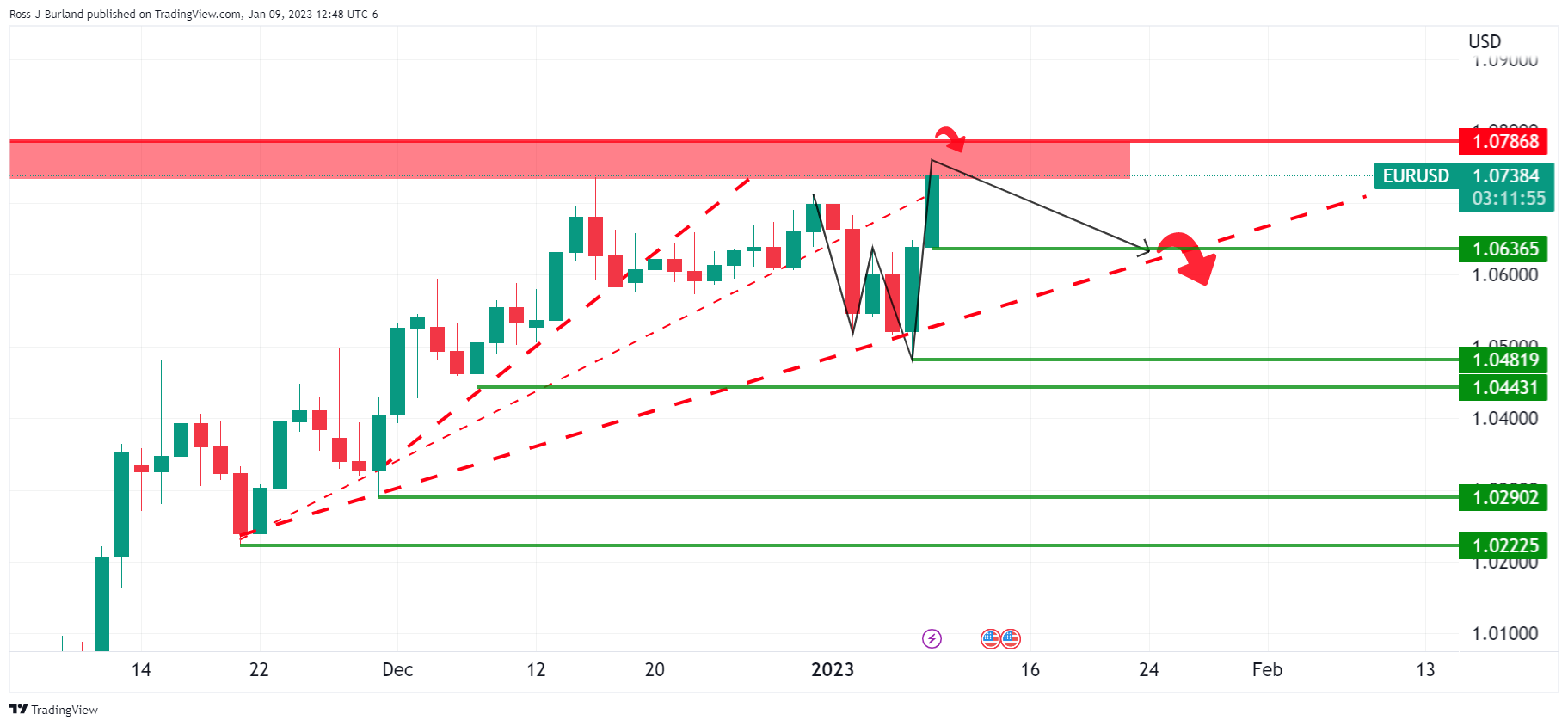
EUR/USD broke to the backside of the bearish trend at the end of last year. It has since rallied towards a key resistance area but has started to slow in its ascent which leaves the focus on signs of distribution for the days ahead. The following illustrates this on a daily chart and highlights a key reversion pattern that has emerged at the start of the year:

EUR/USD daily chart
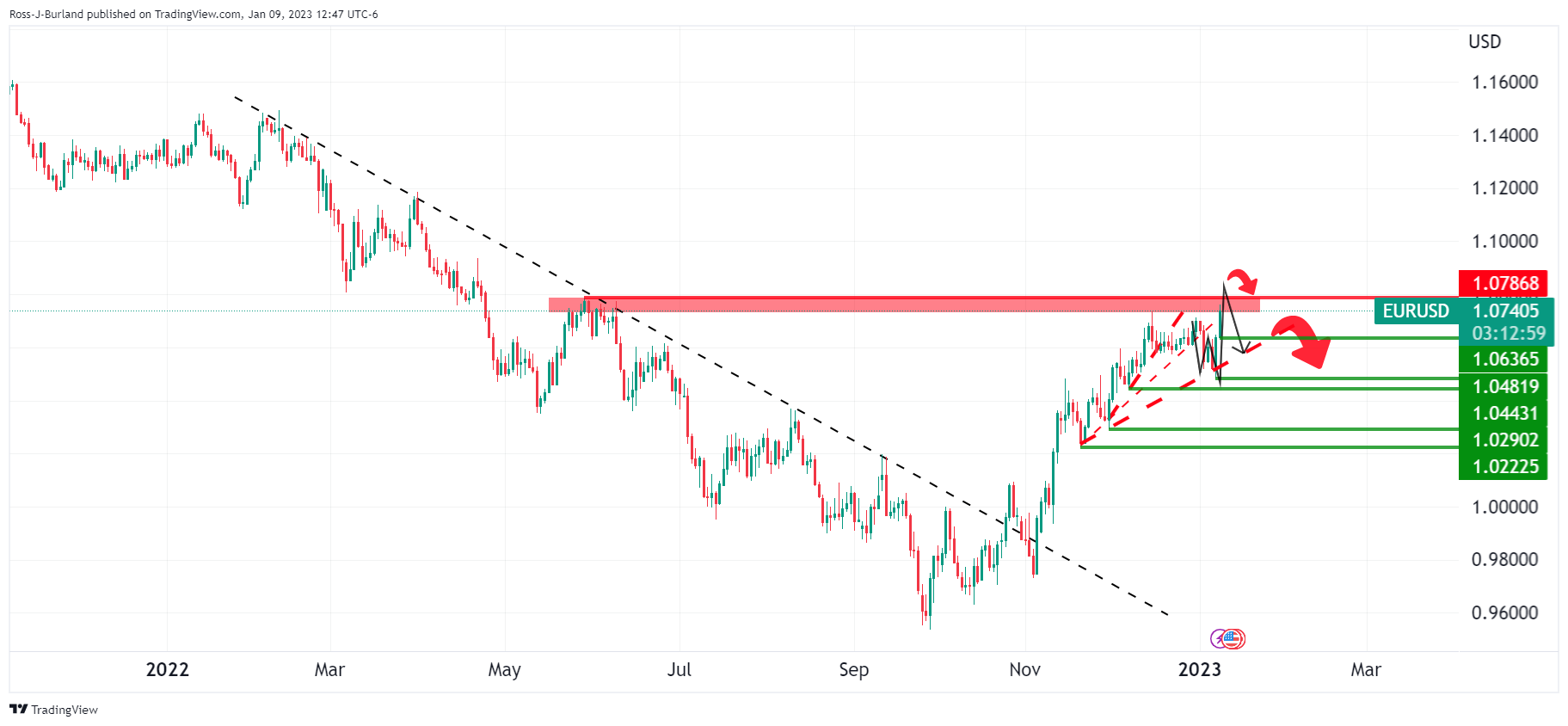
EUR/USD has reached up to test prior highs of 1.0736 and has moved into a critical resistance area as a potential last stop before the bears move back in.

Zoomed in...
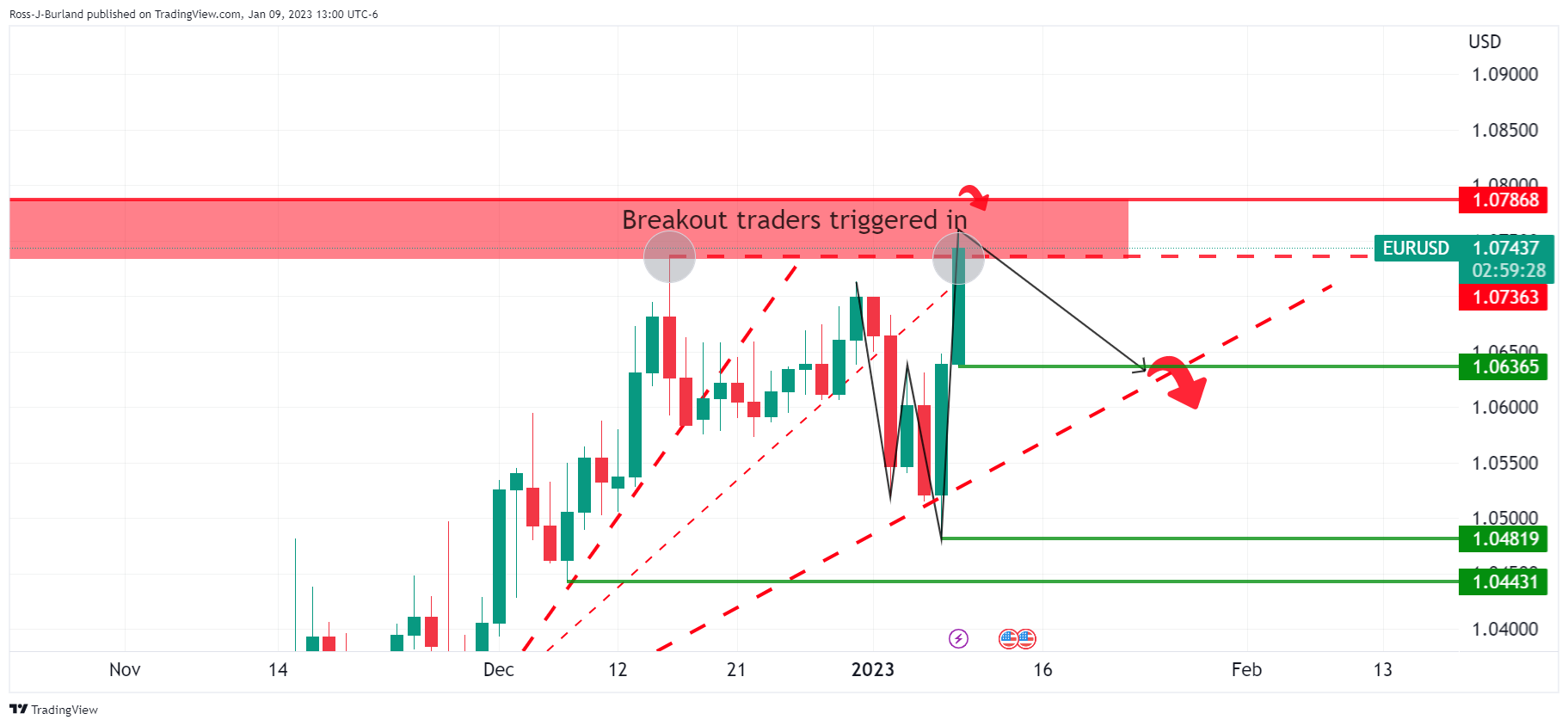
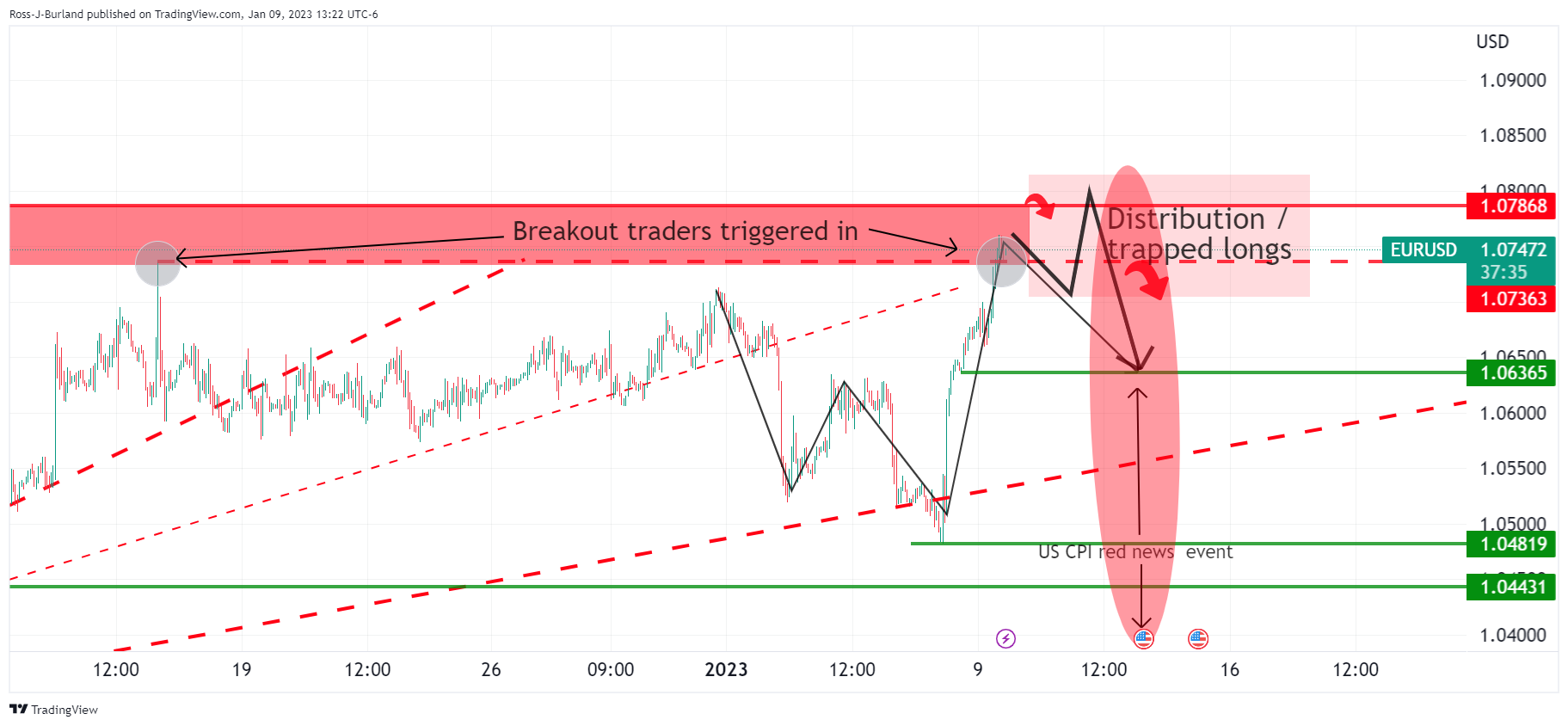
Should the bears emerge below 1.0790, then the focus will be on signs of distribution again that will ultimately trap the breakout long positions.

The W-formation is supportive of such a thesis given that it is a reversion pattern. EUR/USD would be expected to revert towards the neckline and day's lows of near 1.0637. This could put the trendline support back under pressure and open the risk of a move below 1.0500 and on to test 1.0480, 0.0440 and then 1.0300 that guards 1.0290 and 1.0225 lower down. 

EUR/USD H1 chart

In the meantime, the lower time frames can be monitored for signs of buying exhaustion love the coming sessions: 
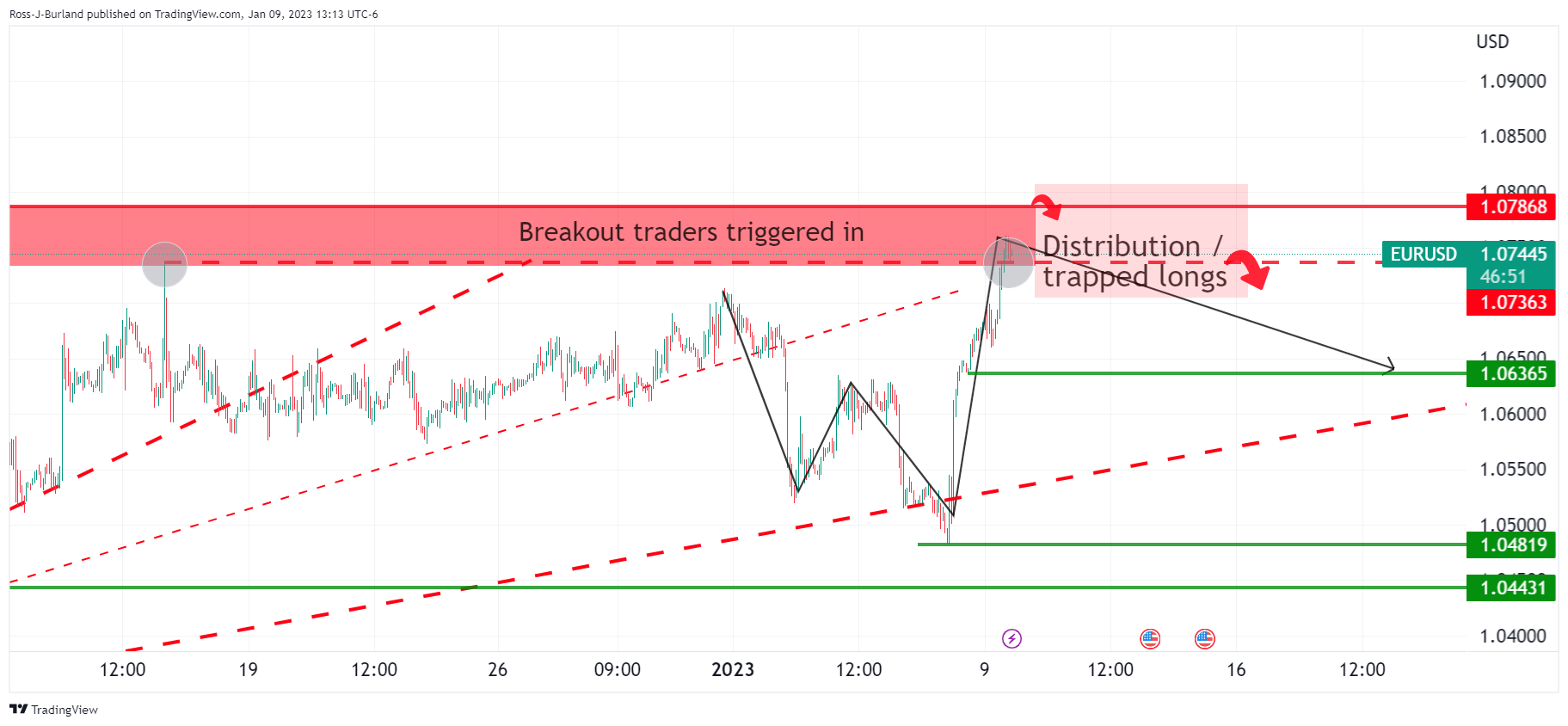
A long squeeze below 1.0750/36 could be in order for the sessions and days ahead with US Consumer Price Index eyed as a potential catalyst on Thursday for a three-day set-up and bearish opportunity.

With that being said, a test of 1.0800 is on the table beforehand:
Author

Ross J Burland

Ross J Burland, born in England, UK, is a sportsman at heart. He played Rugby and Judo for his county, Kent and the South East of England Rugby team.


More from Ross J Burland
Share:

Editor's Picks

AUD/USD sits near a one-month top, above 0.7000 amid fresh USD selling

AUD/USD holds above 0.7000 through the Asian session, trading near a one-month high touched earlier this Monday amid renewed US Dollar selling. US bond yields decline further amid a modest pullback in crude oil prices, capping the USD recovery from a three-week low. Moreover, bets for a November RBA rate hike support the Aussie, though upside seems capped ahead of the crucial two-day FOMC meeting, starting Tuesday.

USD/JPY struggles below 157.00 on weak USD; holds above one-month low ahead of Fed, BoJ meetings

USD/JPY attracts fresh sellers during the Asian session on Monday, stalling its recovery from the lowest level since September 18, touched Friday as a further decline in US bond yields weighs on the US Dollar. Meanwhile, the Japanese Yen benefits from a more hawkish BoJ, further weighing on the currency pair. The downside, however, seems limited as traders keenly await Fed and BoJ policy meetings later this week.

Gold holds on just above $4,000

Gold clings to daily gains, leaving behind two daily drops in a row and reclaiming the key $4,000 mark per troy ounce and above on Monday. The better tone in the US Dollar and mixed US Treasury yields accompany the precious metal’s uptick, while declining crude oil prices appear to sustain the bounce for now.

Bitcoin stalls around $80,000 as geopolitical tensions dampen risk appetite

Bitcoin hovers around $80,500 on Monday after three straight weeks of correction. Rising geopolitical tensions in the Middle East continue to push oil prices higher, stoking inflation concerns and dampening risk appetite.

Everyone's bracing for a hawkish central bank week. Here's why the surprise could be dovish

Five of the world's major central banks are preparing to announce monetary policy decisions this week, with investors increasingly anticipating higher interest rates as the global energy shock continues to push inflation above target.

What November 3 means for the Fed's rate path and the US Dollar

The USD faces a decisive period ahead of the November 3 midterm elections. While markets anticipate another interest rate increase from the Fed in December, the battle for control of Congress could reshape fiscal policy expectations and, indirectly, the path of US monetary policy in 2027.