|

EUR/USD Price Analysis: Bears seeking a break below 1.15 the figure

  • EUR/USD is under pressure on a fractal basis and eyes are on a break below 1.15 the figure. 
  • Day traders will be looking for an optimal entry to scalp the larger move from lower time frames. 

EUR/USD is a compelling bearish scenario and the following technical analysis illustrate the various time frames, from the weekly to the H1 charts.

EUR/USD weekly chart
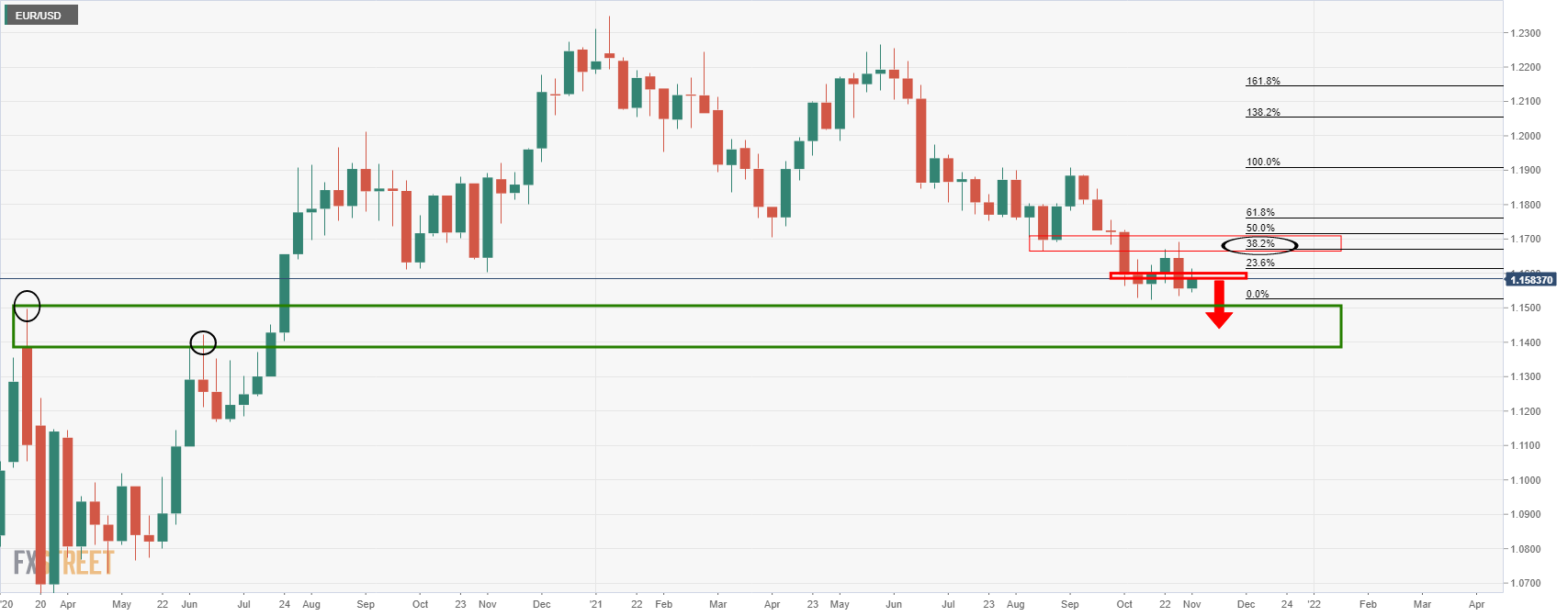
The weekly chart is bearish as the price has already corrected some of the imbalance of price following the weekly bearish impulse. A test into the weekly fractal highs of the spring and summer below 1.15 the figure is in focus. 

EUR/USD daily bearish engulfing candle
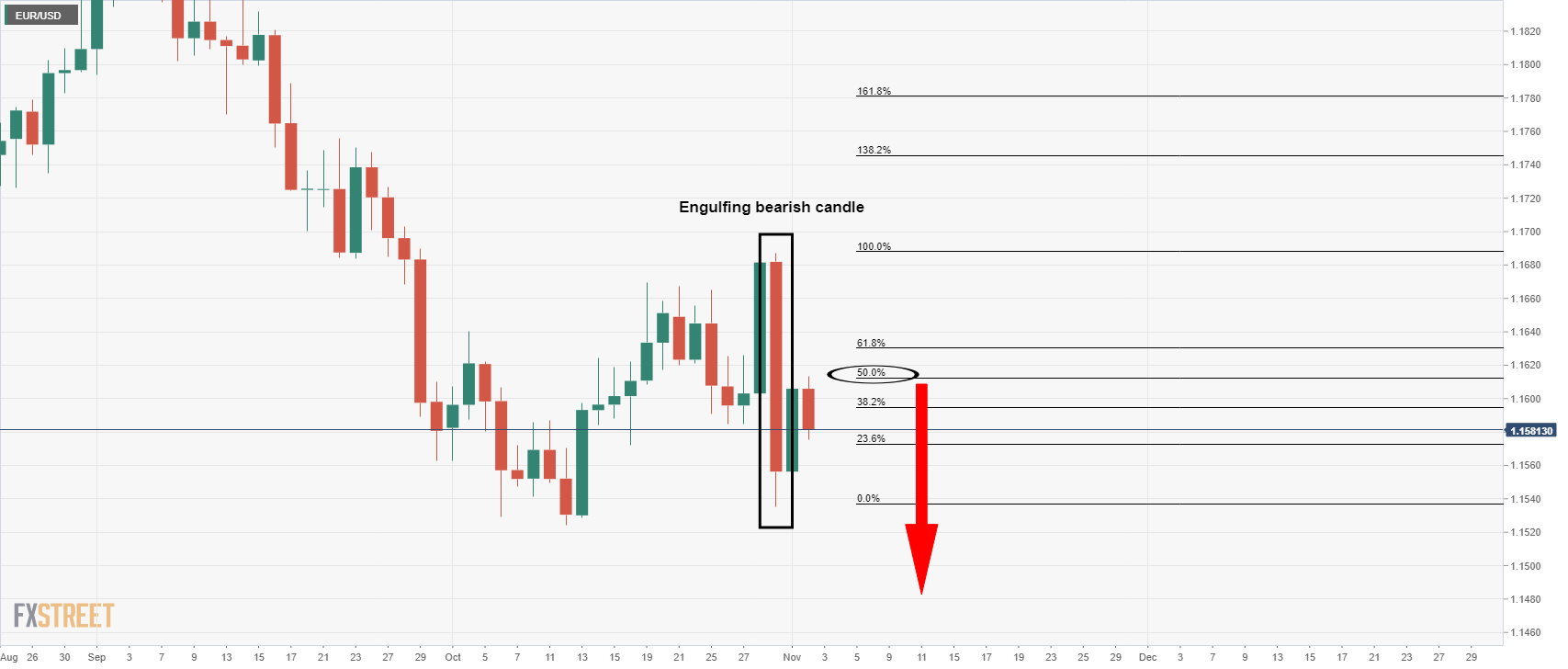
We have seen a strong momentum candle in the last few days which is yet to lead to a lower low. The price has instead corrected 50% of the imbalance in a phase of mitigation and a retest of liquidity. The price has since been rejected which would now be expected to lead to further downside. 

EUR/USD H1 chart
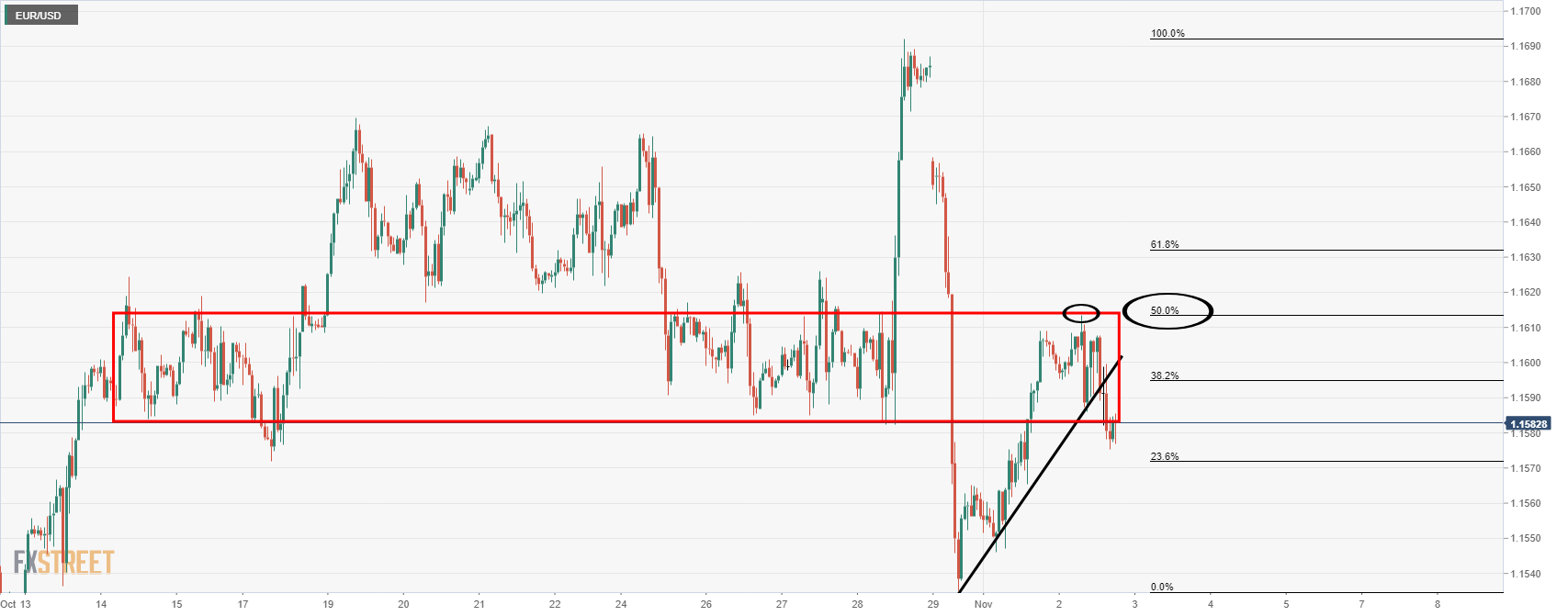
meanwhile, from an intraday trading perspective, the price has corrected a significant portion of the drop and the focus is now back on the downside:
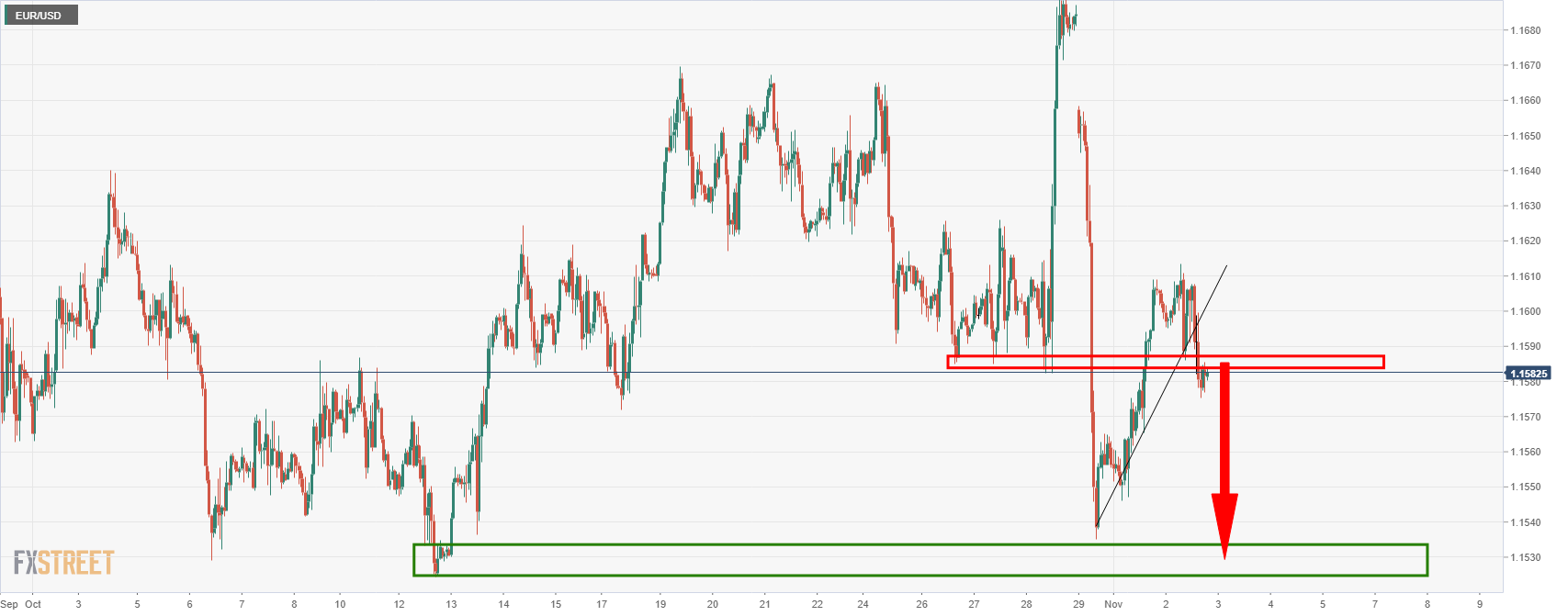
There is now room to go and test the Oct lows in the 1.1520s. 
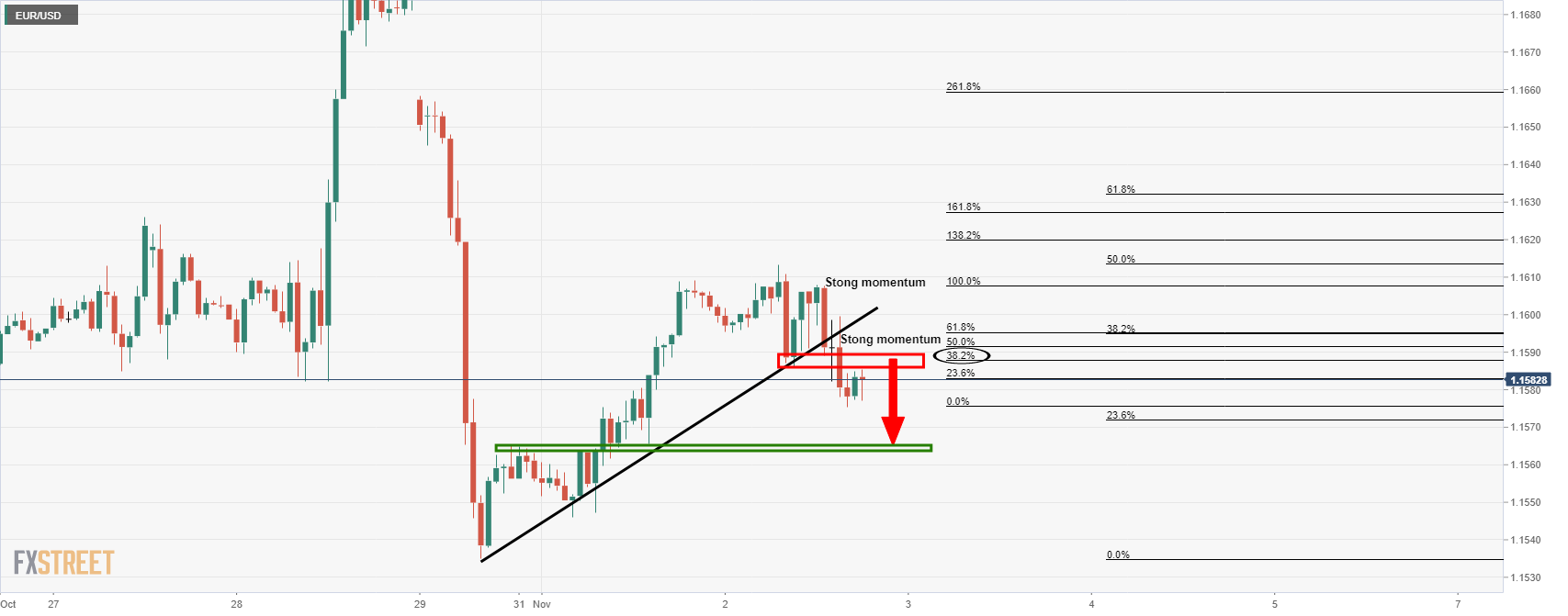
Meanwhile, however, there could be some more correction to go into the 38.2% Fibonacci of the breakout below the trendline that would be expected to act as a counter-trendline on a restest beyond the 38.2%. This would offer a reasonable area for placement of a stop loss to protect short entries in order to target the 1.1560s and beyond. 

Author

Ross J Burland

Ross J Burland, born in England, UK, is a sportsman at heart. He played Rugby and Judo for his county, Kent and the South East of England Rugby team.


More from Ross J Burland
Share:

Editor's Picks

AUD/USD extends the range play above 0.7200 as traders await US inflation data

AUD/USD is seen extending its consolidative price move above 0.7200 during the Asian session on Thursday amid mixed cues. Rising RBA rate-hike bets keep the Aussie close to its highest level since May 14. However, hawkish Fed expectations and escalating US-Iran tensions offer some support to the US Dollar, capping the currency pair as traders await US inflation figures.


USD/JPY consolidates around 153.50 as bears turn cautious ahead of US inflation

USD/JPY stabilizes above 153.50 during the Asian session on Thursday, but remains near a seven-month low set earlier this week as hawkish BoJ repricing continues to underpin the Japanese Yen. Meanwhile, rising September Fed rate-hike bets and escalating US-Iran tensions help ease US Dollar selling pressure, offering some support to the currency pair ahead of US inflation figures.

Gold sticks to gains, eyes $4,450 as USD remains depressed ahead of US inflation data

Gold turns higher following an intraday dip to sub-$4,400 levels, and moves further away from a one-week low touched the previous day. The commodity, however, remains below the $4,450 pivotal point as bulls seem hesitant ahead of US inflation figures. The US Producer Price Index report will be published later today, while the US Consumer Price Index is due on Friday.

Raydium's rally signals trend reversal amid network growth, buyback

Raydium maintains a firm bullish tone, posting nearly 9% gains, and extending its 41% rally from Sunday. Solana-based Decentralized Exchange is witnessing a surge in network activity and growth amid new token launches. The technical outlook for Raydium signals a potential upside toward $1.50 as momentum holds firm despite overbought conditions.

European Central Bank to resume interest rate hikes in September as inflation, energy risks rise

The European Central Bank is expected to raise the interest rate on the Main Refinancing Operations and the Deposit Facility by 25 basis points to 2.65% and 2.50%, respectively. The ECB will announce the decision on Thursday at 12:15 GMT.

Venezuela’s 65-billion-barrel Oil deal could reshape America’s inflation fight
The United States (US) has secured unprecedented access to part of Venezuela’s vast Oil reserves. The timing is particularly significant as the war with Iran is disrupting Middle Eastern supplies, keeping energy prices elevated and reviving concerns about inflation.