Digital World Acquisition Corp Stock News and Forecast: DWAC bottom nearby
- DWAC stock is in an ascending price channel.
- Digital World Acquisition Crop is up 65% in 2022.
- The SPAC share count is expected to quadruple 30 days after the merger is completed.

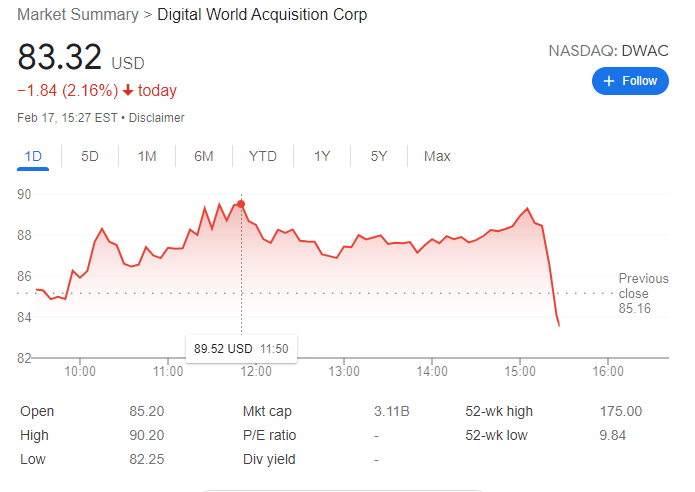
Update: DWAC is down 2.16% heading into the US close, changing hands at around $83.32 per share. US indexes are in the red, accelerating ahead of the close with the DJIA down over 500 points. Fears dominated financial markets amid escalating tensions between Russia and Ukraine. Diplomatic negotiations with the US had gone downhill after Russia ejected US officials from their embassy and accused Washington of ignoring its security demands, while US President Joe Biden accused Moscow of creating drama to justify an invasion.
Digital World Acquisition Corp (DWAC), the SPAC that is merging with former President Donald Trump's social media startup, jumped 4.9% to $85.16 on Wednesday. DWAC is slated to take Trump Media & Technology Group (TMTG) public via merger by the end of March, and investors seem mostly interested in the positive vibes associated with the completion of the deal. TMTG is the owner of TRUTH Social, the social media platform that is currently in beta version. Former US Rep. Devin Nunes, a Trump acolyte, is the new CEO of TMTG. DWAC shares are up another 1% to $86 in Thursday's premarket.
Digital World Acquisition Corp Stock News: Shares could quadruple
The former president himself made his first post on the new beta version of Truth Social on Tuesday. He already has 175 followers, but there is no timeline for when it gets opened to the public.

At its current price, DWAC is priced at $3.2 billion. The closing of the merger, however, means that a 30-day clock begins. When the 30 days post merger is up, then separate shares allotted to insiders, underwriters and private investors who invested in the SPAC's separate PIPE deal (Private Investment in Public Equity) before the merger closed can begin trading their shares. This means that the current 37.2 million or so shares available to trade will grow overnight to more than 170 million.
On top of that there are some 40 million "earnout" shares that get minted to company insiders and owners like the Trump family if the share price remains above $15, $20 and $30 a share in the month after the merger. The math is complicated, and the share count could change for a host of reasons, but one prominent forecast making the rounds estimates there will be over 193 million shares post-merger. This does not even include warrants that could add an additional 15 million shares in September.
All told, if DWAC can retain its share price above $80, this would be a $15 billion stock pre-revenue. However, another conservative social media company that went public last year, Grab Holdings, has lost about 60% of its share price after its own SPAC merger closed. At least one short-seller thinks DWAC is primed to drop post-merger and has already issued a $36 price target. Of course, no one should ever count Donald Trump out.
Digital World Acquisition Corp Stock Forecast: $110 is the target
DWAC's mid-term prospects may be worrisome, but its short-term chart looks appetizing. The SPAC is trading within an ascending price channel and is currently near the lower trend line. Wednesday's surge forced DWAC above the 9-day moving average, always a good sign, and the 21-day moving average has provided steady support.
The chart looks like DWAC is set for another leg up. Since December DWAC has witnessed four higher highs and four higher lows. With the latter just finishing, the pattern could continue with a jump to $110. This is an estimation of where the price would top out at the upper trend line if the pattern continues and takes the normal two weeks. Long-term support is at $38.
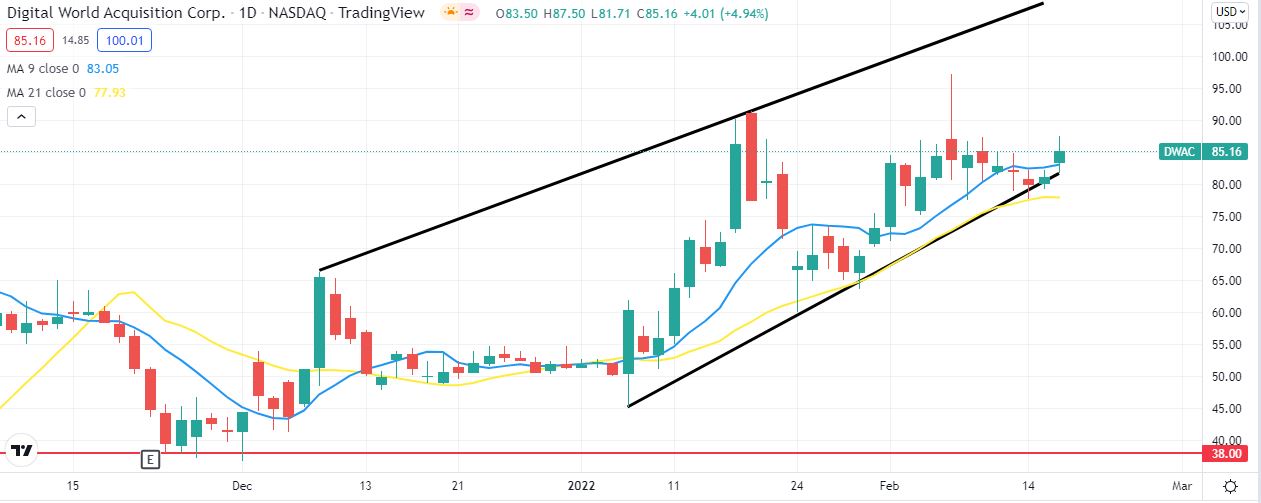
DWAC 1-day chart
Author

Clay Webster
FXStreet
Clay Webster grew up in the US outside Buffalo, New York and Lancaster, Pennsylvania. He began investing after college following the 2008 financial crisis.