|

Chinese CPI rises at fastest pace since August 2020

Both the Consumer Price Index and the Producer Price Indexis that are released by the National Bureau of Statistics of China have been released as follows:

  • November CPI 2.3% YoY (Reuters poll +2.5% ).
  • November CPI+0.4% MoM (Reuters poll +0.3%).
  • November PPI +12.9 pct from a year ago (Reuters poll +12.4 pct).
  • November PPI 0.0 pct from the previous month.

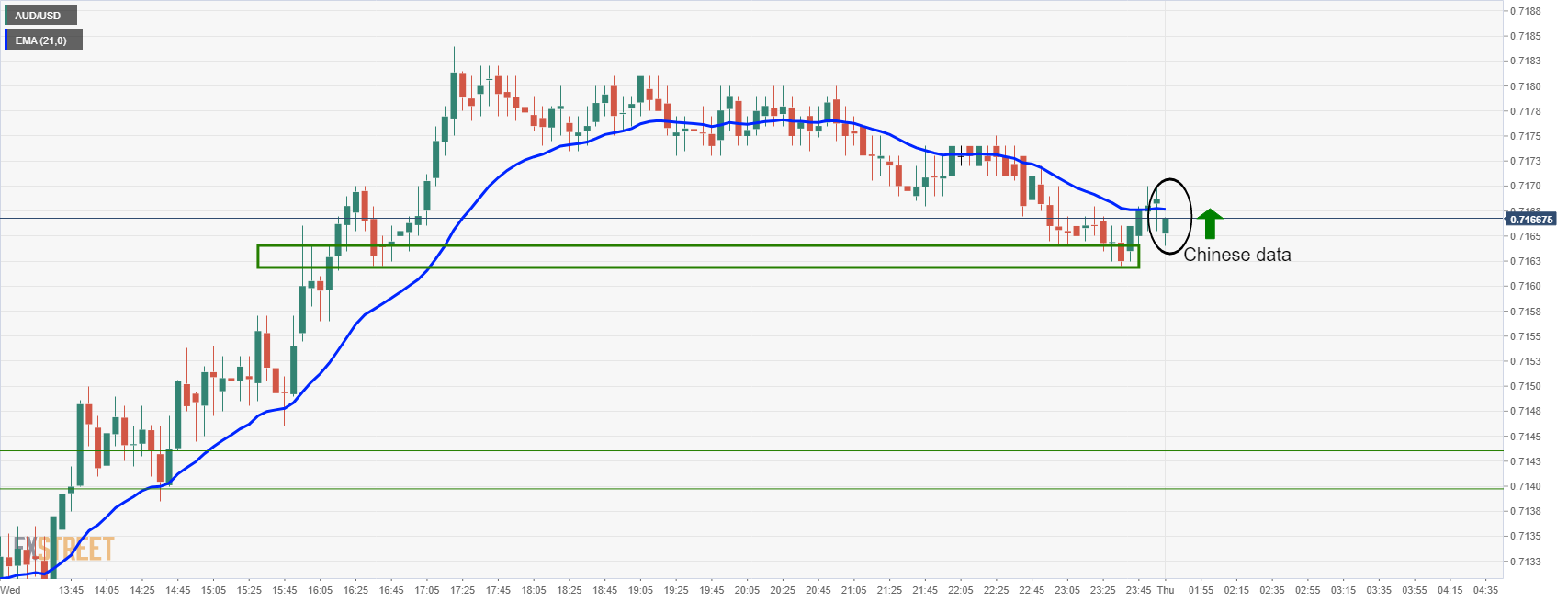
The Aussie dollar, which can at times react to Chinese data, (China is  Australia's largest export customer), has perked up a little on the data but has only moved a few pips higher. 
For a more in-depth technical analysis on AUD/USD, see here: AUD/USD Price Analysis: Bullish momentum in play, bulls to buy the dip

About the Consumer Price Index

The Consumer Price Index is released by the National Bureau of Statistics of China and was the most key of the two data releases today. It is a measure of retail price variations within a representative basket of goods and services. The result is a comprehensive summary of the results extracted from the urban consumer price index and rural consumer price index.

The purchasing power of the CNY is dragged down by inflation. The CPI is a key indicator to measure inflation and changes in purchasing trends. A substantial consumer price index increase would indicate that inflation has become a destabilizing factor in the economy, potentially prompting The People’s Bank of China to tighten monetary policy and fiscal policy risk. Generally speaking, a high reading is seen as positive (or bullish) for the CNY, while a low reading is seen as negative (or Bearish) for the CNY.

Author

Ross J Burland

Ross J Burland, born in England, UK, is a sportsman at heart. He played Rugby and Judo for his county, Kent and the South East of England Rugby team.


More from Ross J Burland
Share:

Editor's Picks

GBP/USD flirts with two-week tops around 1.3270

GBP/USD makes a U-turn and adds to Monday’s uptick, advancing to the area of two-week highs near 1.3270 on Tuesday. Meanwhile, Cable’s better tone follows a loss of upside traction in the Greenback, always amid the sharp rally in USD/JPY.

EUR/USD off tops, back to 1.1400

EUR/USD now loses some momentum and recedes from the area of recent daily tops, revisiting the 1.1400 neighbourhood in the latter part of Tuesday session. The pair’s daily decline comes in response to the resurgence of some buying interest in the US Dollar.

Gold clings to daily gains beyond $4,000

Following multi-month lows near $3,950, Gold now manages to regain some composure and reclaim the area beyond the key $4,000 yardstick per troy ounce on Wednesday. Still, any meaningful recovery appears limited as a broadly firmer US Dollar and rising US Treasury yields weigh on the yellow metal.

Ripple defends critical support, Stellar extends recovery

Ripple (XRP) trades around the key $1.00 psychological level, consolidating as the token awaits its next directional catalyst. Stellar (XLM) extends its recovery above $0.178 after posting modest gains at the start of this week.

Why a hawkish Bank of Japan could trigger the next Bitcoin sell-off

The Japanese Yen hits a 40-year low of 162.00 against the US Dollar, raising concerns about intervention or additional rate hikes by the Bank of Japan. BoJ may sell US Treasuries to buy back Yen, potentially pushing US bond yields higher and making Bitcoin less attractive to investors.

Kevin Warsh isn't expected to say much in Sintra: That's exactly why markets will listen

Financial markets could find an important catalyst in the enchanting, fairytale-like landscape of Sintra this week. The ECB Forum will, as it does every year, gather the crème de la crème of central banks. The new boss at the Fed, who has clearly said that the Fed should stop explaining everything, will need to talk – and traders should listen.