|

China data dump mixed and fails to move the needle ahead of the Fed

A series of Chinese data has been released for the month of November. This includes Industrial Production (power outages and supply issues remain as headwinds) and Retail Sales as the most-watched features of the data dump. 

The results come as follows:

  • China November Retail Sales +3.9 pct YoY (Reuters poll +4.6 pct).
  • China Nov. Industrial Output up 3.8% YoY (Reuters poll +3.6 %).

FX implications

The data was mixed and has had no impact on the forex market with the Aussie stationary near 0.7110 around the release. 

Meanwhile, the softer-than-expected fixings continue as the central bank attempts to slow CNY rise, (USD/CNY fix: 6.3716 vs the prev fix of 6.3675).

The Federal Reserve meeting will be the next key catalyst for the yuan and Aussie:
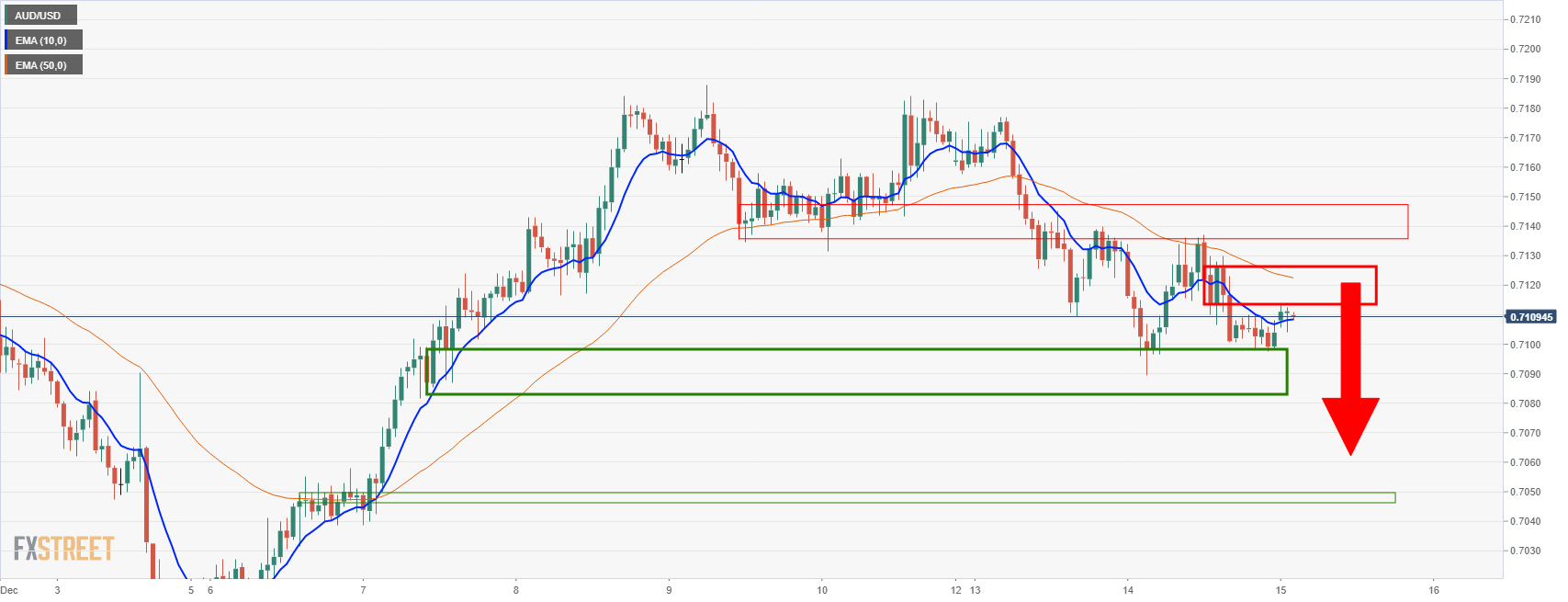
The chart above is an hourly analysis of AUD/USD which illustrates a bias to the downside while below 0.7150. 

About the Chinese data

Industrial output is released by the National Bureau of Statistics of China. It shows the volume of production of Chinese Industries such as factories and manufacturing facilities. A surge in output is regarded as inflationary which would prompt the People’s Bank of China would tighten monetary policy and fiscal policy risk. Generally speaking, if high industrial production growth comes out, this may generate a positive sentiment (or bullish) for the CNY, whereas a low reading is seen as negative (or Bearish) for the CNY.

The Retail Sales report released by the National Bureau of Statistics of China measures the total receipts of the retailed consumer goods. It reflects the total consumer goods that the various industries supply to the households and social groups through various channels. It is an important indicator to study the changes in the Chinese retail market and reflecting the degree of economic prosperity. In general, A high reading is seen as positive (or bullish) CNY, while a low reading is seen as negative (or bearish) for the CNY.

Author

Ross J Burland

Ross J Burland, born in England, UK, is a sportsman at heart. He played Rugby and Judo for his county, Kent and the South East of England Rugby team.


More from Ross J Burland
Share:

Editor's Picks

USD/JPY stays below 160.50 as markets assess BoJ decision

USD/JPY fluctuates in a relatively narrow range above 160.00 on Tuesday as markets assess the Bank of Japan's (BoJ) decision to raise the policy rate by 25 at the June meeting. Meanwhile, investors keep a close eye on news coming out of the Middle East, while preparing for the critical Fed meeting.

AUD/USD struggles for direction, still below 0.7100

AUD/USD looks to extend Monday’s recovery, although a challenge to the 0.7100 barrier remains elusive ahead of the opening bell in Asia. The Aussie Dollar was unable to take advantage of the RBA's relatively cautious message, which included keeping its OCR unchanged at 4.35% and leaving the possibility of further tightening in the future.

Gold: $4,000 or $4,500? The Fed may decide Gold’s next big move

Gold now surrenders part of its initial advance and recedes to the vicinity of the $4,350 mark per troy ounce on Tuesday. The early enthusiasm sparked by the US-Iran peace deal has faded somewhat, prompting investors to adopt a more prudent stance as they await further details of the agreement and key guidance from the Fed.

XRP pulls back as subdued ETF inflows, layered resistance cap upside
Ripple (XRP) remains elevated above $1.23 at the time of writing on Tuesday, struggling amid a capped upside. Despite an improved overall market sentiment driven by news of a peace agreement between the United States and Iran to end the war in the Middle East, capital inflows remain notably subdued.
1% rate, 160 Yen: Why Japan’s historic hike changed little
The Bank of Japan (BoJ) pushed its short-term policy rate to 1% on Tuesday, the highest setting since 1995 and a 31-year milestone in a normalization cycle barely two years old. It is the kind of number that should mark a turning point for the Yen, and it did almost nothing.
Why a hawkish RBA is no longer enough to lift the Australian Dollar

The Reserve Bank of Australia delivered more than what markets expected: a hawkish hold that should have supported the Aussie. But markets widely ignored it, focusing instead on slowing economic growth and proving that central bank messaging alone isn’t always enough to drive currencies.