|

Breaking: AUD/USD drops over 30 pips on Aussie jobs data disappointment

The Australian Employment Change and jobs data released by the Australian Bureau of Statistics has come out as follows and is a disappointment, weighing on the Aussie: 

  • Australia Employment Change Jan: -11.5K (est 20.0K; prev -14.6K).
  • Unemployment Rate Jan: 3.7% (est 3.5%; prev 3.5%).
  • Full Time Empl Change Jan: -43.3K (prev 17.6K).
  • Part Time Empl Change Jan: 31.8K (prev -32.2K).
  • Participation Rate Jan: 66.5% (est 66.6%; prev 66.6%).

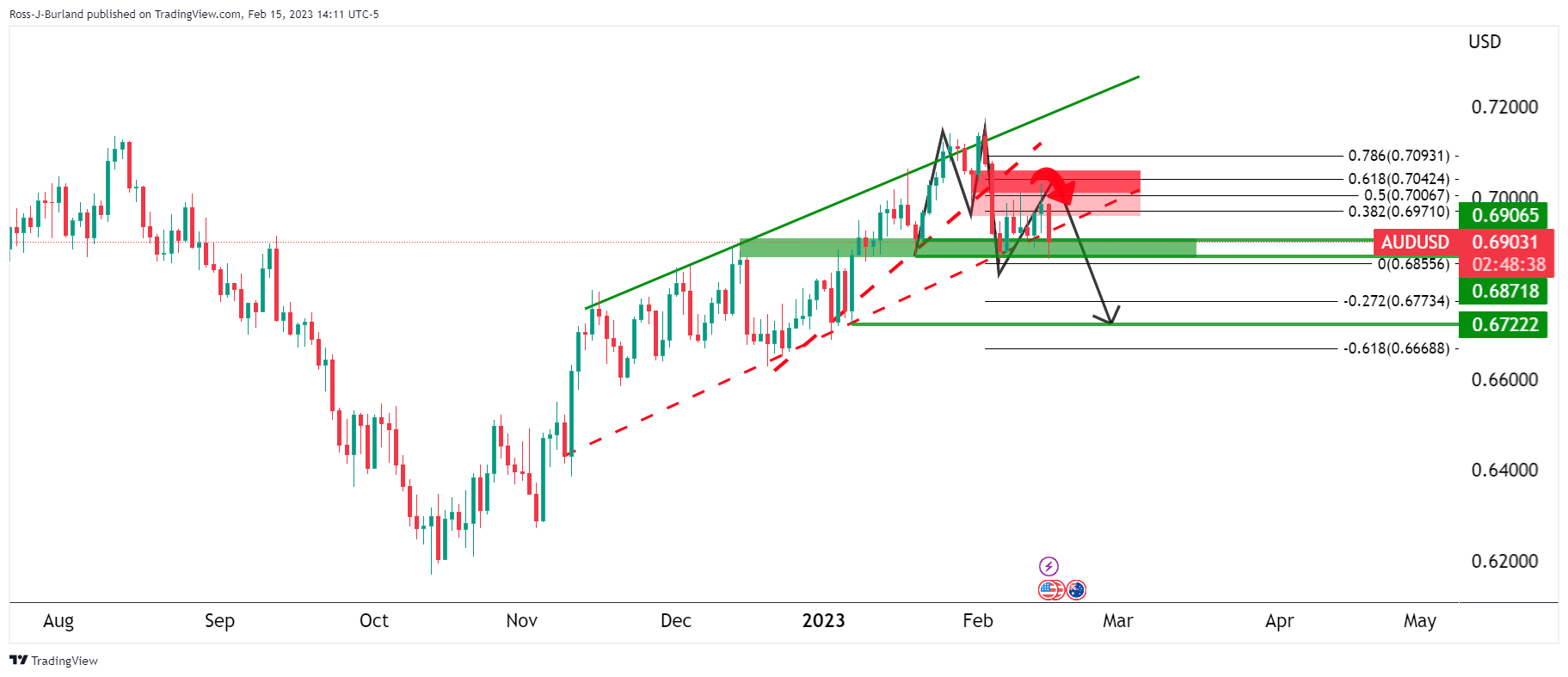
AUD/USD update
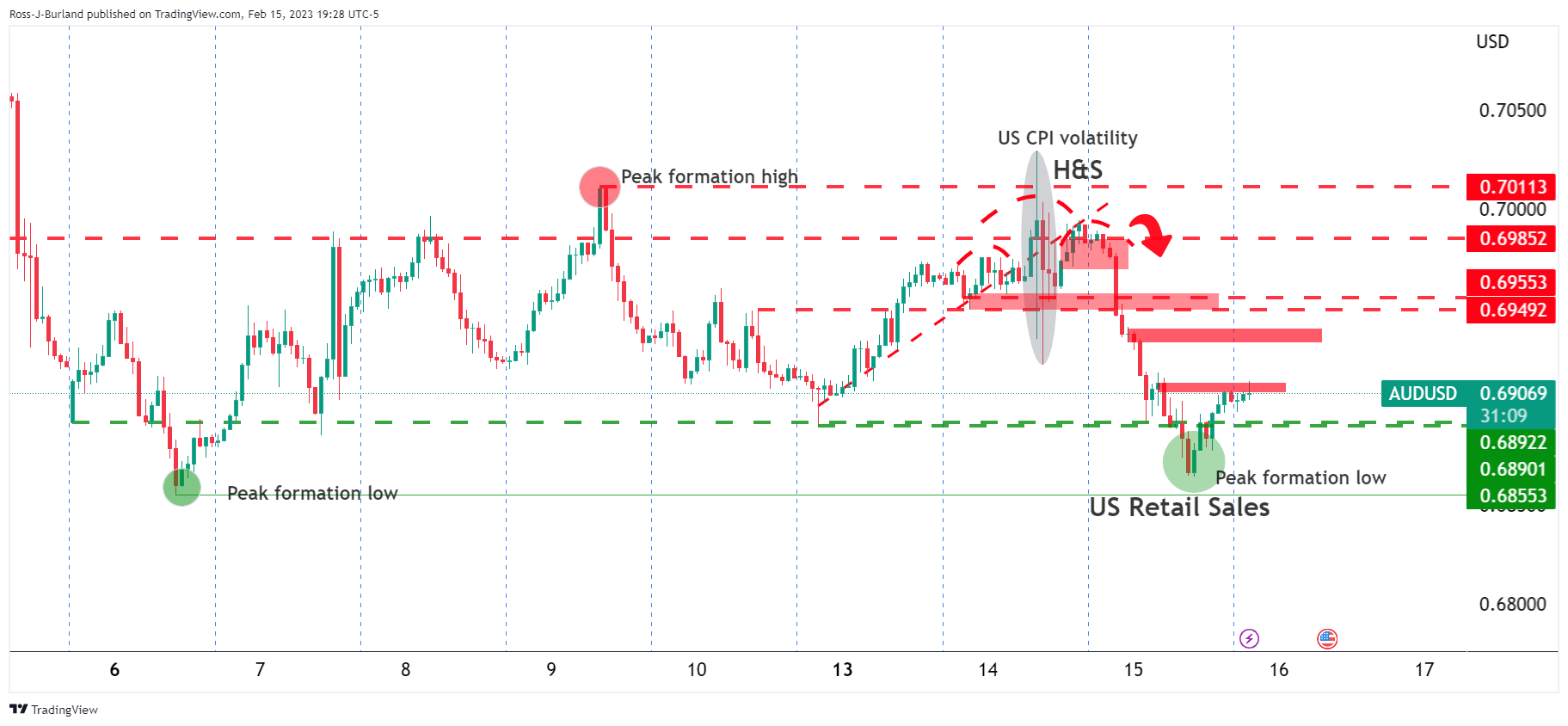
(Prior to the data above)

(Knee jerk reaction below)

The Aussie is under pressure on the Unemployment Rate disappointment and big miss in the Employment Change:
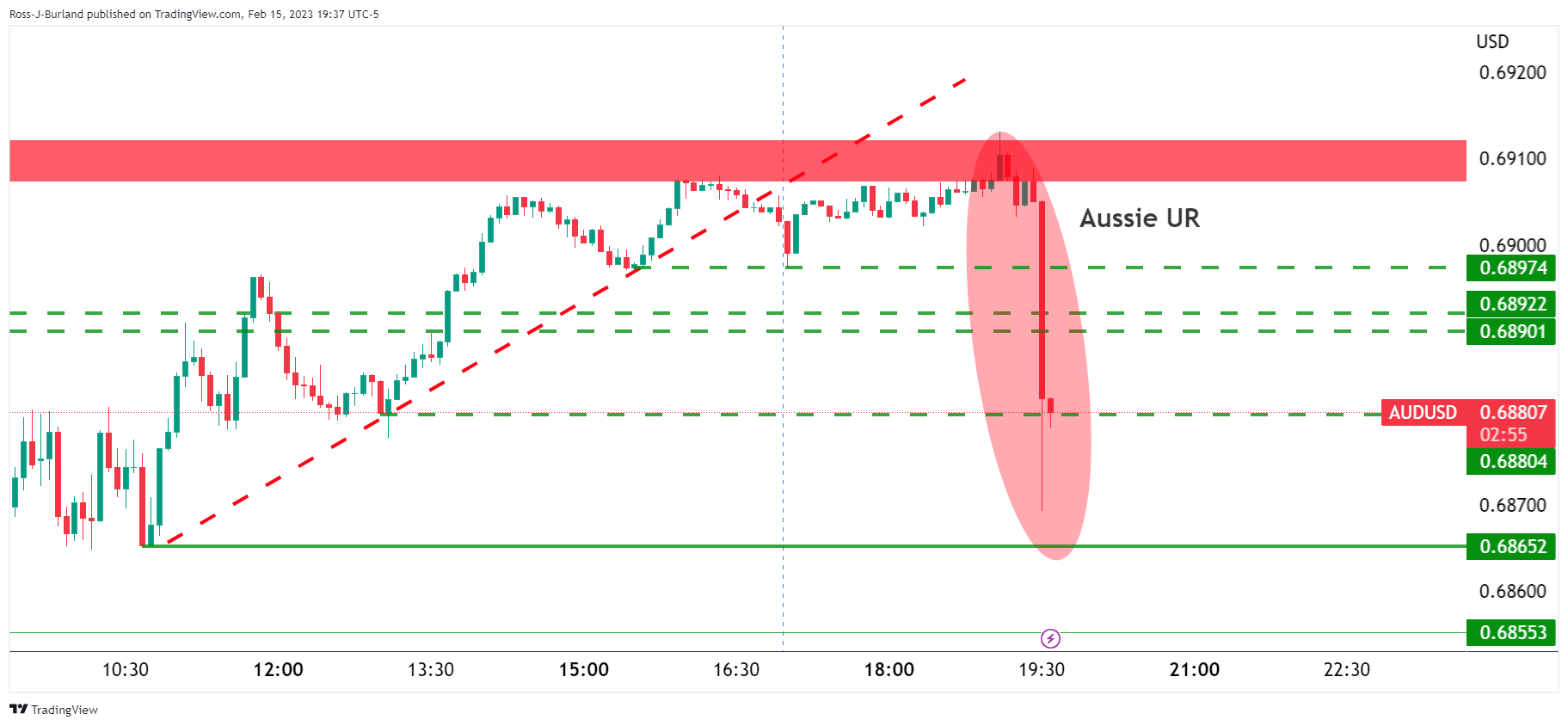
AUD/USD has dropped heavily on the back of the data and a break of the recent 0.6865 lows is on the cards for the day ahead. 

In prior analysis, AUD/USD Price Analysis: Bulls are forced to the edge of the abyss, a bearish thesis was drawn as follows:

''Should the bears commit below 0.6920:
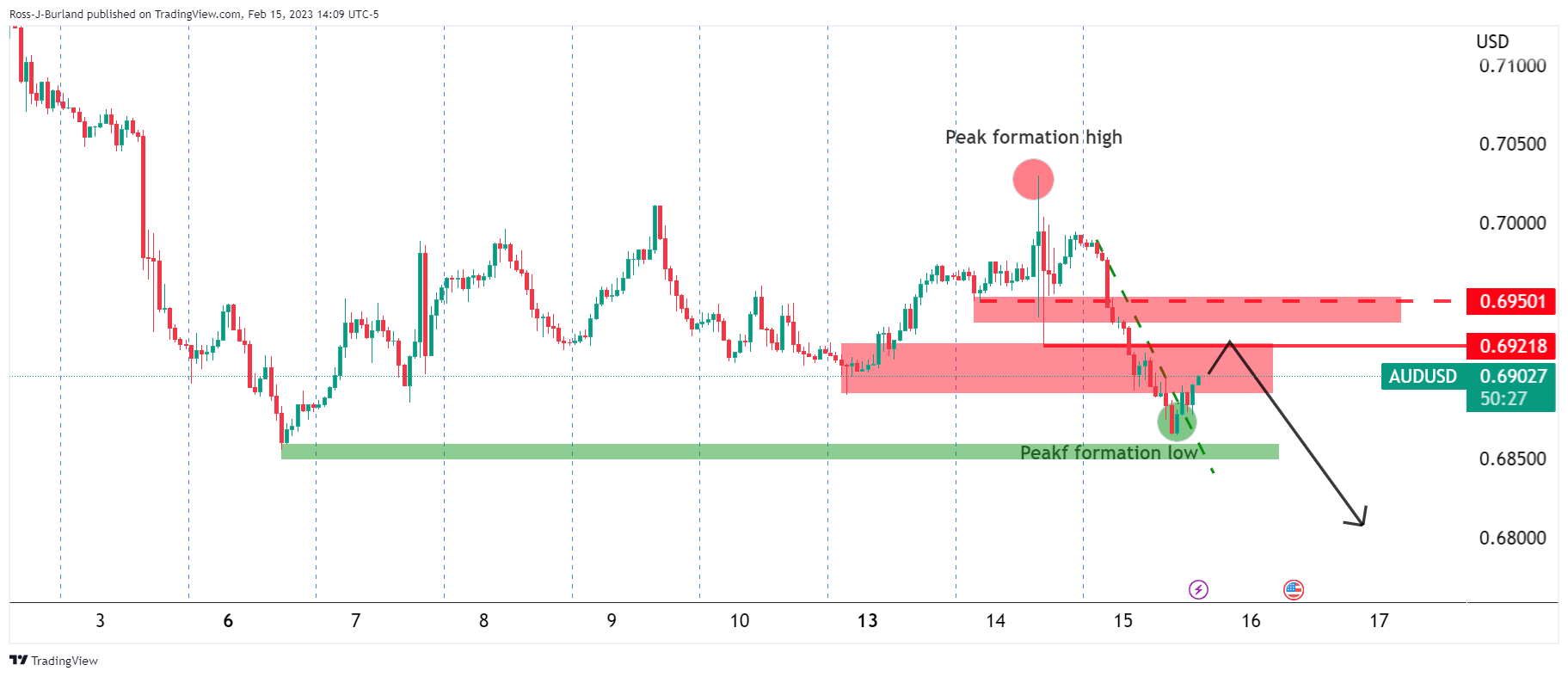
There will be probabilities of a much deeper breakout with 0.6720 eyed at the extreme as per the daily chart.''

About Aussie Employment report

The Employment Change released by the Australian Bureau of Statistics is a measure of the change in the number of employed people in Australia. Generally speaking, a rise in this indicator has positive implications for consumer spending which stimulates economic growth. Therefore, a high reading is seen as positive (or bullish) for the AUD, while a low reading is seen as negative (or bearish).

Author

FXStreet Team

Composed of a group of economic journalists and FX experts, the FXStreet content team produces and oversees all content published on FXStreet. It provides a purely journalistic approach to the Forex market.


More from FXStreet Team
Share:

Editor's Picks

AUD/USD turns south toward 0.6900 as USD firms up

AUD/USD sees fresh selling and drops toward 0.6900 in late Asian trading on Monday, as renewed US Dollar strength weighs on the pair amid lingering Middle East and Russia-Ukraine geopolitical tensions. Focus remains on Oil prices, Treasury bond yields, and RBA expectations for fresh trading impetus in the major.

USD/JPY retakes 158.00 amid hawkish BoJ bets, firmer USD

USD/JPY erases losses and retakes 158.00 in the Asian session on Monday, trading within a one-week-old range. Geopolitical uncertainty continues to underpin the US Dollar, despite fading Fed rate hike hopes, supporting the pair's rebound. However, further upside could be capped by hawkish BoJ expectations and looming intervention risks that could support the Japanese Yen.

Gold flat lines below $4,150 as rallying USD offsets receding Fed hike bets

Gold extends its consolidative price move, trading below $4,150 heading into the European session, and moves within a range held over the past week or so. As investors look past Friday's disappointing US jobs data, the US Dollar regains strong positive traction and rallies to a fresh high since April 2025. This is seen as a key factor capping the commodity, though receding bets for an October rate hike by the Federal Reserve help limit the downside.

BNB: Derivatives back bullish upside continuation

BNB, formerly known as Binance Coin, edges lower trading around $790 on Monday after posting three consecutive weekly gains. Rising Open Interest and positive funding rates suggest that bullish positioning is strengthening in the derivatives market.

Economics week ahead
In the U.S., the September ISM Services index is expected to ease modestly while continuing to signal expansion, with particular attention on whether price pressures remain elevated. In Canada, the labor market likely rebounded in September, although broader trends still point to a cooling pace of employment growth.
The Euro is near a one-year low: Inflation could trigger its rebound, not its fall

EUR/USD has fallen to its lowest level since May 2025. The pair hit 1.1312 on Wednesday and trades well below the January peak of 1.2082. The decline reflects a powerful combination of US Dollar strength, geopolitical uncertainty and renewed concerns about Europe's exposure to higher energy prices.