BoC Minutes: Members see risk consumers could be significantly weaker than expected in 2025 and 2026
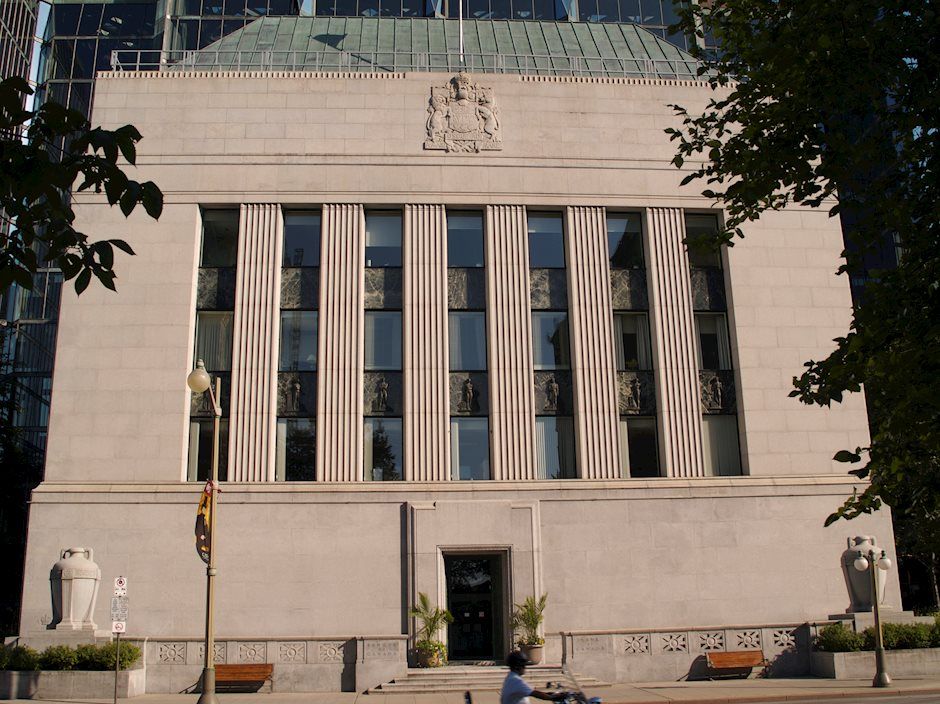

According to the Bank of Canada's (BoC) minutes from a recent meeting that was released Wednesday, the governing council saw the risk that consumer spending could be significantly weaker than expected in 2025 and 2026.
Key quotes
Spending in 2025 and 2026 could be hit by the number of households likely to be renewing their mortgages at higher rates.
Spending per person is expected to recover as rates decline but many households will still face significant debt-servicing costs.
Agreed to communicate that they would be weighing two-way inflation forecasts.
Saw less of a chance that pent-up demand would lead to a sudden rise in house prices as rates were cut.
Governing Council increasingly confident "ingredients for price stability are in place."
Downside risks to inflation now as prominent as upside risks.
Economy in excess supply, slack emerging in labor market.
GDP growth subdued, consumption weak on a per-capita basis.
Core and headline inflation within 1-3% range for several months.
Wage growth still elevated at ~4%, but expected to moderate.
Housing market imbalances persist, putting upward pressure on rents.
Future rate cuts are likely if inflation continues easing as projected.
No predetermined path for policy rate - decisions to be made meeting-by-meeting.
BoC to continue balance sheet normalization by allowing maturing bonds to roll-off.
Some expressed concerns that further weakness in jobs market could delay rebound in consumption.
Market reaction to the BoC Minutes
At the time of writing, USD/CAD was down 0.04% on the day at 1.3753.
Bank of Canada FAQs
The Bank of Canada (BoC), based in Ottawa, is the institution that sets interest rates and manages monetary policy for Canada. It does so at eight scheduled meetings a year and ad hoc emergency meetings that are held as required. The BoC primary mandate is to maintain price stability, which means keeping inflation at between 1-3%. Its main tool for achieving this is by raising or lowering interest rates. Relatively high interest rates will usually result in a stronger Canadian Dollar (CAD) and vice versa. Other tools used include quantitative easing and tightening.
In extreme situations, the Bank of Canada can enact a policy tool called Quantitative Easing. QE is the process by which the BoC prints Canadian Dollars for the purpose of buying assets – usually government or corporate bonds – from financial institutions. QE usually results in a weaker CAD. QE is a last resort when simply lowering interest rates is unlikely to achieve the objective of price stability. The Bank of Canada used the measure during the Great Financial Crisis of 2009-11 when credit froze after banks lost faith in each other’s ability to repay debts.
Quantitative tightening (QT) is the reverse of QE. It is undertaken after QE when an economic recovery is underway and inflation starts rising. Whilst in QE the Bank of Canada purchases government and corporate bonds from financial institutions to provide them with liquidity, in QT the BoC stops buying more assets, and stops reinvesting the principal maturing on the bonds it already holds. It is usually positive (or bullish) for the Canadian Dollar.
Author
Lallalit Srijandorn
FXStreet
Lallalit Srijandorn is a Parisian at heart. She has lived in France since 2019 and now becomes a digital entrepreneur based in Paris and Bangkok.