Blue Apron Holdings (APRN) stock revs up once again on Tuesday
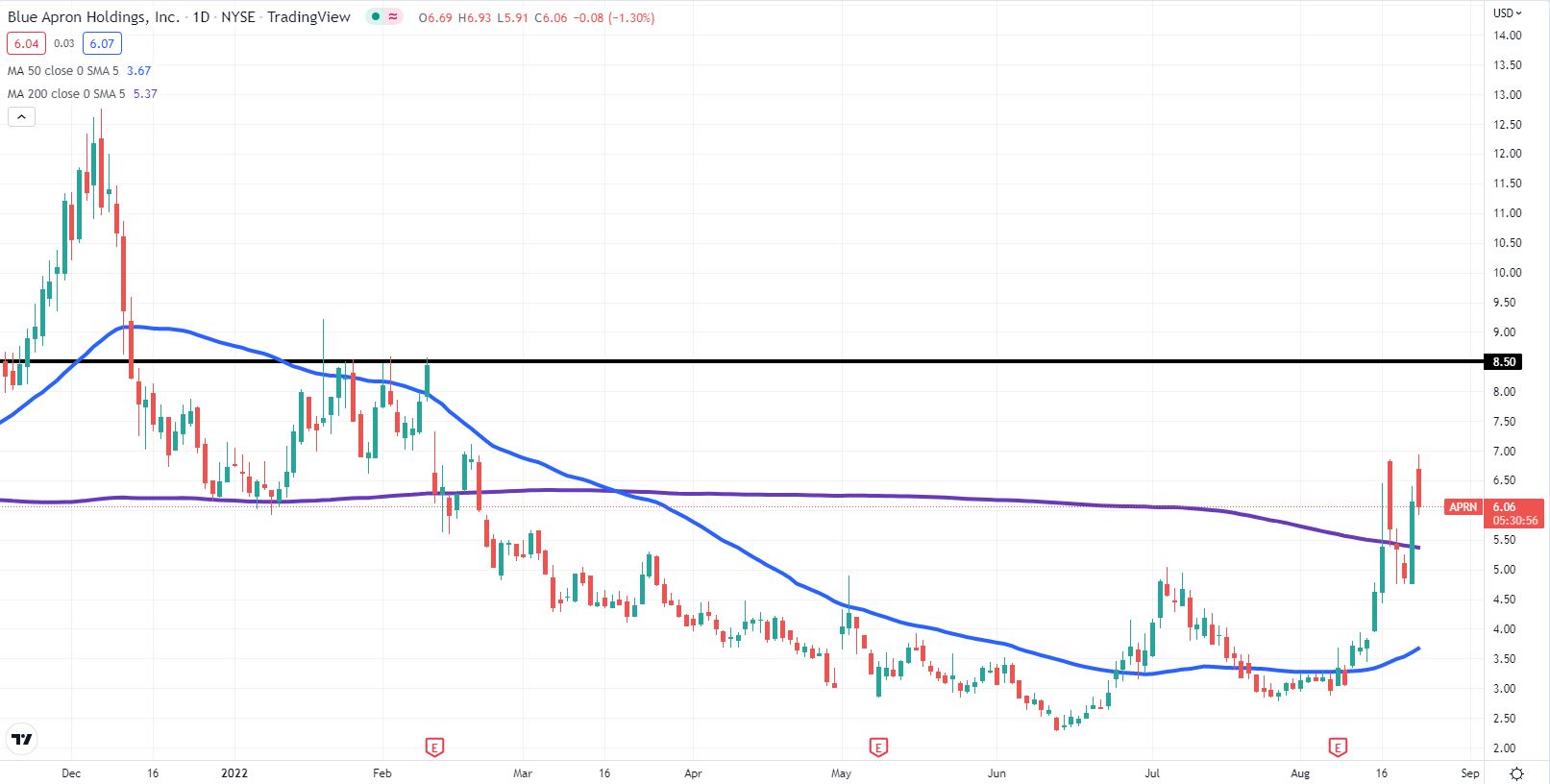
- Blue Apron stock has been volatile of late but faces resistance at $6.85-$7.00.
- APRN stock is up 104% over the past month.
- The stock is part of the short squeeze retail movement.

Blue Apron Holding (APRN), the fresh produce and recipe delivery service, opened 8.3% higher on Tuesday at $6.65, continuing its two-week trend of gains. The stock is up 104% over the past month, and most of that advance has taken place since August 9.
Blue Apron appears to be hanging on from the meme stock rally of the past month, although it appears to have witnessed its largest gains just as other meme stocks like AMC Entertainment (AMC) and Bed Bath & Beyond met their demise during the previous week. APRN shares gained more than 26% on Monday.
Part of the reason for the excitement is that Blue Apron ended July with nearly a quarter of its float sold short. Poor earnings on August 8 made the short strategy even more sensible. Blue Apron reported customers down 7% YoY and orders off 14% YoY, clear signs that the business was flailing.
Hurting the short-sellers, however, is the name of the game in the meme world, and this particular meme stock looks to be outlasting its cohort.
Blue Apron stock forecast
On August 17 and again on Monday Blue Apron stock appears to have given up around $6.85. This is not too far from the $7 resistance level that stopped APRN in its tracks back in February. This area is the first to beat in order to keep the rally going. Otherwise, without a retest and overtaking of the $7 level, APRN is likely to end its run and drop to support at the recent swing low near $4.76. A further sell-off could take it back to the 50-day moving average, now at $3.67.
Longer-term bullish price targets come at prior resistance levels from the chart at $8.50 and then at $12.50.
Author

Clay Webster
FXStreet
Clay Webster grew up in the US outside Buffalo, New York and Lancaster, Pennsylvania. He began investing after college following the 2008 financial crisis.