|

Bank Nifty: Reversal at 51,404? – Nifty eyes 25,000 break

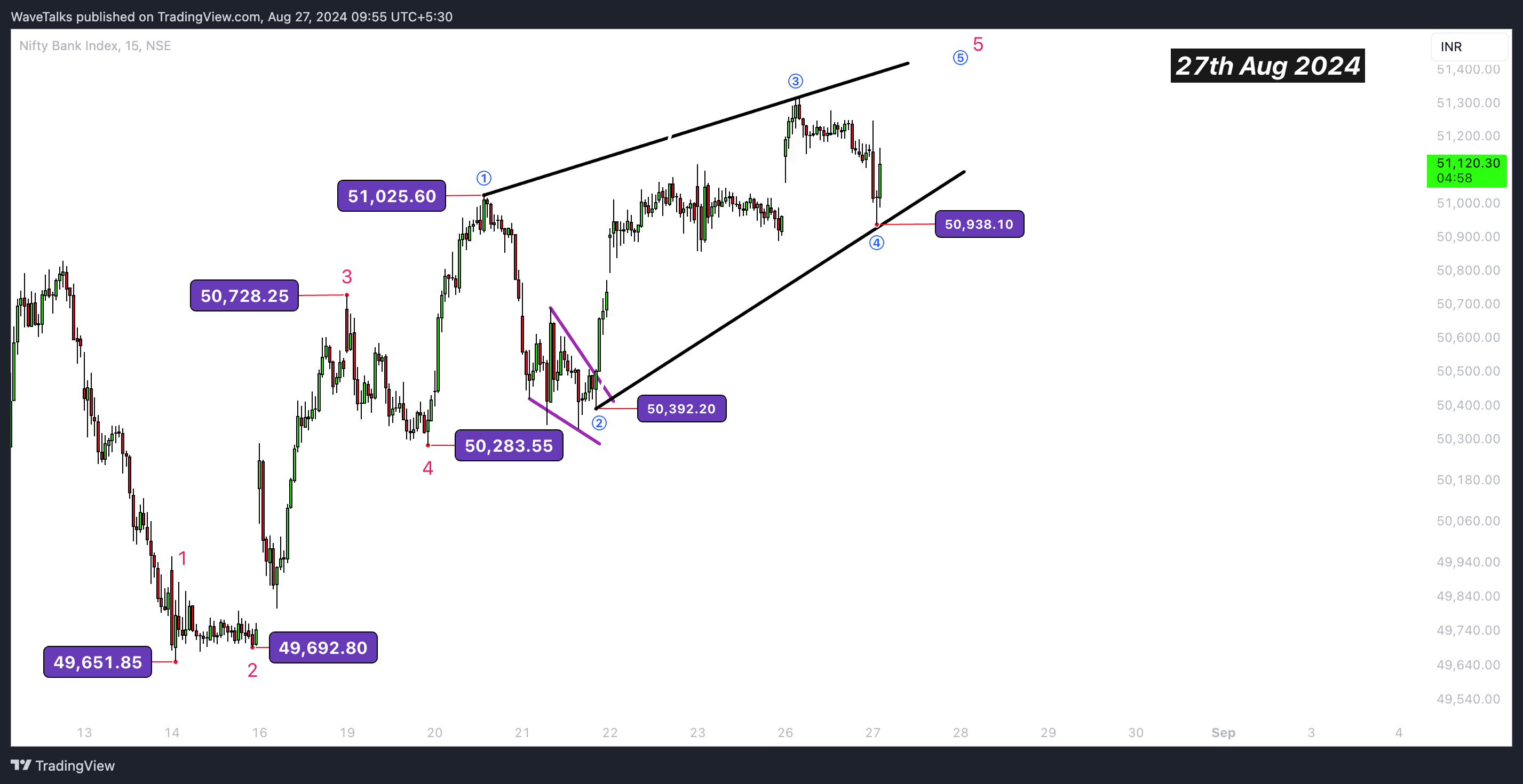
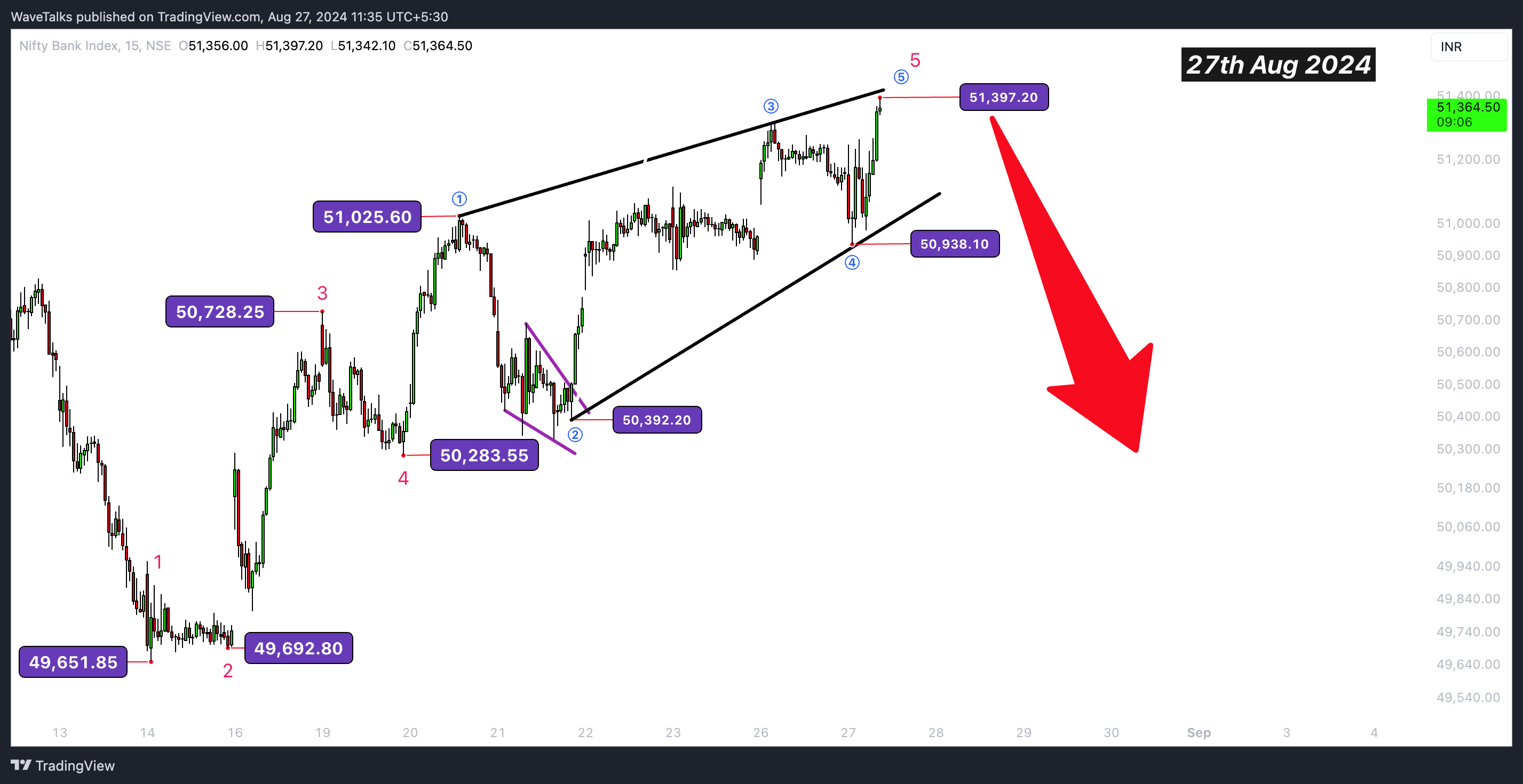
The Bank Nifty index has been rallying, but is this upward momentum about to hit a ceiling? The formation of an ending diagonal at the top of 51,404, which corresponds to 62% of the wave 1 distance (from 50,283 to 51,025), suggests that the current wave 5 may have reached its minimum objective. Safe traders should consider a negative bias, as a breach of the day's low at 50,939 could lead to a drop towards 50,283. This analysis dives into the potential reversal patterns forming in Bank Nifty and how bulls should prepare for the next wave.

Understanding the ending diagonal pattern: An ending diagonal is a pattern that often signals the end of a trend, typically forming in wave sequences. The recent rally from 50,939 to 51,404 as of 27th Aug 2024 may be the final push before a reversal. If the index fails to hold above the current high of 51,404, traders should watch for a close below 50,939, which could indicate a further decline towards 50,283.
Chart

 
Chart

Key levels to watch:

  • Current high: 51,404 (62% of wave 1).

  • Day's low: 50,939 (Critical Support Level or Wave 4 bottom).

  • Target: 50,283 (Next Logical Support on Breach - Wave 4 Higher Degree).

Nifty Index: Psychological level of 25,000 in danger? While Bank Nifty tests its limits, the Nifty Index is showing signs of weakening. Falling below the psychological level of 25,000 could be an early signal for bulls to exercise caution. A breakdown here may mark the beginning of a broader market correction, with potential repercussions for bullish positions.

Conclusion: As Bank Nifty hovers near a critical resistance level, the formation of an ending diagonal suggests that a trend reversal could be on the horizon. Safe traders should consider adopting a negative bias and monitor key support levels closely. The potential breach of the Nifty Index below 25,000 further underscores the need for caution in the coming sessions.

Author

Abhishek H. Singh

Abhishek is a seasoned financial analyst with over a decade of experience specializing in Elliott Wave Theory.


More from Abhishek H. Singh
Share:

Editor's Picks

GBP/USD bounces off lows, back above 1.3200

After bottoming out near 1.3160, GBP/USD manages to regain a bit of shine and reclaim the 1.3200 mark and beyond at the end of the week. Stronger-than-expected UK Retail Sales data seem to be helping the British Pound limit its losses, while the chaotic UK political environment keeps the bulls at bay for now.

EUR/USD looks consolidative around 1.1460

EUR/USD stages a modest rebound after slipping to a three-month low below 1.1420 at the end of the week. That said, the pair now looks to consolidate humble gains just above 1.1460 despite growing uncertainty surrounding the next round of US-Iran negotiations, which keeps the US Dollar’s downside contained.

Gold remains vulnerable, targets $4,100

Gold retreats for the fourth consecutive day on Monday, targeting the key $4,100 mark per troy ounce. The precious metal continues to face headwinds from the Fed's hawkish stance and renewed uncertainty surrounding the US-Iran negotiations.

Breaking: Iran closes the Strait of Hormuz amid ceasefire deal violation
Iran says it is closing the Strait of Hormuz after accusing the United States (US) and Israel of violating the ceasefire. According to Iran, the decision came over the continued Israeli strikes in Lebanon. The Iranian Revolutionary Guard Corps Navy issued a warning to all vessels: "Do not approach the Strait of Hormuz; otherwise, your security will be jeopardized."
The Iran war didn't break the US economy, but what happens next?

Nearly four months after the start of the Iran war, the US economy remains remarkably resilient. While the conflict initially triggered a severe disruption to global energy markets and a sharp rise in Oil prices, recent diplomatic progress between Washington and Tehran has eased concerns about a prolonged supply shock.

Regime change: Inside Kevin Warsh's first move to make the Fed unreadable on purpose

The rate did not move. That was the least interesting thing about Kevin Warsh's first meeting in charge of the Fed. The FOMC held its benchmark at 3.50%-3.75% for the fourth straight meeting, exactly as priced, and then the new chair used his first press conference to dismantle the machinery the market has leaned on for a decade.