|

Aussie Trade Balance: Surplus suffers on higher imports, AUD unchanged

The Aussie trade surplus is a driver for AUD and the December numbers have been released as follows:

Australia Dec. Balance goods/svcs A$+8,356 mln, s/adj.

Dec goods/services Exports +1 pct MoM, seasonally adjusted.

Australia Dec goods/services Imports +5 pct MoM, seasonally adjusted.

The data was anticipated to fall as reopening demand lifts both import prices and volumes, analysts at Westpac said in a note before the event.

AUD/USD reaction

There has been little reaction to the data this time around as markets have bogger fish to fry in, 1. the Reserve Bank has released its quarterly Statement on Monetary Policy (SMP), and 2. US Nonfarm Payrolls data. 

AUD/USD daily chart
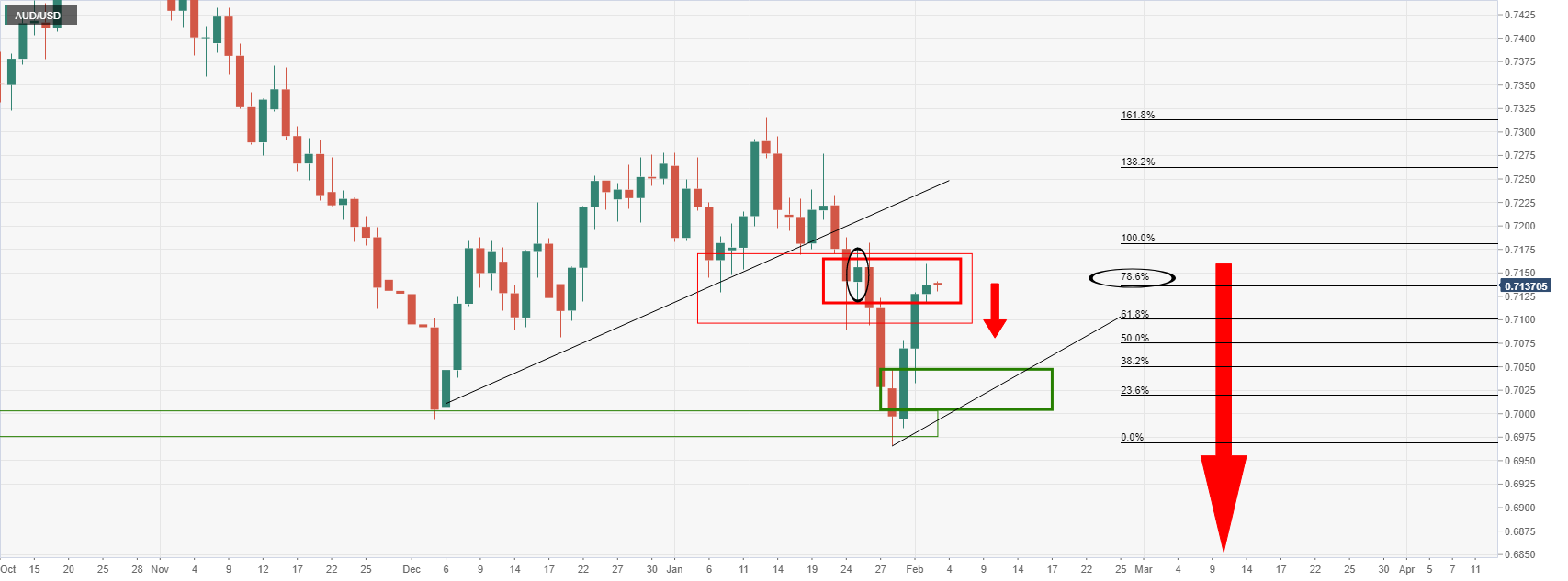
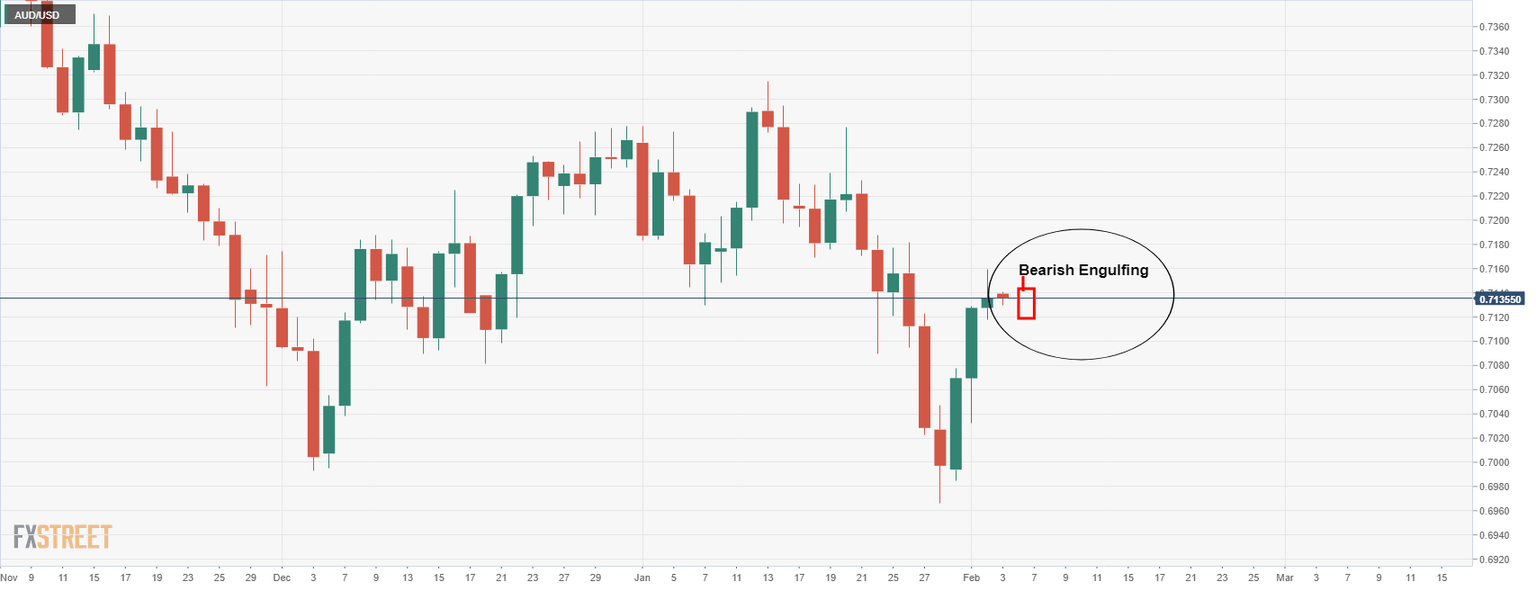
Meanwhile, the bears are monitoring for confirmation that the current bullish daily correction may have ended from Thursday's candle's close.

An ideal and textbook outcome would be a bearish engulfing candle such as this:
About the Trade Balance

The trade balance released by the Australian Bureau of Statistics is the difference in the value of its imports and exports of Australian goods. Export data can give an important reflection of Australian growth, while imports provide an indication of domestic demand. Trade Balance gives an early indication of the net export performance. If a steady demand in exchange for Australian exports is seen, that would turn into a positive growth in the trade balance, and that should be positive for the AUD. Review Alex Nekritin's Article - Trading the Aussie with Australia Trade Balance

Author

Ross J Burland

Ross J Burland, born in England, UK, is a sportsman at heart. He played Rugby and Judo for his county, Kent and the South East of England Rugby team.


More from Ross J Burland
Share:

Markets move fast. We move first.

Orange Juice Newsletter brings you expert driven insights - not headlines. Every day on your inbox.

By subscribing you agree to our Terms and conditions.

Editor's Picks

EUR/USD eases from around 1.1800 after US GDP figures

The US Dollar is finding some near-term demand after the release of the US Q3 GDP. According to the report, the economy expanded at an annualized rate of 4.3% in the three months to September, well above the 3.3% forecast by market analysts.

GBP/USD retreats below 1.3500 on modest USD recovery

GBP/USD retreats from session highs and trades slightly below 1.3500 in the second half of the day on Tuesday. The US Dollar stages a rebound following the better-than-expected Q3 growth data, limiting the pair's upside ahead of the Christmas break.

Gold: Record rally sustains above $4,500 on safe-haven flows

Gold sustains the record-setting rally above $4,500 in the Asian session on Wednesday. The Israel-Iran conflict and the escalating US-Venezuela tensions boost safe-haven flows into Gold. Furthermore, US Q3 GDP data fails to lift the US Dollar amid growing bets for two Fed rate cuts in 2026, underpinning the non-yielding bullion. 

The crypto market is preparing us for a deeper global sell-off

The crypto market capitalisation fell by 1.4% to $2.97T, falling below the $3T mark once again. The market was unable to repeat the robust rebound from the local bottom, as it did after 23 November and 2 December, indicating increased pressure from sellers.

Ten questions that matter going into 2026

2026 may be less about a neat “base case” and more about a regime shift—the market can reprice what matters most (growth, inflation, fiscal, geopolitics, concentration). The biggest trap is false comfort: the same trades can look defensive… right up until they become crowded.

Dogecoin ticks lower as low Open Interest, funding rate weigh on buyers

Dogecoin extends its decline as risk-off sentiment dominates across the crypto market. DOGE’s derivatives market remains weak amid suppressed futures Open Interest and perpetual funding rate.