|

AUD/USD Price Analysis: Bullish breakout on the cards or have we seen the highs?

  • AUD/USD bulls in control but there is a case for both the bulls and bears at this juncture.
  • A break through the 0.6880s opens risk to 0.7050 and 0.7090 while a break below 0.6950 opens risk of a move to 0.6870.

It's been a roller coaster of a ride to start the year and AUD/USD has been one of the most volatile love the past week, driven on fundamentals, both home and away. Nevertheless, the schematic is arguably bearish but there needs to be a break of 0.6870 to confirm the downside bias. Therefore, bulls are going to be looking for a drive through 0.7000 for the initial balance for the week as the following illustrates: 

AUD/USD H4 chart

Firstly, a bearish outlook and schematic could be drawn as follows:
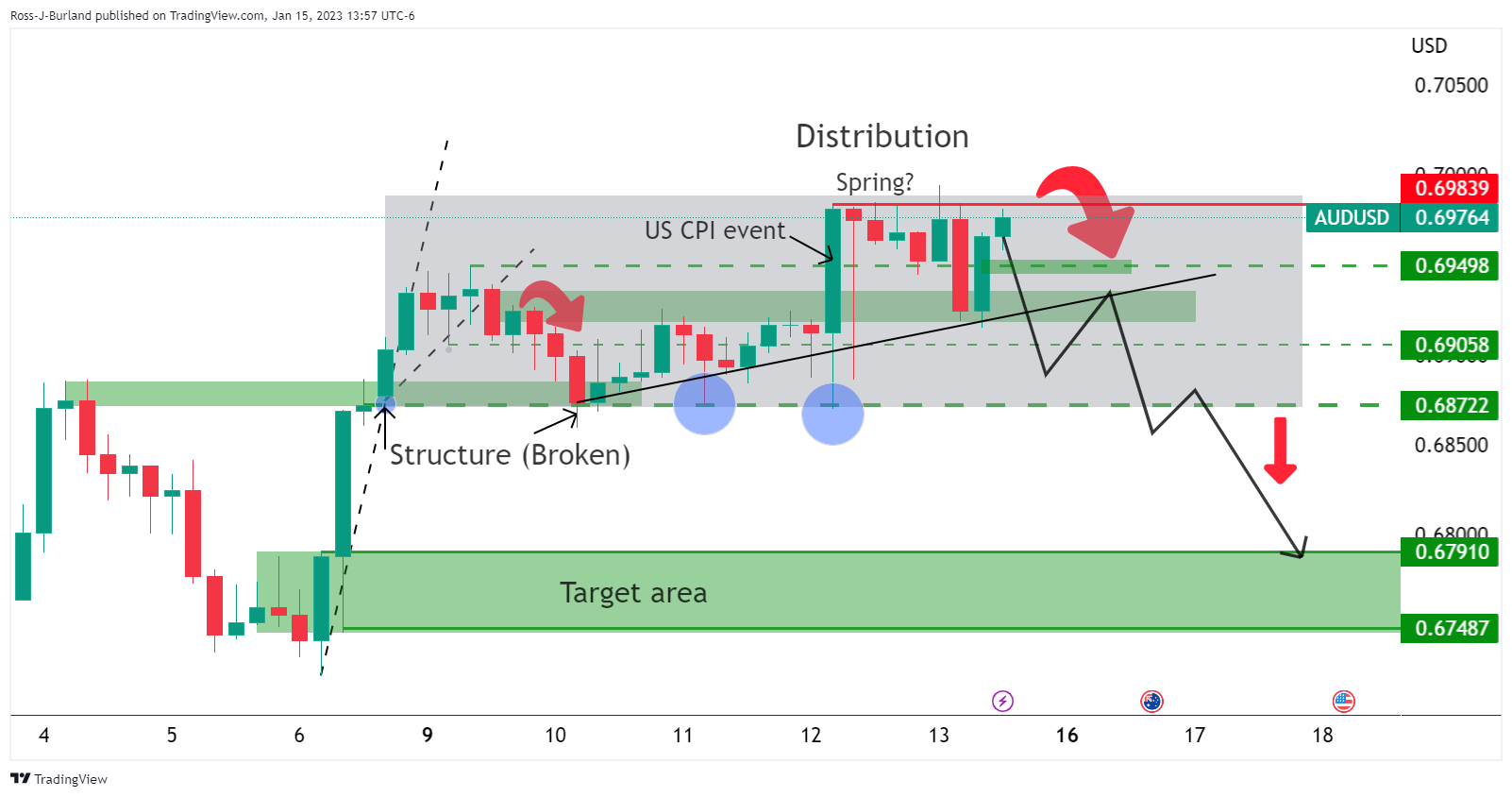
On a break of 0.6950, the trendline support could come under pressure in the coming sessions and if it were to give way, 0.6900 stops could trigger a slide towards 0.68 and below if 0.6870 breaks. 

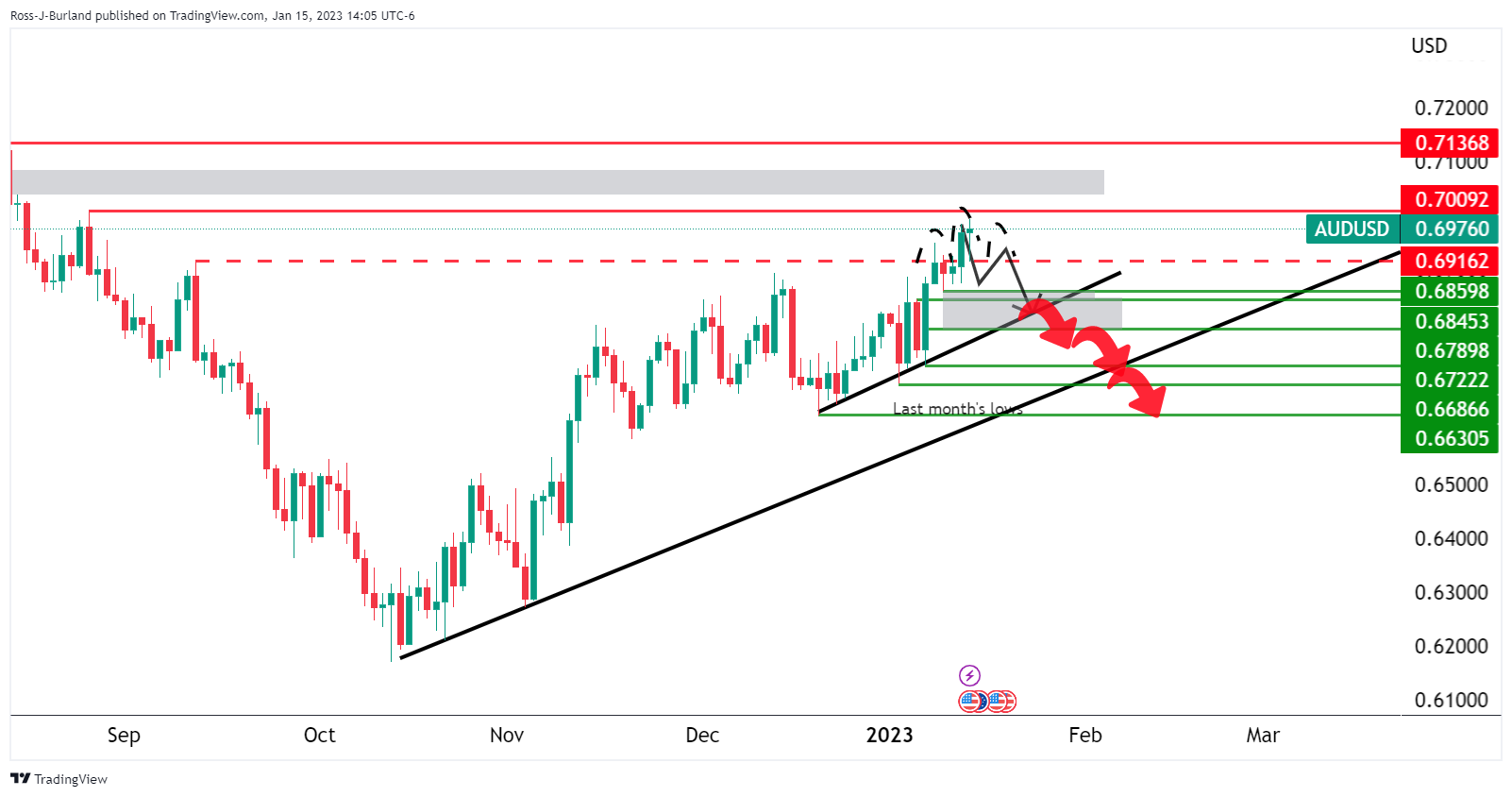
This falls in line with a bearish daily chart thesis:
AUD/USD upside bias, H4 chart

On the upside, an inverse head and shoulders could be forming:
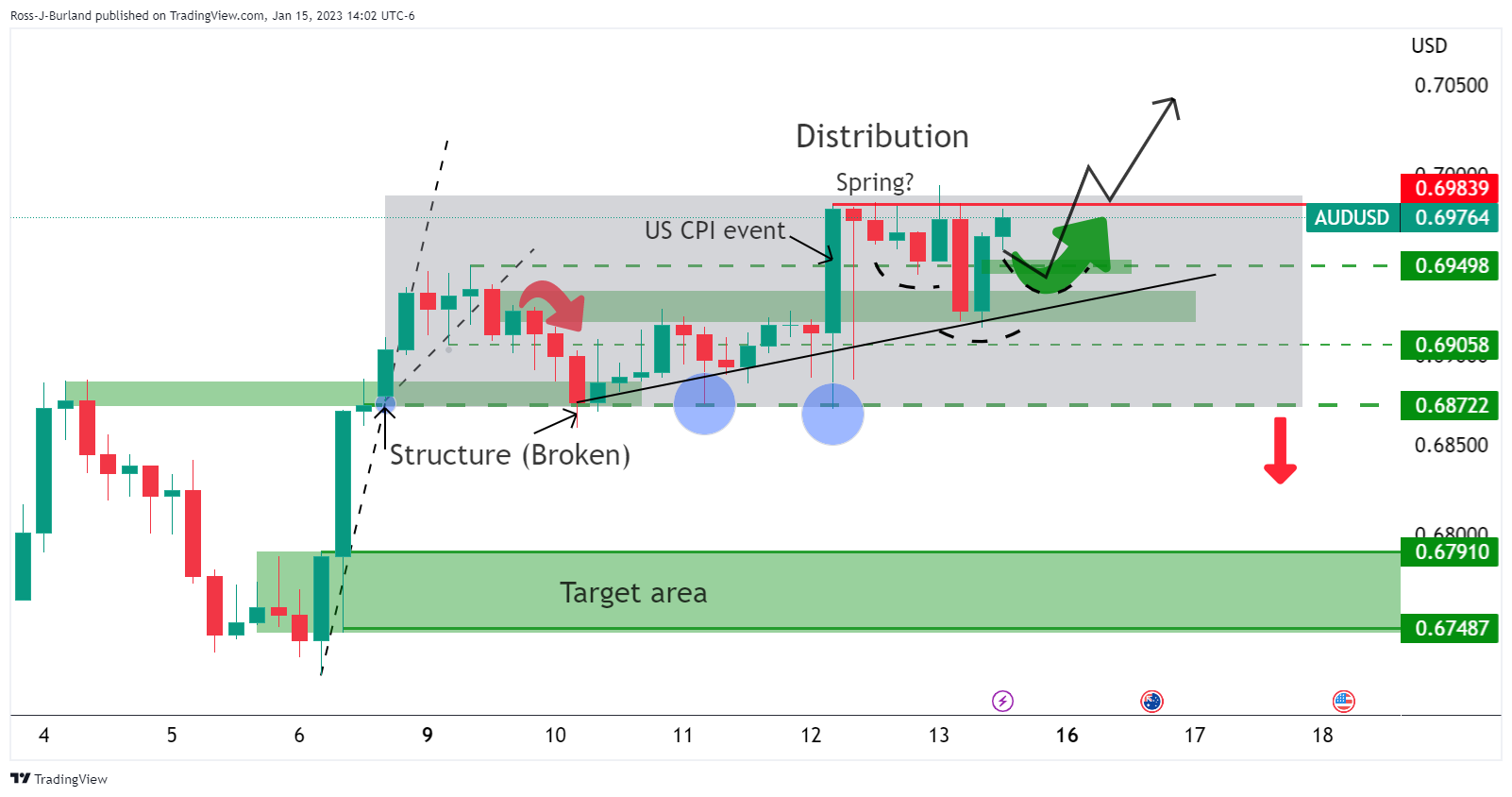
A break through the 0.6880s opens risk to 0.7050 and 0.7090 for sessions ahead, in line with the bullish trend. 

Author

Ross J Burland

Ross J Burland, born in England, UK, is a sportsman at heart. He played Rugby and Judo for his county, Kent and the South East of England Rugby team.


More from Ross J Burland
Share:

Editor's Picks

GBP/USD holds range below 1.3650 amid Iran risks

GBP/USD extends its sideways consolidative price move for the second straight day and trades below 1.3650 in Tuesday's European session. The US Dollar is looking to build on its modest recovery amid US sanctions on Iran, acting as a headwind for the pair. The lack of follow-through selling warrants some caution for bearish traders.

EUR/USD struggles near 1.1650 as USD recovers amid Mideast woes

EUR/USD is struggling to gain traction, while trading near 1.1650 in European trading on Tuesday. The pair fails to find support amid a modest US Dollar recovery as rising oil prices, elevated bond yields, and escalating Middle East tensions fuel risk-off trades. Upbeat Germany IFO Survey fails to inspire Euro bulls.

Gold remains depressed below $4,650 on firmer USD, Fed risks, and Middle East tensions

Gold remains on the back foot below $4,650 through the first half of the European session. However, the lack of follow-through selling warrants caution before positioning for an extension of the intraday retracement slide from the $4,700 neighborhood, or the highest level since May 14, touched earlier this Tuesday. The US Dollar is seen building on its recovery from a three-month low as inflation risks stemming from volatile energy prices keep bets for at least one interest rate hike by the US Federal Reserve on the table.

Bitcoin tops $80,000 as US Treasury fights high yields – AERO, VIRTUAL rally

Bitcoin extends gains above $80,000 as broader market risk-on sentiment persists. The scarce asset could extend its rally as the US Treasury combats high yields in the long-dated bond market, with further interventions on the horizon. Aerodrome Finance (AERO) and Virtuals Protocol (VIRTUAL) emerged as top performers over the last 24 hours.

The forex market is switching to a ‘debasement trade’
The US dollar has stabilised near three-month lows thanks to a rapid recovery in Treasury bond yields. Yields on 30-year bonds are returning to the levels seen following the Treasury’s announcement that it was increasing the minimum purchase volume to $4 billion. The greenback got support from falling stock indices, the continued rally in Brent crude, and positive signals from the US economy.
$20 billion offered, $2 billion taken: Why Treasury doubled its buyback cap

The US Treasury moved off its own calendar on Wednesday, and that is the part worth sitting with. At 12:32 GMT, the department said it would at least double the size of liquidity support buyback operations in the 10-year to 20-year and 20-year to 30-year sectors, lifting the maximum from $2 billion per operation to at least $4 billion, effective September 9 and running to November 4.