|

AMZN Elliott Wave technical analysis [Video]

AMZN Elliott Wave technical analysis

Function: Trend.

Mode: Impulsive.

Structure: Motive.

Position: Wave (v) of {i}.

Direction: Upside in (v).

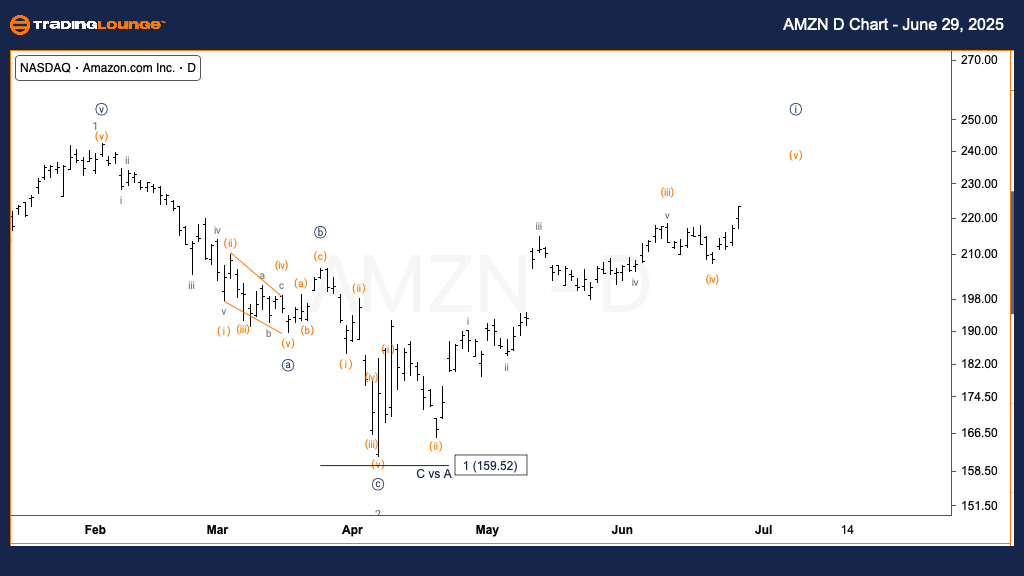
Details: The market appears to be completing a five-wave sequence within wave {i}, with wave (v) currently unfolding. Wave (iii) previously extended, supporting ongoing upside potential in wave (v).
Chart

AMZN Elliott Wave Technical Analysis

Function: Trend.

Mode: Impulsive.

Structure: Motive.

Position: Wave (v) of {i}.

Direction: Upside in (v).

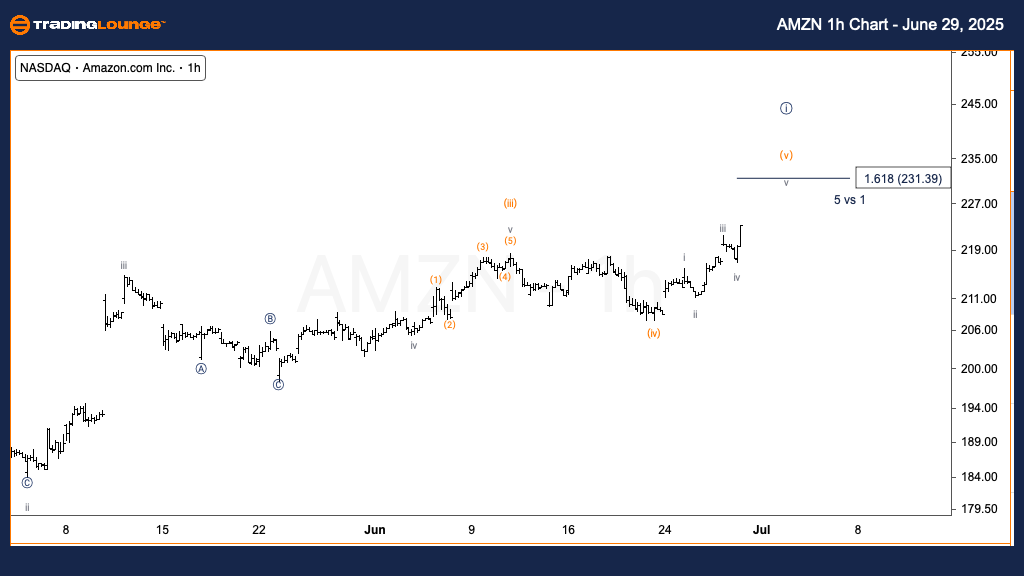
Details: With wave iii and wave i of (v) showing similar lengths, wave v could extend. This extension might drive price action toward the top of Minor Group 1, targeting $230.
Chart

This analysis for Amazon.com Inc. (AMZN) covers both daily and 1-hour charts, utilizing Elliott Wave Theory to forecast market direction.

Daily chart overview:

AMZN is progressing through wave (v) of {i}, indicating the final phase of a five-wave pattern from April’s lows. With a previously extended wave (iii), wave (v) could either reach similar length or truncate. A corrective wave {ii} might follow upon completion.

One-hour chart overview:

Wave (v) is developing with clear structure. The similarity in length between waves iii and i of (v) supports the likelihood of an extension in wave v. Price may reach the top of MinorGroup1, around $230, which aligns with Fibonacci projections in typical motive wave formations.

AMZN Elliott Wave technical analysis [Video]

Author

Peter Mathers

Peter Mathers

TradingLounge

Peter Mathers started actively trading in 1982. He began his career at Hoei and Shoin, a Japanese futures trading company.


More from Peter Mathers
Share:

Editor's Picks

AUD/USD holds steady above 0.7000 as traders await RBA rate decision

AUD/USD extends its consolidation phase in the Asian session on Tuesday, trading just above 0.7000 ahead of the RBA rate decision. Meanwhile, the US Dollar sits near a two-month high as oil-driven inflation fears reaffirm Fed hike bets and continue to push US bond yields to multi-year highs. Moreover, the US-Iran standoff underpins the safe-haven buck and caps the currency pair.

USD/JPY consolidates near 157.50 as a bullish USD counters intervention risks

USD/JPY struggles to capitalize on the overnight bounce from a one-week low, consolidating around 157.50 in the Asian session on Tuesday. Trump's concerns about the Japanese Yen's weakness fueled speculation about another US-Japan joint intervention. This, along with the hawkish BoJ, underpins the JPY and caps the currency pair. Meanwhile, rising Fed rate-hike bets and oil-driven inflation fears continue to push US bond yields to multi-year highs, keeping the US Dollar pinned near a two-month high and supporting the pair.

Gold sees a dead cat bounce ahead of US jobs data

Gold bounces off eight-week lows at $4,110 early Tuesday, awaiting US JOLTS jobs data. The US Dollar enters bullish consolidation alongside US Treasury yields; Fed rate-hike bets persist. Gold confirms a falling wedge breakdown, while daily RSI stays bearish.

NEAR: Intents blocks more than $50M in attempted laundering linked to Bitget exploit
NEAR Intents, a cross-chain trading protocol, has blocked more than $50 million in attempted laundering flows linked to the recent Bitget exploit, while freezing $503,000 during the execution process. The intervention was carried out through SHIELD, the protocol’s risk-intelligence system, which monitors transactions for links to hacks and other illicit activity, according to a Monday report.
India Gold market cautiously optimistic with approach of festive and wedding seasons
The Indian gold market is cautiously optimistic as we approach the festive gold-buying season. Higher prices continue to weigh on gold jewelry demand even as they support investment purchases. Meanwhile, wedding buying appears “resilient,” according to the World Gold Council.
Fed vs BoJ: Both hiked. The market only believes one of them – and the chart shows which

The Fed and the BoJ have just done something remarkably similar. Both central banks raised interest rates by 25 bps last week, both are confronting inflation risks, and both signal that future decisions will depend on incoming economic data.













