Why traders and investors must go beyond rationality by thinking outside the box
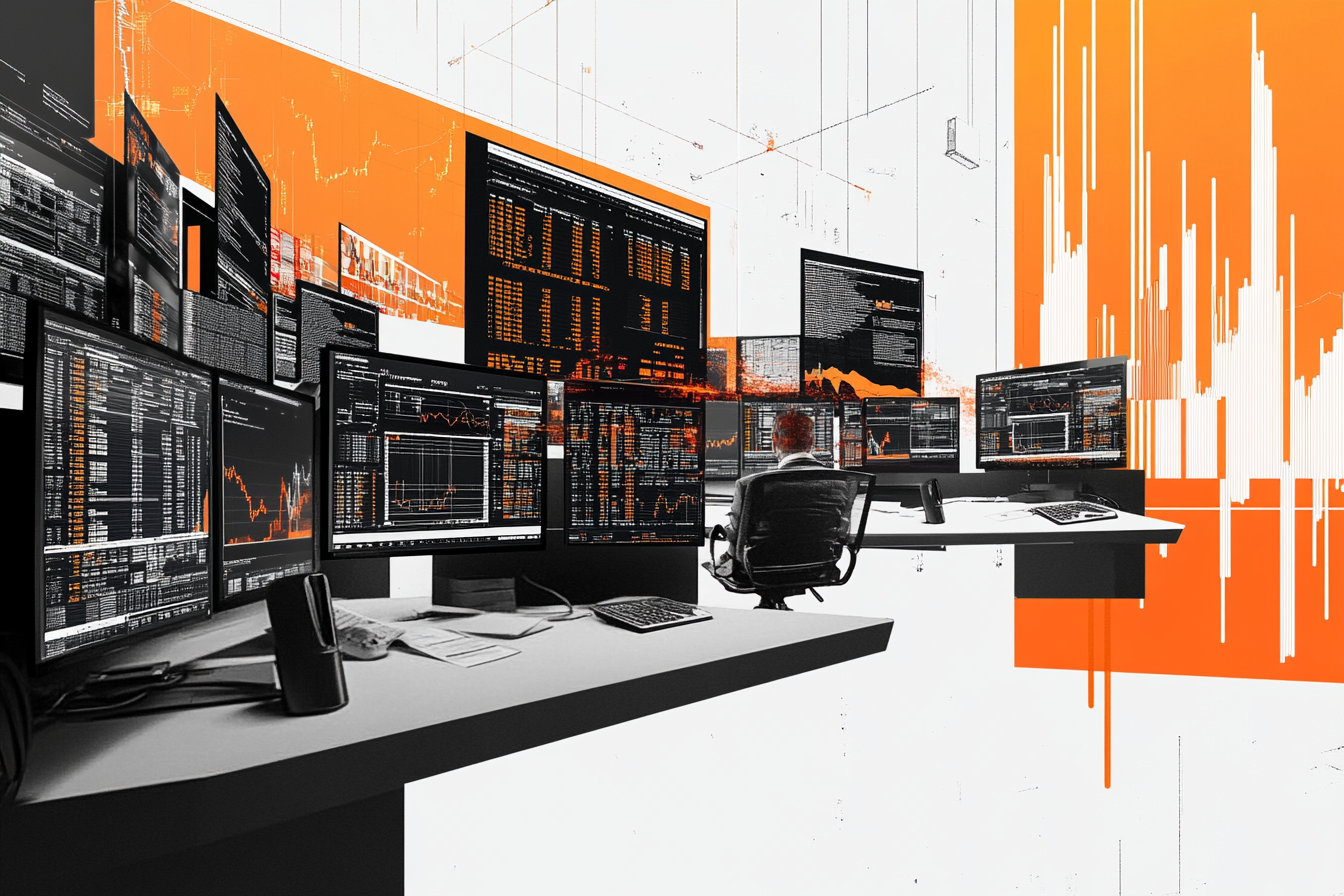
For decades, traders and investors have relied on rational thinking—analyzing data, following economic indicators, and using structured decision-making processes. Rationality has been the foundation of market strategies, risk management, and portfolio allocation.
However, as we enter the era of the 5th Industrial Revolution, relying solely on rationality is no longer sufficient. Markets are evolving at an unprecedented pace, influenced by AI, automation, geopolitical shifts, and disruptive innovations. To stay ahead, traders and investors must embrace creativity and challenge traditional market paradigms.
The limits of rational trading and investing
Rational decision-making, while providing structure and discipline, also comes with inherent limitations:
- Over-reliance on historical data: Traditional models depend on past market patterns, but in a world of rapid technological evolution, history does not always repeat itself. Innovations like AI and blockchain are rewriting the rules. For instance, during the cryptocurrency boom, historical models of stock valuation were inadequate to predict the volatile swings driven by speculative trading and new investor demographics.
- Changing market efficiency: The Efficient Market Hypothesis (EMH) assumes all available information is already priced in. However, AI-driven trading strategies and alternative data sources are uncovering hidden inefficiencies faster than ever. Hedge funds, like Renaissance Technologies, have consistently outperformed the market by using complex algorithms that identify inefficiencies other investors miss.
- Risk management needs more than logic: With increasing volatility driven by macroeconomic uncertainties and geopolitical disruptions, navigating these complexities requires adaptability and intuition. During the 2008 financial crisis, traders who relied solely on historical risk assessment models found themselves unprepared for the magnitude of market disruption.
- Linear thinking in an exponential market: As new asset classes like cryptocurrencies and decentralized finance (DeFi) platforms emerge, the financial landscape is redefined, moving away from predictable cycles. Traders who adhere to linear thinking risk obsolescence.
The fifth industrial revolution as a new investment mindset
The 5th Industrial Revolution is not just about technology; it's about the fusion of human intelligence, AI, and sustainable investing. It prioritizes collaboration between humans and machines, personalized investment strategies, and ethical finance.
Thinking outside the box
The most successful traders and investors of the future will be those who:
- Use AI, but with a human touch: AI-driven models are powerful, but human intuition, creativity, and emotional intelligence are crucial. While AI can detect arbitrage opportunities, human judgment is needed to evaluate geopolitical risks. Traders at J.P. Morgan have leveraged AI for real-time data analysis but rely on seasoned analysts to interpret complex trade implications amid geopolitical tensions.
- Challenge market norms: Instead of blindly following technical indicators or macroeconomic trends, top traders ask, "What if the market reacts differently this time?" They consider alternative scenarios and question the status quo.
- Leverage alternative data sources: Social media sentiment, satellite imagery, and machine learning predictions are transforming trading. Investors who incorporate these tools gain an edge over those relying only on traditional reports. A prime example is hedge funds using satellite data to monitor global supply chain disruptions before official reports confirm them.
- Adapt to non-linear market movements: Markets today are driven by exponential change, not gradual trends. Traders must be flexible, ready to pivot, and open to unconventional strategies. Those who can recognize emerging shifts early—such as the impact of quantum computing on financial modeling—will lead the next generation of market winners.
A visionary approach to trading and investing
The financial world is entering uncharted territory. The traditional rational investor may survive, but the visionary investor will thrive. The best strategies will emerge from those who embrace uncertainty, experiment with new methodologies, and think beyond conventional finance.
The choice is clear: adapt or be left behind. Traders who blend AI, alternative data, and creative thinking will define the next era of finance. Prepare to break free from conventional wisdom and embrace the new frontier of investing, where the future will not be defined by those who follow the rules—it will be shaped by those who redefine them.
Author

Nikolaos Akkizidis
Independent Analyst
Nikolaos Akkizidis is an Independent Financial Writer, Economist, Author, and Speaker with more than two decades of experience in financial services, capital markets, investment advisory, portfolio management, trading, risk manage