Human beings are hard wired in many ways that run contrary to what is necessary for successful trading in financial markets. A lot of research has been done under the field of behavioural finance that studies the effects of social, cognitive, and emotional factors on the economic decisions of individuals and institutions.
Trading on a manual, discretionary basis requires making a series of decisions. Traders need to make numerous decisions almost every minute of the trading process. Traders need to decide whether to enter a trade, exit the trade or simply do nothing with every change in prices or news flow. Trading on a contrarian or trend following basis requires a huge amount of self-control to do what is necessary to be successful. Take the good old trend following strategy as an example. A simple way to think about trend following is to resist the temptations to take profits too soon on a winning trade. With every price increase in a long/buy trade, self-control is used and exhausted to prevent the trader from taking profit too early. If self-control can be depleted like energy, are we confident that we will still do the right things when self-control exhaustion happens?
Much like how people begin making irrational decisions when they start losing much of their money in the casino, traders who win or lose too much can begin to act irrationally. When self-control fails, traders might also start to prefer instant gratifications instead of delayed rewards. This is again against the principles of trend following approaches.
When traders focus too much on the monetary aspect of the trading system, it is highly likely that the release of dopamine is triggered and there are a lot of emotions involved. When trades are winning, happiness and greed takes over while when trades are losing, despair, anger and fear takes centre stage. Traders are also more likely to focus on the short term monetary rewards and not make logical decisions about the longer term prospect of a trade or investment.
A contrarian trading strategy where the trader seeks to act opposite of the crowd is really painful. You can even think of it as getting your fingers cut on a daily basis.
Recall the times when you enter a trade telling yourself that when price hits X profit level or when a profit warning is issued, you would make a dash for the exit. However when price did hit X level or when the dreaded profit warning is indeed issued, you acted differently from your plan. Yes, you probably had a plan before trading but why is it so hard to stick to the plan?
In behavioural finance studies, academics found that people tend to underestimate the influence of emotional situations on their choice/decisions. They call this Empathy Gaps. Empathy Gaps are very often seen in financial markets. Just like the examples mentioned earlier, emotions such as greed and fear often interfere with our decision making. The end result is people do not stick to the planned action and allow emotions to influence the trading decision.
A way to combat Empathy Gaps is to set out rules and envision various scenarios and imagine making the right decisions in each of these scenarios ahead of time. Think of it as allowing your brain to practice making decisions.
Self-Control Depletes Like Energy
In a research done, (by Muraven and Baumeister, 2000), they found that self-control is much like muscles or energy, in that self-control is a limited resource that will be depleted under strenuous conditions. Emotions are often involved in the decision making process. The logical cognitive process is used to override this emotional input sometimes. However the ability to use this self- control to force our logical thought process to be dominant in the decision making process is limited. Each effort at self-control reduces the amount available for subsequent self-control.Trading on a manual, discretionary basis requires making a series of decisions. Traders need to make numerous decisions almost every minute of the trading process. Traders need to decide whether to enter a trade, exit the trade or simply do nothing with every change in prices or news flow. Trading on a contrarian or trend following basis requires a huge amount of self-control to do what is necessary to be successful. Take the good old trend following strategy as an example. A simple way to think about trend following is to resist the temptations to take profits too soon on a winning trade. With every price increase in a long/buy trade, self-control is used and exhausted to prevent the trader from taking profit too early. If self-control can be depleted like energy, are we confident that we will still do the right things when self-control exhaustion happens?
Irrational Decisions Under Emotional Distress
Muraven and Baumeister, 2003, also found that under emotional distress, people shift towards favouring high risk, high payoff options. When self-esteem is threatened, people become uncomfortable and lose their capacity to self-regulate.Much like how people begin making irrational decisions when they start losing much of their money in the casino, traders who win or lose too much can begin to act irrationally. When self-control fails, traders might also start to prefer instant gratifications instead of delayed rewards. This is again against the principles of trend following approaches.
Stop Thinking About Money
Our brain reacts to the anticipation of receiving money in similar ways as receiving other rewards such as delicious food or pleasure inducing drugs. Our body releases dopamine, a simple organic chemical that causes us to feel good about ourselves. Confidence level is increased with the increase in dopamine levels in our body. The anticipation of monetary rewards lead to the release of dopamine which causes traders to feel good. The problem is, the brain reacts to rewards using an intuitive and not logical manner.When traders focus too much on the monetary aspect of the trading system, it is highly likely that the release of dopamine is triggered and there are a lot of emotions involved. When trades are winning, happiness and greed takes over while when trades are losing, despair, anger and fear takes centre stage. Traders are also more likely to focus on the short term monetary rewards and not make logical decisions about the longer term prospect of a trade or investment.
Social Exclusion Is Painful
Do you remember the last time when you were completely ignored in a group or all your friends went on an outing but you were not invited? Do you remember the pain?Herding Mentality
It is our instinct to want to belong to a group. When we are excluded (out of our own will) from a social group, it is painful. In fact, Eisenberger and Lieberman (2004) concluded that social exclusion generates brain activity in the same parts as real physical pain. Ouch! Physical pain is very distinct and we all can remember the pain when we twisted our ankle or cut our fingers. Pain from social exclusion may not be as distinct but the innate urge to avoid such pain is significant. Sub-consciously, we all want to behave and act like a group and this is what we call the herding mentality.A contrarian trading strategy where the trader seeks to act opposite of the crowd is really painful. You can even think of it as getting your fingers cut on a daily basis.
Why Can’t I Stick To The Plan?
We probably have heard that failing to plan is planning to fail. Would you agree with this statement? One of the great commandments to successful trading seems to be to develop a trading plan and to STICK TO THE PLAN.Recall the times when you enter a trade telling yourself that when price hits X profit level or when a profit warning is issued, you would make a dash for the exit. However when price did hit X level or when the dreaded profit warning is indeed issued, you acted differently from your plan. Yes, you probably had a plan before trading but why is it so hard to stick to the plan?
In behavioural finance studies, academics found that people tend to underestimate the influence of emotional situations on their choice/decisions. They call this Empathy Gaps. Empathy Gaps are very often seen in financial markets. Just like the examples mentioned earlier, emotions such as greed and fear often interfere with our decision making. The end result is people do not stick to the planned action and allow emotions to influence the trading decision.
A way to combat Empathy Gaps is to set out rules and envision various scenarios and imagine making the right decisions in each of these scenarios ahead of time. Think of it as allowing your brain to practice making decisions.
Automated Trading Systems
In many other ways human psychology is not suitable for the activity of trading financial markets. Automated trading systems assist traders in circumventing their psychological biases and hindrance. Automated trading strategies make trading decisions based entirely on logic. Traders are not subjected to emotions affecting their trading decisions negatively.
Editors’ Picks

EUR/USD climbs to two-week highs beyond 1.1900
EUR/USD is keeping its foot on the gas at the start of the week, reclaiming the 1.1900 barrier and above on Monday. The US Dollar remains on the back foot, with traders reluctant to step in ahead of Wednesday’s key January jobs report, allowing the pair to extend its upward grind for now.

GBP/USD hits three-day peaks, targets 1.3700
GBP/USD is clocking decent gains at the start of the week, advancing to three-day highs near 1.3670 and building on Friday’s solid performance. The better tone in the British Pound comes on the back of the intense sekk-off in the Greenback and despite re-emerging signs of a fresh government crisis in the UK.

USD/JPY recedes to multi-day lows near 155.50
USD/JPY is pulling back sharply at the start of the week, slipping back toward the 155.50 area as speculation mounts that authorities could step in to rein in further Yen weakness. That narrative gained traction after PM S. Takaichi secured a landslide victory in Sunday’s election, stoking expectations of a tougher line in defence of the domestic currency.
Editors’ Picks
EUR/USD climbs to two-week highs beyond 1.1900
EUR/USD is keeping its foot on the gas at the start of the week, reclaiming the 1.1900 barrier and above on Monday. The US Dollar remains on the back foot, with traders reluctant to step in ahead of Wednesday’s key January jobs report, allowing the pair to extend its upward grind for now.
USD/JPY recedes to multi-day lows near 155.50
USD/JPY is pulling back sharply at the start of the week, slipping back toward the 155.50 area as speculation mounts that authorities could step in to rein in further Yen weakness. That narrative gained traction after PM S. Takaichi secured a landslide victory in Sunday’s election, stoking expectations of a tougher line in defence of the domestic currency.

Gold treads water around $5,000
Gold is trading in an inconclusive fashion around the key $5,000 mark on Monday week. Support is coming from fresh signs of further buying from the PBoC, while expectations that the Fed could turn more dovish, alongside concerns over its independence, keep the demand for the precious metal running.

Crypto Today: Bitcoin steadies around $70,000, Ethereum and XRP remain under pressure
Bitcoin hovers around $70,000, up near 15% from last week's low of $60,000 despite low retail demand. Ethereum delicately holds $2,000 support as weak technicals weigh amid declining futures Open Interest. XRP seeks support above $1.40 after facing rejection at $1.54 during the previous week's sharp rebound.
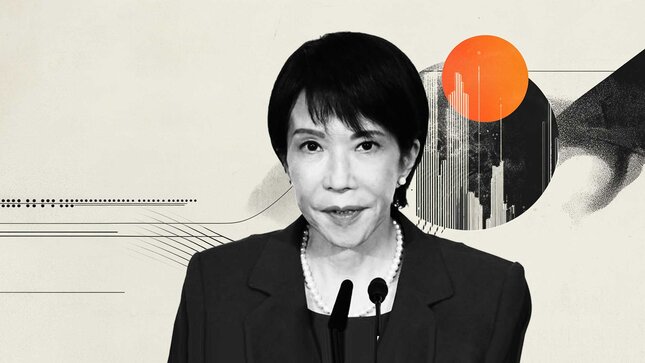
Japanese PM Takaichi nabs unprecedented victory – US data eyed this week
I do not think I would be exaggerating to say that Japanese Prime Minister Sanae Takaichi’s snap general election gamble paid off over the weekend – and then some. This secured the Liberal Democratic Party (LDP) an unprecedented mandate just three months into her tenure.
RECOMMENDED LESSONS
Making money in forex is easy if you know how the bankers trade!

I’m often mystified in my educational forex articles why so many traders struggle to make consistent money out of forex trading. The answer has more to do with what they don’t know than what they do know. After working in investment banks for 20 years many of which were as a Chief trader its second knowledge how to extract cash out of the market.
5 Forex News Events You Need To Know

In the fast moving world of currency markets where huge moves can seemingly come from nowhere, it is extremely important for new traders to learn about the various economic indicators and forex news events and releases that shape the markets. Indeed, quickly getting a handle on which data to look out for, what it means, and how to trade it can see new traders quickly become far more profitable and sets up the road to long term success.
Top 10 Chart Patterns Every Trader Should Know

Chart patterns are one of the most effective trading tools for a trader. They are pure price-action, and form on the basis of underlying buying and selling pressure. Chart patterns have a proven track-record, and traders use them to identify continuation or reversal signals, to open positions and identify price targets.
7 Ways to Avoid Forex Scams

The forex industry is recently seeing more and more scams. Here are 7 ways to avoid losing your money in such scams: Forex scams are becoming frequent. Michael Greenberg reports on luxurious expenses, including a submarine bought from the money taken from forex traders. Here’s another report of a forex fraud. So, how can we avoid falling in such forex scams?
What Are the 10 Fatal Mistakes Traders Make
Trading is exciting. Trading is hard. Trading is extremely hard. Some say that it takes more than 10,000 hours to master. Others believe that trading is the way to quick riches. They might be both wrong. What is important to know that no matter how experienced you are, mistakes will be part of the trading process.
The challenge: Timing the market and trader psychology

Successful trading often comes down to timing – entering and exiting trades at the right moments. Yet timing the market is notoriously difficult, largely because human psychology can derail even the best plans. Two powerful emotions in particular – fear and greed – tend to drive trading decisions off course.