 Dr. Woody Johnson
Independent Analyst
Have you ever initiated a “revenge” trade? Most traders are well aware of this issue; but some of you may need an explanation.
What is Revenge Trading?
A revenge trade is a reaction to one or more losses. Let’s say that you had a good profit run of a couple of months. Your gains were in the 30% category and you were riding high and frequently breaking out into the trader “happy dance”. Then one morning you were feeling quite full of yourself with an illusion of infallibility. In other words, you felt that due to your string of wins you couldn’t lose. Your confidence had exceeded your competence. This irrational exuberance or trader’s euphoria clouded your vision and diffused your focus. Just then the price action inched toward your stop and you gave into an overwhelming urge to move the stop. This behavior is due to a common bias that virtually every human being on the planet succumbs to at one time or another… loss aversion.
Loss aversion is the tendency for individuals to prefer avoiding losses rather than accruing gains. The theory was first introduced in 1979 by Kahneman and Tversky under the assumption that losses have a larger impact on preferences than that of the advantages of gains.1 In fact, you may have moved the stop several times. Because you loathed the thought of losing so much all semblance of perspective left you and in that attempt to keep from losing money in the trade you inordinately and inappropriately increased your risk, in effect wiping out all of the last two month’s gains.

In addition to the empty pit that replaced your stomach you felt depressed and self-loathing for violating your rule, while also huffing and puffing at the market for taking your money. Now, whether you were aware of it or not, you also felt anger. You wanted desperately to get your money back. So, you identified another entry, doubled or tripled your size and entered a revenge trade to get back what was rightfully yours and what, according to you, the market unceremoniously snatched from your portfolio. You don’t need me to spell out what the next outcome entailed…another loss, larger than the first one which more or less wiped out a large portion of your account. This very bleak picture is played out over and over again across the trading planet; and traders just like you are losing most if not all of their portfolio funds while caught in this psychological epidemic.
How to NOT Revenge Trading
First, you must aim to be fully present, fully available and in the NOW of the trade. Trading is a zero sum game and it is arguably the single most challenging business venture on the planet because you are trading your hard earned money and, more importantly, when you are in a trade, with every tick of the market you are gaining money or losing it. Due to this difficulty, at the drop of a hat you could find yourself in a position similar to the one above where one or two trades could wipe out scores of gains.
Secondly, you’ll want to ensure that you are not trading in mental states where you are frustrated, frazzled and fragmented; meaning that you are immersed in negative emotions like fear, anxiety, greed, doubt, worry or anger that can severely diminish your ability to maintain a fierce focus on what matters most. This is accomplished by taking your emotional temperature early and often. If you detect that you are distracted in any way, take a moment to reset and regroup your mental state.
Thirdly, you’ll want to discover your trading macro purpose and when you have done so, place it prominently in your trading business plan, preferably directly under your title. This purpose is where you take the “what matters most in your life” and connect it to the “what matters most in the trade”. It becomes your “compelling reason” for trading. The passion of your life is then put in the service of ensuring that you stay the course in your trading. It lays the foundation for supporting you in planning your trades, trading your plans, following all of your rules and keeping all of your commitments.
Revenge trading is just one of many mental/emotional pitfalls that can derange your trading results. It is imperative that you trade deliberately in a methodical step-by-step fashion and by design; that is, taking the time to be intentional about your mental/emotional state to ensure that your A-Game is working…all the time. You want to trade with your highest and best trader trading in your highest and best interests. It is much too expensive to do otherwise. It’s like walking a tightrope high above the ground…without a net. One false step could have you careening toward a very bad end. This is what we teach in Mastering the Mental Game online and on-location course. Ask your Online Trading Academy representative for more information. Also get my book, From Pain to Profit: Secrets of the Peak Performance Trader.
Note: All information on this page is subject to change. The use of this website constitutes acceptance of our user agreement. Please read our privacy policy and legal disclaimer. Opinions expressed at FXstreet.com are those of the individual authors and do not necessarily represent the opinion of FXstreet.com or its management. Risk Disclosure: Trading foreign exchange on margin carries a high level of risk, and may not be suitable for all investors. The high degree of leverage can work against you as well as for you. Before deciding to invest in foreign exchange you should carefully consider your investment objectives, level of experience, and risk appetite. The possibility exists that you could sustain a loss of some or all of your initial investment and therefore you should not invest money that you cannot afford to lose. You should be aware of all the risks associated with foreign exchange trading, and seek advice from an independent financial advisor if you have any doubts.
Editors’ Picks

EUR/USD climbs to two-week highs beyond 1.1900
EUR/USD is keeping its foot on the gas at the start of the week, reclaiming the 1.1900 barrier and above on Monday. The US Dollar remains on the back foot, with traders reluctant to step in ahead of Wednesday’s key January jobs report, allowing the pair to extend its upward grind for now.

GBP/USD hits three-day peaks, targets 1.3700
GBP/USD is clocking decent gains at the start of the week, advancing to three-day highs near 1.3670 and building on Friday’s solid performance. The better tone in the British Pound comes on the back of the intense sekk-off in the Greenback and despite re-emerging signs of a fresh government crisis in the UK.

USD/JPY recedes to multi-day lows near 155.50
USD/JPY is pulling back sharply at the start of the week, slipping back toward the 155.50 area as speculation mounts that authorities could step in to rein in further Yen weakness. That narrative gained traction after PM S. Takaichi secured a landslide victory in Sunday’s election, stoking expectations of a tougher line in defence of the domestic currency.
Editors’ Picks
EUR/USD climbs to two-week highs beyond 1.1900
EUR/USD is keeping its foot on the gas at the start of the week, reclaiming the 1.1900 barrier and above on Monday. The US Dollar remains on the back foot, with traders reluctant to step in ahead of Wednesday’s key January jobs report, allowing the pair to extend its upward grind for now.
USD/JPY recedes to multi-day lows near 155.50
USD/JPY is pulling back sharply at the start of the week, slipping back toward the 155.50 area as speculation mounts that authorities could step in to rein in further Yen weakness. That narrative gained traction after PM S. Takaichi secured a landslide victory in Sunday’s election, stoking expectations of a tougher line in defence of the domestic currency.

Gold treads water around $5,000
Gold is trading in an inconclusive fashion around the key $5,000 mark on Monday week. Support is coming from fresh signs of further buying from the PBoC, while expectations that the Fed could turn more dovish, alongside concerns over its independence, keep the demand for the precious metal running.

Crypto Today: Bitcoin steadies around $70,000, Ethereum and XRP remain under pressure
Bitcoin hovers around $70,000, up near 15% from last week's low of $60,000 despite low retail demand. Ethereum delicately holds $2,000 support as weak technicals weigh amid declining futures Open Interest. XRP seeks support above $1.40 after facing rejection at $1.54 during the previous week's sharp rebound.
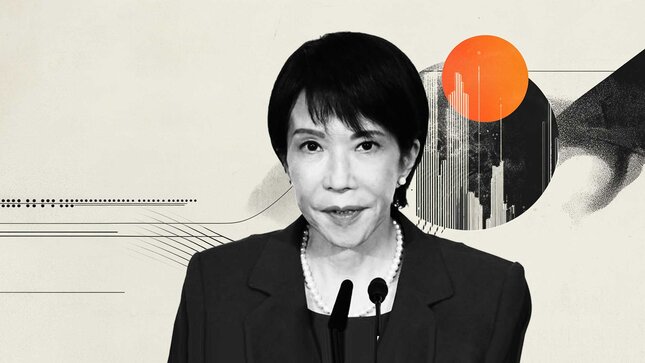
Japanese PM Takaichi nabs unprecedented victory – US data eyed this week
I do not think I would be exaggerating to say that Japanese Prime Minister Sanae Takaichi’s snap general election gamble paid off over the weekend – and then some. This secured the Liberal Democratic Party (LDP) an unprecedented mandate just three months into her tenure.
RECOMMENDED LESSONS
Making money in forex is easy if you know how the bankers trade!

I’m often mystified in my educational forex articles why so many traders struggle to make consistent money out of forex trading. The answer has more to do with what they don’t know than what they do know. After working in investment banks for 20 years many of which were as a Chief trader its second knowledge how to extract cash out of the market.
5 Forex News Events You Need To Know

In the fast moving world of currency markets where huge moves can seemingly come from nowhere, it is extremely important for new traders to learn about the various economic indicators and forex news events and releases that shape the markets. Indeed, quickly getting a handle on which data to look out for, what it means, and how to trade it can see new traders quickly become far more profitable and sets up the road to long term success.
Top 10 Chart Patterns Every Trader Should Know

Chart patterns are one of the most effective trading tools for a trader. They are pure price-action, and form on the basis of underlying buying and selling pressure. Chart patterns have a proven track-record, and traders use them to identify continuation or reversal signals, to open positions and identify price targets.
7 Ways to Avoid Forex Scams

The forex industry is recently seeing more and more scams. Here are 7 ways to avoid losing your money in such scams: Forex scams are becoming frequent. Michael Greenberg reports on luxurious expenses, including a submarine bought from the money taken from forex traders. Here’s another report of a forex fraud. So, how can we avoid falling in such forex scams?
What Are the 10 Fatal Mistakes Traders Make
Trading is exciting. Trading is hard. Trading is extremely hard. Some say that it takes more than 10,000 hours to master. Others believe that trading is the way to quick riches. They might be both wrong. What is important to know that no matter how experienced you are, mistakes will be part of the trading process.
The challenge: Timing the market and trader psychology

Successful trading often comes down to timing – entering and exiting trades at the right moments. Yet timing the market is notoriously difficult, largely because human psychology can derail even the best plans. Two powerful emotions in particular – fear and greed – tend to drive trading decisions off course.