 Dr. Woody Johnson
Independent Analyst
In any important effort where you are up against other individuals that are as motivated, as intelligent, as competent and as prepared if not better than you, then it is crucial that you identify an edge in your game in order to come out ahead of the pack and get the win. Trading is a good example of this due to the solitary nature of the game. You are in there alone in most cases and, ultimately, the only person that you can rely upon is you when the ride gets bumpy. By having and using an edge, you are employing an approach, a strategy, a belief, a mindset, or a tool that will support you in bringing your absolute best to the platform and keep it there. Surely you have experienced times where you found yourself at a crossroads in a trade; a fork-in-the-road where you had to make a choice to either go to the left and violate your rules, break your promises to yourself and go over the cliff to crash and burn; or you chose to go to the right, kept your highest and best trader engaged while trading in your highest and best interests. When you do-the-right-thing in such an instance, you not only support your ability to follow-through more consistently; but, as well, you have cataloged a peak experience that has the effect of catapulting you forward, bolstering your confidence and strengthening your self-esteem. One such edge is a tool that aids you in remaining focused intently on what-matters-most in the trade by interrupting disruptive patterns of thinking, feeling and doing that can and do cause you to take the left turn at the fork in the road resulting in catastrophic results. This tool is called Stop, Challenge and Choose.
One of the most common rule violations that novices and some experienced traders make is inappropriately moving a hard stop when the price-action is inching toward it. The first signal that you normally become aware of is an emotion that is other than positive or neutral; such as, in this instance, fear or anxiety as you watch the price-action. That emotional signal is not the first thing that happens however. The first response in you is an internal dialogue that for the most part is out of your awareness, which is why you must attend to the emotional signal as the first stimulus that comes to your attention. When the fear/anxiety is felt immediately “stop” what you are doing in order to interrupt the emerging pattern, which would culminate in moving the hard-stop, increasing your risk and in most cases end in a greater loss than you would have experienced had you maintained the hard-stop. By stopping, you take a deep breath which will initiate a relaxation response in you; then change your physical posture and assume a position of power, for example, standing up straight and unclenching fists or teeth. By doing this you are not only interrupting the emerging bad pattern, you are also exchanging a forthright intention for what a moment ago was frustration, frazzlement and fragmentation.
Then you “challenge” yourself by asking 3 important questions: 1) What must I be thinking or believing to feel this fear or anxiety? The answer in this instance might be, “…That price-action is going to hit my hard-stop and that means I’ll lose, and that means I’m a poor trader, and that means I’m stupid…” You get the picture. 2) What is the objective reality? In this example the reality is that the price-action may or may not hit your hard-stop; and in actuality it doesn’t matter because your initial plan calculated the best hard-stop placement according to the risk assessment. 3) Is there an alternative interpretation? For our example the alternative interpretation would be that the hard-stop is there to protect your capital and, therefore, if it is activated by the price-action then it has done its job and you are more, not less, intelligent for allowing the plan to go forth without interference or second guessing from you.
After asking the three questions, then it’s time to “choose” a response that is in keeping with your highest and best goals for the trade. In this instance, that would be to be patient and allow the process to play itself out. You’ll not only maintain your A-Game at the platform, you will have gathered more mechanical and internal data; and trading is all about the data.
Stop, Challenge and Choose is a simple and highly effective “edge” for interrupting emerging bad patterns and placing yourself in a position to not only follow rules and keep commitments, but to maintain a position of increasing your skill levels. Additionally, it works quite well with your journal to memorialize the process in order to track the instances of emotional turmoil so that you can identify the bad patterns of thinking, feeling or doing as they take place. In this way you are poised to anticipate the occurrence and become proactive and pre-emptive in the process, thereby greatly enhancing your ability to sustain your highest and best trader at the platform. This and many other powerful, highly effective and easy to use tools, techniques and concepts are what we teach in the “Mastering the Mental Game” on-location, online and XLT courses. Ask your Online Trading Academy representative for more information. Also, get my book From Pain to Profit: Secrets of the Peak Performance Trader.
Note: All information on this page is subject to change. The use of this website constitutes acceptance of our user agreement. Please read our privacy policy and legal disclaimer. Opinions expressed at FXstreet.com are those of the individual authors and do not necessarily represent the opinion of FXstreet.com or its management. Risk Disclosure: Trading foreign exchange on margin carries a high level of risk, and may not be suitable for all investors. The high degree of leverage can work against you as well as for you. Before deciding to invest in foreign exchange you should carefully consider your investment objectives, level of experience, and risk appetite. The possibility exists that you could sustain a loss of some or all of your initial investment and therefore you should not invest money that you cannot afford to lose. You should be aware of all the risks associated with foreign exchange trading, and seek advice from an independent financial advisor if you have any doubts.
Editors’ Picks

EUR/USD clings to strong gains above 1.1850 on USD weakness
EUR/USD preserves its bullish momentum to start the week and trades above 1.1850. The US Dollar struggles to find demand ahead of Wednesday's critical January employment report and helps the pair continue to push higher.

GBP/USD hovers near 1.3600 as UK government crisis weighs on Pound Sterling
GBP/USD moves sideways after registering modest gains in the previous session, trading around 1.3610 during the European hours on Monday. The pair could come under pressure as the Pound Sterling may weaken amid a fresh government crisis in the United Kingdom.

USD/JPY slumps below 157.00 on intervention risks
The Japanese Yen outperforms the US Dollar to start the week on the back of speculations that authorities will step in to stem JPY weakness in the domestic currency following Prime Minister Sanae Takaichi's landslide win in Sunday's election.
Editors’ Picks
EUR/USD clings to strong gains above 1.1850 on USD weakness
EUR/USD preserves its bullish momentum to start the week and trades above 1.1850. The US Dollar struggles to find demand ahead of Wednesday's critical January employment report and helps the pair continue to push higher.
USD/JPY slumps below 157.00 on intervention risks
The Japanese Yen outperforms the US Dollar to start the week on the back of speculations that authorities will step in to stem JPY weakness in the domestic currency following Prime Minister Sanae Takaichi's landslide win in Sunday's election.

Gold holds steady above $5,000
Gold builds on the gains it posted to end the previous week and holds steady above $5,000 on Monday. Data released over the weekend showed that the People's Bank of China extended its Gold buying spree for a 15th month in January. Moreover, dovish US Fed expectations and concerns about the central bank's independence drag the US Dollar lower for the second straight day, providing an additional boost to the non-yielding yellow metal.

Crypto Today: Bitcoin steadies around $70,000, Ethereum and XRP remain under pressure
Bitcoin hovers around $70,000, up near 15% from last week's low of $60,000 despite low retail demand. Ethereum delicately holds $2,000 support as weak technicals weigh amid declining futures Open Interest. XRP seeks support above $1.40 after facing rejection at $1.54 during the previous week's sharp rebound.
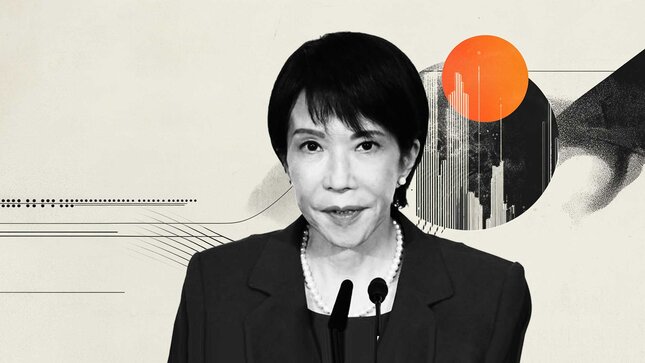
Japanese PM Takaichi nabs unprecedented victory – US data eyed this week
I do not think I would be exaggerating to say that Japanese Prime Minister Sanae Takaichi’s snap general election gamble paid off over the weekend – and then some. This secured the Liberal Democratic Party (LDP) an unprecedented mandate just three months into her tenure.
RECOMMENDED LESSONS
Making money in forex is easy if you know how the bankers trade!

I’m often mystified in my educational forex articles why so many traders struggle to make consistent money out of forex trading. The answer has more to do with what they don’t know than what they do know. After working in investment banks for 20 years many of which were as a Chief trader its second knowledge how to extract cash out of the market.
5 Forex News Events You Need To Know

In the fast moving world of currency markets where huge moves can seemingly come from nowhere, it is extremely important for new traders to learn about the various economic indicators and forex news events and releases that shape the markets. Indeed, quickly getting a handle on which data to look out for, what it means, and how to trade it can see new traders quickly become far more profitable and sets up the road to long term success.
Top 10 Chart Patterns Every Trader Should Know

Chart patterns are one of the most effective trading tools for a trader. They are pure price-action, and form on the basis of underlying buying and selling pressure. Chart patterns have a proven track-record, and traders use them to identify continuation or reversal signals, to open positions and identify price targets.
7 Ways to Avoid Forex Scams

The forex industry is recently seeing more and more scams. Here are 7 ways to avoid losing your money in such scams: Forex scams are becoming frequent. Michael Greenberg reports on luxurious expenses, including a submarine bought from the money taken from forex traders. Here’s another report of a forex fraud. So, how can we avoid falling in such forex scams?
What Are the 10 Fatal Mistakes Traders Make
Trading is exciting. Trading is hard. Trading is extremely hard. Some say that it takes more than 10,000 hours to master. Others believe that trading is the way to quick riches. They might be both wrong. What is important to know that no matter how experienced you are, mistakes will be part of the trading process.
The challenge: Timing the market and trader psychology

Successful trading often comes down to timing – entering and exiting trades at the right moments. Yet timing the market is notoriously difficult, largely because human psychology can derail even the best plans. Two powerful emotions in particular – fear and greed – tend to drive trading decisions off course.