 Dr. Woody Johnson
Independent Analyst
As we move further into the New Year and you’re still saying Happy New Year to those you like but haven’t seen yet, you may still be riding a fresh wave of motivation around your New Year’s resolutions. But, have you thought about what it means to be truly motivated? When you are deeply motivated to accomplish tasks, objectives and goals you won’t let things get between you and that achievement. When you are motivated, you become fiercely focused on what you must do in order to get the results that you want. Deep motivation helps you to become single-minded in your pursuit of the prize. To be motivated means that you have an incentive and you are moved to take action. Motivation is at the crux of becoming a success in any endeavor, and especially trading. Motivation is energy and we know that energy can both provide life-support and it can take it away. How many times have you been motivated to move a stop, chase a trade or exit a trade prematurely? In each case you were motivated; it’s just that you were motivated towards the “wrong” aims based on limiting beliefs and errant emotions like fear and greed. So, when we talk about motivation or being motivated, we want to be motivated in the direction of success and getting the right results. You want to be motivated to do your best and be your best.
Doing and being your best in the trade means getting the trading results you want…consistently. The most powerful tool you have is in your head but you must learn how to release this enormous energy. To unlock this inner strength you must aim to be fully present as you trade. Being fully present is directly related to being in the NOW, in this moment, on task, on target and on purpose. To be in this space successfully you’ll want to also be aligned in body, mind and emotions so that you can go in the same direction and for the same goals. If your system is aligned, you are accessing and activating your internal resources to bear on the task at hand. But, how do you align your system and overcome all the noise of counterproductive thoughts stemming from limiting beliefs and erratic, unsupportive emotions that ultimately drive behaviors that lead to bone-head trades? One thing for sure is that you’ve got to engage your passion; you’ve got to identify what you are most jazzed about and connect that to your trade plans and keeping your commitments. When you are motivated by a deep seated inner desire, for instance the desire to be a “great” trader as opposed to a “mediocre” trader; you become driven by a fire-in-the-belly intensity to do only that which is in-line with consistent follow-through and an unwavering grasp on keeping all of your commitments. When you are intensely focused on raising the bar of your game, it becomes less about whether or not you made a profit in any particular trade and more about the excellence of your execution. A magnificent obsession is developed around the details of the play and being meticulous about your strategy. Wouldn’t it be wonderful to have a magnificent obsession about doing everything that it takes to be consistently successful; where success in the trade is defined as how well you executed your strategy and followed your rules?
Let’s take a look at what happens in your brain when you are totally engaged in purposeful achievement. When you are passionate about the task at hand, the neurotransmitter dopamine is released, it sharpens focus and increases performance while creating a profound sense of well being. If you’ve ever learned to play a game or sport very well, then you have experienced the drive to be “better.” It really is about “how you play the game.” Vince Lombardi’s great Green Bay Packers pro-football team amassed an impressive number of championships over a relatively short period of time. He consistently reminded his players that, “winning is an all the time thing” and that “You don’t do things right once in a while … you do them right all the time.” Roy Campanella, the great Brooklyn Dodger said about baseball, “…you’ve got to love it like a boy and play it like a man.” He spoke about that level of childlike focus that is immersed in wanting to do it well so badly you are willing to be uncomfortable in the service of getting better…and love every minute of it. When you have a compelling reason (your purpose and passion) for what you are doing, you’ll practice for hours in the rain, cold and through pain because you want it that badly. Toddlers do this; they are so driven by the inner desire to learn to walk that when they struggle and fall they will get back up and do it over and over again, each time with renewed intensity. They are obsessed with imitating and learning. They make sounds and try to talk with a dogged determination. Babies are keyed into a passion that drives them to see, to listen, to imitate, and to learn. The passion that drove you as a baby is still inside you; it is a part of your humanity. Unfortunately, we are also taught to remove ourselves from the passion as we become socialized into “good citizens.” Socialization can stifle curiosity, creativity and that playful spirit that sees life as a series of games and puzzles to figure out. When this happens, or when we become “grown up,” that inner spark to explore the reasons why and to be wide-eyed at the wonders of life is often lost to the detriment of a rich and growth-oriented life. But, when rekindled, this passion galvanizes your energy, curiosity and trial-and-error courage.
Now let’s look at one of the most obvious motivators and, actually, it’s not really as strong as most people think; and that is money. Money is a type of “fool’s gold” with regard to motivation. It is short lived because money is transient and of itself has no substance; it is only good as a medium of exchange. You can’t eat it, drink it, live in it, drive it or wear it – at least not for very long. Many believe that they want money, but to be specific, what they really want is what money can buy. I would contend that if you had everything that you have ever desired, money would lose its appeal. The literature is replete with studies that support the notion that money is a poor motivator. One of the articles written about this subject was a Forbes.com missive by Charles S. Jacobs, March 6, 2009 entitled, “Why Money Isn’t A Motivator.” An out-of-proportion fixation on money in any particular trade can be a prescription for greed. Greed distorts reality into a phantom of itself, resulting in decisions based on conjured notions of what you “think” will happen, not what is taking place in the charts.
Then there is fear, an ever present aspect of the markets. You might find yourself saying, “If I don’t make a profit in this trade then I am screwed!” Fear, like greed, fragments, blurs and moves you to grasp for fading phantoms that leave you as bait in waters teeming with sharks eager to feed on your capital. I’m sure you’ve heard the adage: “Scared money does not win.” The only motivation that moves you to do what is required for consistent long-term results is tied to reasons like family security, a purposeful life, personal pride in doing a good job, and peer recognition.
Note: All information on this page is subject to change. The use of this website constitutes acceptance of our user agreement. Please read our privacy policy and legal disclaimer. Opinions expressed at FXstreet.com are those of the individual authors and do not necessarily represent the opinion of FXstreet.com or its management. Risk Disclosure: Trading foreign exchange on margin carries a high level of risk, and may not be suitable for all investors. The high degree of leverage can work against you as well as for you. Before deciding to invest in foreign exchange you should carefully consider your investment objectives, level of experience, and risk appetite. The possibility exists that you could sustain a loss of some or all of your initial investment and therefore you should not invest money that you cannot afford to lose. You should be aware of all the risks associated with foreign exchange trading, and seek advice from an independent financial advisor if you have any doubts.
Editors’ Picks

EUR/USD extends its optimism past 1.1900
EUR/USD retains a firm underlying bid, surpassing the 1.1900 mark as the NA session draws to a close on Monday. The pair’s persistent uptrend comes as the US Dollar remains on the defensive, with traders staying cautious ahead of upcoming US NFP prints and CPI data.

GBP/USD hits three-day peaks, targets 1.3700
GBP/USD is clocking decent gains at the start of the week, advancing to three-day highs near 1.3670 and building on Friday’s solid performance. The better tone in the British Pound comes on the back of the intense sekk-off in the Greenback and despite re-emerging signs of a fresh government crisis in the UK.

USD/JPY bounces off lows, back above 156.00
USD/JPY is starting the week markedly on the defensive, sliding back toward the 155.50 area where it has met some decent contention for now. The move lower in spot follows FX intervention chatter after PM S. Takaichi scored a landslide win in Sunday’s election..
Editors’ Picks

AUD/USD gets ready to punch through 0.7100
The intense sell-off in the Greenback underpins the solid performance of the Aussie Dollar on Monday, motivating AUD/USD to add to recent gains while challenging the key 0.7100 barrier, or fresh YTD highs, at the same time.
EUR/USD extends its optimism past 1.1900
EUR/USD retains a firm underlying bid, surpassing the 1.1900 mark as the NA session draws to a close on Monday. The pair’s persistent uptrend comes as the US Dollar remains on the defensive, with traders staying cautious ahead of upcoming US NFP prints and CPI data.

Gold picks up pace, retargets $5,100
Gold gathers fresh steam, challenging daily highs en route to the $5,100 mark per troy ounce in the latter part of Monday’s session. The precious metal finds support from fresh signs of continued buying by the PBoC, while expectations that the Fed could lean more dovish also collaborate with the uptick.
XRP struggles around $1.40 despite institutional inflows
Ripple (XRP) is extending its intraday decline to around $1.40 at the time of writing on Monday amid growing pressure from the retail market and risk-off sentiment that continues to keep investors on the sidelines.
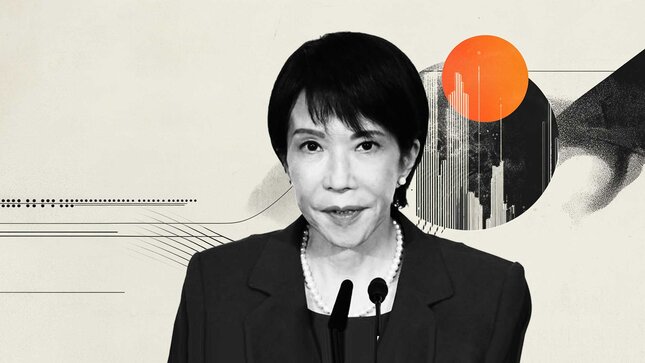
Japanese PM Takaichi nabs unprecedented victory – US data eyed this week
I do not think I would be exaggerating to say that Japanese Prime Minister Sanae Takaichi’s snap general election gamble paid off over the weekend – and then some. This secured the Liberal Democratic Party (LDP) an unprecedented mandate just three months into her tenure.
RECOMMENDED LESSONS
Making money in forex is easy if you know how the bankers trade!

I’m often mystified in my educational forex articles why so many traders struggle to make consistent money out of forex trading. The answer has more to do with what they don’t know than what they do know. After working in investment banks for 20 years many of which were as a Chief trader its second knowledge how to extract cash out of the market.
5 Forex News Events You Need To Know

In the fast moving world of currency markets where huge moves can seemingly come from nowhere, it is extremely important for new traders to learn about the various economic indicators and forex news events and releases that shape the markets. Indeed, quickly getting a handle on which data to look out for, what it means, and how to trade it can see new traders quickly become far more profitable and sets up the road to long term success.
Top 10 Chart Patterns Every Trader Should Know

Chart patterns are one of the most effective trading tools for a trader. They are pure price-action, and form on the basis of underlying buying and selling pressure. Chart patterns have a proven track-record, and traders use them to identify continuation or reversal signals, to open positions and identify price targets.
7 Ways to Avoid Forex Scams

The forex industry is recently seeing more and more scams. Here are 7 ways to avoid losing your money in such scams: Forex scams are becoming frequent. Michael Greenberg reports on luxurious expenses, including a submarine bought from the money taken from forex traders. Here’s another report of a forex fraud. So, how can we avoid falling in such forex scams?
What Are the 10 Fatal Mistakes Traders Make
Trading is exciting. Trading is hard. Trading is extremely hard. Some say that it takes more than 10,000 hours to master. Others believe that trading is the way to quick riches. They might be both wrong. What is important to know that no matter how experienced you are, mistakes will be part of the trading process.
The challenge: Timing the market and trader psychology

Successful trading often comes down to timing – entering and exiting trades at the right moments. Yet timing the market is notoriously difficult, largely because human psychology can derail even the best plans. Two powerful emotions in particular – fear and greed – tend to drive trading decisions off course.