 Dr. Woody Johnson
Independent Analyst
Have you ever become confused in a trade? Most traders have at one time or another, even the pros. It can result from trading at cross purposes. In other words, part of you wanted to take an identified set-up and that part felt centered, grounded and focused on the things that mattered; and, the other part of you was fragmented, frustrated, frazzled and “scared-to-death” that the trade would fall apart and leave you on the losing end. Let’s look at what happened to Steve.
Steve did what he thought was going to get him a profit…he moved his stop! The price action was moving perilously close to the stop loss he had put 4 ticks above the distal supply zone line that was drawn on the 60 minute YM E-mini chart. When he saw this, his heart began to pound, his breathing became shallow and he felt a flood of anxiety and fear. Another part of him was attempting to shout… , “No, don’t do that!” But it might as well have been a whimper in a windstorm because Steve could barely hear it. His attention was riveted to the price-action as he was haunted relentlessly by his past three losers. He wanted desperately to get even; but, his actions were in direct conflict with his highest and best interests…and the results were just as disastrous.
Now, more than likely, your trading rules include a big red sign on moving your stop loss. That will get you in a lot of trouble; as you no doubt have already experienced. When you do something that is a violation of your established trade rules you not only greatly increase your risk, you also decrease your self-esteem because you have broken another promise to you…and it feels really bad. So, even if you do happen to get a profitable trade, it’s almost like taking a loss because you have reinforced “losing” behavior. You have acted against your own best interests. You were in conflict with you and you lost! When you are in conflict because part of you wants to gamble and your other part wants to trade (with your A-Game), every time the A-Game loses out, even if you happen to make a profit on the gamble, you have lost a bit more of your ability to keep your highest and best trader at the platform. When you are out of alignment it is all but impossible to maintain focus on what matters most and do what is in your best interest.
Have you ever tried to ride a bike that had out-of-alignment wheels? It is not a pretty site. Once when I was on a 100-mile ride for the last 30 miles I felt a strong tug, which felt like a head wind. I had to work twice as hard to go a half as fast. It was very difficult. When I reached the end of the ride I noticed that I had popped a spoke. This meant that the wheel had become out-of-alignment and looked like a wobbly noodle. As a result, the wheel had been rubbing on the brakes almost constantly which caused me to work against myself. This is what happens when you are out-of-alignment in your trading. You begin to work against your own best interests as your internal conflict rages causing you to become confused, frustrated, angry and fragmented. This is not a good prescription for properly planning and executing as you trade. Your trades are so serious that you’ll want to have all your mental cylinders “rockin” as you enter and exit trade set-ups. The point is that your mental/emotional system is critical to this process of alignment. You want to be lined up in body, mind, and emotions, going in the same direction and for the same goals. Your preparation and training cannot take you to ever higher heights of trading goals if your execution is full of conflict and working at cross purposes.
Being in alignment with yourself can also be described as thinking, feeling and doing in a way that resonates with reality of the charts and optimizes all of your internal and external resources. It is supporting you through states of mind that have a confidence based on competence. Being aligned is founded on a belief system that maximizes supportive positive beliefs and minimizes limiting beliefs that may still be in your unconscious. Being in alignment also means that you are aimed to be and remain in the Now of the trade because if you are not in the Now you will reduce the available attention you have in your mind when you allow yourself to become distracted and fragmented. Becoming distracted and fragmented are negative in and of themselves; but when you are trading, these negatives compound your deficits and worsen any bad thoughts or feelings that you might be experiencing. No doubt you have noticed when you were out-of-alignment and conflicted you became confused about what would be the best thing to do vs what your ego was telling you. That ego-voice might have been telling you, “Don’t mind that plan, you can move that stop if you want to!” Another indication that you are out of alignment is when your values become challenges and “keeping commitments” become less than a priority.
When you think, feel, say, and do in a way that is congruent—meaning that you have internal and external consistency, perceived by others as sincerity or authenticity—then you are in alignment. It can also be termed an ‘intra-rapport,’ moving in tandem with self, in sync and balanced, centered and grounded. You can also be described as having integrity and ‘walking your talk.’ Alignment cannot be overstated in its importance to trading or anything that involves performance, for like the congruency and alignment of the moving parts of an engine or a bicycle, if integrity and alignment are compromised, even in minute ways, the object will either not reach its destination or it will, due to internal friction, be thrown off course to the point of disruption and destruction. On the other hand, when alignment is true, optimal performance is all but guaranteed. All parts are moving towards the same goal and in the same direction with precision.
Humans are often out of alignment, but sadly, many don’t recognize it. They trudge along trying through force of will to achieve desired outcomes, and when they descend into mental and emotional fatigue due to the stress of moving against themselves, they often wonder why and search for the answer to their issues from every vantage point but the one that matters—inside of themselves.
There are many parts that are involved in alignment. Some of the more important parts are:
Purpose
Beliefs
Values
Identity
Behavior
Purpose is first on this list because it’s of vital importance that you’ve identified the reason why you are in pursuit of any goal, objective, or desire. You must be able to answer the “why” question. A compelling reason will not only move, but catapult you to achievement.
Next, you’ll want to have Beliefs that support your purpose. Of course, you must first know what your beliefs are. Many of your beliefs are unconscious and must be discovered through a process of introspection and reflection.
Values are also critical. As with beliefs, values must, for the most part, be uncovered. You may want to “choose” values that are lofty and noble, but if you aren’t already “living” a value, it is not a personal value; it’s a personal principle, no matter how much you talk about it. Personal principles and values are similar but not the same. Personal principles are what you hold as important, and you aim to be true to those standards and maintain them. Personal principles are what you “want” to live by. Values are how you are living – how you roll, so to speak.
Identity is another important aspect of you that must be in alignment. It is the description of who you are. Of course, you must first figure out which person in you we’re talking about. Who are you first thing in the morning? Who are you when you are really stressed? Who are you when things are going well? Who are you when you’ve just entered into a trade with an oversized position? The fact of the matter is that you are not one personality; rather, you are an amalgam of any number of personas fashioned by your experiences taken from all manner of influential figures throughout your life.
Finally, what are you doing in the service of your alignment? Are you focused with a purpose that encompasses the desired outcome? Behaviors are the test of alignment. In other words, are you doing what you said you were going to do, like keeping commitments, following through with projects and following up on task items? Do you have a trading plan and are you following through on it? Do you have trading rules? Are you practicing appropriate money management and position sizing? When you have losses or experience other disappointments, are you able to learn from, accept the reality and move on, or do you wallow in self-pity, sadness, and anger? Are you following the market? Or, do you wish, hope, pray, and otherwise try to make the market go where you want it to go? Are you keep a journal? Are you logging your trades? What you do speaks volumes about who you are. Alignment also relates to how you are conducting yourself in other parts of your life. Are you expecting more from others than you are willing to give yourself? Are you keeping your promises? Are you having difficult conversations with loved ones and other important people in your life? Are you exhibiting courage? Align yourself and your trading for consistent success. You are an organic machine, and you work best when all of you are working in a coordinated and congruent fashion. Online Trading Academy is poised to assist you in successfully preparing yourself to trade as a winner, planning your trades, trading your plans and following all of your rules. Ask your Online Trading Academy representative for more information. Also, get my book “From Pain to Profit: Secrets of the Peak Performance Trader.”
Note: All information on this page is subject to change. The use of this website constitutes acceptance of our user agreement. Please read our privacy policy and legal disclaimer. Opinions expressed at FXstreet.com are those of the individual authors and do not necessarily represent the opinion of FXstreet.com or its management. Risk Disclosure: Trading foreign exchange on margin carries a high level of risk, and may not be suitable for all investors. The high degree of leverage can work against you as well as for you. Before deciding to invest in foreign exchange you should carefully consider your investment objectives, level of experience, and risk appetite. The possibility exists that you could sustain a loss of some or all of your initial investment and therefore you should not invest money that you cannot afford to lose. You should be aware of all the risks associated with foreign exchange trading, and seek advice from an independent financial advisor if you have any doubts.
Editors’ Picks

EUR/USD extends its optimism past 1.1900
EUR/USD retains a firm underlying bid, surpassing the 1.1900 mark as the NA session draws to a close on Monday. The pair’s persistent uptrend comes as the US Dollar remains on the defensive, with traders staying cautious ahead of upcoming US NFP prints and CPI data.

GBP/USD hits three-day peaks, targets 1.3700
GBP/USD is clocking decent gains at the start of the week, advancing to three-day highs near 1.3670 and building on Friday’s solid performance. The better tone in the British Pound comes on the back of the intense sekk-off in the Greenback and despite re-emerging signs of a fresh government crisis in the UK.

USD/JPY bounces off lows, back above 156.00
USD/JPY is starting the week markedly on the defensive, sliding back toward the 155.50 area where it has met some decent contention for now. The move lower in spot follows FX intervention chatter after PM S. Takaichi scored a landslide win in Sunday’s election..
Editors’ Picks

AUD/USD gets ready to punch through 0.7100
The intense sell-off in the Greenback underpins the solid performance of the Aussie Dollar on Monday, motivating AUD/USD to add to recent gains while challenging the key 0.7100 barrier, or fresh YTD highs, at the same time.
EUR/USD extends its optimism past 1.1900
EUR/USD retains a firm underlying bid, surpassing the 1.1900 mark as the NA session draws to a close on Monday. The pair’s persistent uptrend comes as the US Dollar remains on the defensive, with traders staying cautious ahead of upcoming US NFP prints and CPI data.

Gold picks up pace, retargets $5,100
Gold gathers fresh steam, challenging daily highs en route to the $5,100 mark per troy ounce in the latter part of Monday’s session. The precious metal finds support from fresh signs of continued buying by the PBoC, while expectations that the Fed could lean more dovish also collaborate with the uptick.

XRP struggles around $1.40 despite institutional inflows
Ripple (XRP) is extending its intraday decline to around $1.40 at the time of writing on Monday amid growing pressure from the retail market and risk-off sentiment that continues to keep investors on the sidelines.
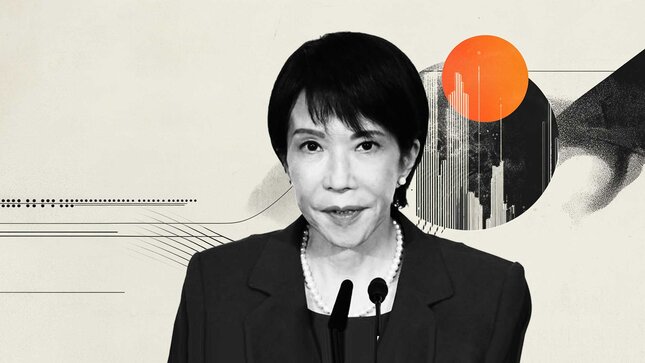
Japanese PM Takaichi nabs unprecedented victory – US data eyed this week
I do not think I would be exaggerating to say that Japanese Prime Minister Sanae Takaichi’s snap general election gamble paid off over the weekend – and then some. This secured the Liberal Democratic Party (LDP) an unprecedented mandate just three months into her tenure.
RECOMMENDED LESSONS
Making money in forex is easy if you know how the bankers trade!

I’m often mystified in my educational forex articles why so many traders struggle to make consistent money out of forex trading. The answer has more to do with what they don’t know than what they do know. After working in investment banks for 20 years many of which were as a Chief trader its second knowledge how to extract cash out of the market.
5 Forex News Events You Need To Know

In the fast moving world of currency markets where huge moves can seemingly come from nowhere, it is extremely important for new traders to learn about the various economic indicators and forex news events and releases that shape the markets. Indeed, quickly getting a handle on which data to look out for, what it means, and how to trade it can see new traders quickly become far more profitable and sets up the road to long term success.
Top 10 Chart Patterns Every Trader Should Know

Chart patterns are one of the most effective trading tools for a trader. They are pure price-action, and form on the basis of underlying buying and selling pressure. Chart patterns have a proven track-record, and traders use them to identify continuation or reversal signals, to open positions and identify price targets.
7 Ways to Avoid Forex Scams

The forex industry is recently seeing more and more scams. Here are 7 ways to avoid losing your money in such scams: Forex scams are becoming frequent. Michael Greenberg reports on luxurious expenses, including a submarine bought from the money taken from forex traders. Here’s another report of a forex fraud. So, how can we avoid falling in such forex scams?
What Are the 10 Fatal Mistakes Traders Make
Trading is exciting. Trading is hard. Trading is extremely hard. Some say that it takes more than 10,000 hours to master. Others believe that trading is the way to quick riches. They might be both wrong. What is important to know that no matter how experienced you are, mistakes will be part of the trading process.
The challenge: Timing the market and trader psychology

Successful trading often comes down to timing – entering and exiting trades at the right moments. Yet timing the market is notoriously difficult, largely because human psychology can derail even the best plans. Two powerful emotions in particular – fear and greed – tend to drive trading decisions off course.