 Sam Seiden
Independent Analyst
Last week I introduced some perceptions people tend to have about aspects of the market and then revealed the truth or reality of those incorrect perceptions. Here are a few more I’d like to share with you:

-
“Futures trading is high risk”
Let me start by saying that if you don’t use protective stop orders to manage your risk, trading anything becomes high risk. If you do use protective stop orders, futures all of a sudden can become lower risk than stocks for example and here are a couple reasons why. First, most of the futures markets we trade are open close to 24 hours, which means the overnight gap risk goes away. They all close each day for a short period but then open up again and trading resumes. They only close so there can be a settlement. Second, the major futures markets we trade at Online Trading Academy are some of the most liquid markets in the world, which means they are as close to a fair trade as there is and you don’t have to worry about slippage that much, though it can happen. I have been trading many different futures markets for many years and these are some of the most liquid, low risk (when you protect yourself with stops) and diverse markets in the world. -
“Commission free Spot Forex trading”
This is a play on words designed to get you to open an account and trade often. Some brokers offer this and it’s fine if that is what you are looking for. Consider however that you may be paying a spread that can average 2 or 3 pips which could mean $20 or $30 dollars in hidden commissions. You can pay that to enter a trade or you can open an account and trade through a broker that charges a commission of perhaps $2 – $5 a trade, up to you. The brokers that charge commission typically have the smallest spreads by far. In short, when someone realizes how much they are paying for “commission free trading”, they then realize how cheap commissions really are. -
“I am brand new to trading, I should start by trading stock options”
If you are looking to trade stock options, yes, you will need to learn to trade stock options. If you are going to the option markets purely for leverage, consider that you are about to embark on a very difficult journey as options are not easy to understand for the new option trader. The big mistake people make who begin their trading career in Options is that they think they can apply options strategies and make money with those alone, without focusing on the underlying market direction. The most important issue here is that some people believe that trading options is a shortcut to profits because you don’t need to understand market timing. This is another trap that gets people into trouble. Have you ever wondered why there are so many options strategies? The answer is because most options traders can’t time the markets turning points, in advance, with a high degree of accuracy. Once you get beyond simple buying and selling of puts and calls, every strategy is some form of a hedge which decreases profit potential. The reason to hedge your bet is because you don’t know where the market is going. If you want my thoughts, learn to trade the underlying market before learning to trade options. Understand the rules behind proper market timing and increase your chances of success with options trading.
As I said last week, understanding how the markets REALLY work is essential to being able to profit in the markets. If you’ve been struggling to make consistent profits using the “common” strategies found in trading books and promoted by those on Wall Street, maybe it is because those strategies are based off of false perceptions of how the market works. You can learn more about how the market really works and OTA’s simple, rule based supply and demand strategy in our free Power Trading Workshop.
Hope this was helpful, have a good day.
Note: All information on this page is subject to change. The use of this website constitutes acceptance of our user agreement. Please read our privacy policy and legal disclaimer. Opinions expressed at FXstreet.com are those of the individual authors and do not necessarily represent the opinion of FXstreet.com or its management. Risk Disclosure: Trading foreign exchange on margin carries a high level of risk, and may not be suitable for all investors. The high degree of leverage can work against you as well as for you. Before deciding to invest in foreign exchange you should carefully consider your investment objectives, level of experience, and risk appetite. The possibility exists that you could sustain a loss of some or all of your initial investment and therefore you should not invest money that you cannot afford to lose. You should be aware of all the risks associated with foreign exchange trading, and seek advice from an independent financial advisor if you have any doubts.
Editors’ Picks

EUR/USD extends its optimism past 1.1900
EUR/USD retains a firm underlying bid, surpassing the 1.1900 mark as the NA session draws to a close on Monday. The pair’s persistent uptrend comes as the US Dollar remains on the defensive, with traders staying cautious ahead of upcoming US NFP prints and CPI data.

GBP/USD hits three-day peaks, targets 1.3700
GBP/USD is clocking decent gains at the start of the week, advancing to three-day highs near 1.3670 and building on Friday’s solid performance. The better tone in the British Pound comes on the back of the intense sekk-off in the Greenback and despite re-emerging signs of a fresh government crisis in the UK.

USD/JPY bounces off lows, back above 156.00
USD/JPY is starting the week markedly on the defensive, sliding back toward the 155.50 area where it has met some decent contention for now. The move lower in spot follows FX intervention chatter after PM S. Takaichi scored a landslide win in Sunday’s election..
Editors’ Picks

AUD/USD gets ready to punch through 0.7100
The intense sell-off in the Greenback underpins the solid performance of the Aussie Dollar on Monday, motivating AUD/USD to add to recent gains while challenging the key 0.7100 barrier, or fresh YTD highs, at the same time.
EUR/USD extends its optimism past 1.1900
EUR/USD retains a firm underlying bid, surpassing the 1.1900 mark as the NA session draws to a close on Monday. The pair’s persistent uptrend comes as the US Dollar remains on the defensive, with traders staying cautious ahead of upcoming US NFP prints and CPI data.

Gold picks up pace, retargets $5,100
Gold gathers fresh steam, challenging daily highs en route to the $5,100 mark per troy ounce in the latter part of Monday’s session. The precious metal finds support from fresh signs of continued buying by the PBoC, while expectations that the Fed could lean more dovish also collaborate with the uptick.

XRP struggles around $1.40 despite institutional inflows
Ripple (XRP) is extending its intraday decline to around $1.40 at the time of writing on Monday amid growing pressure from the retail market and risk-off sentiment that continues to keep investors on the sidelines.
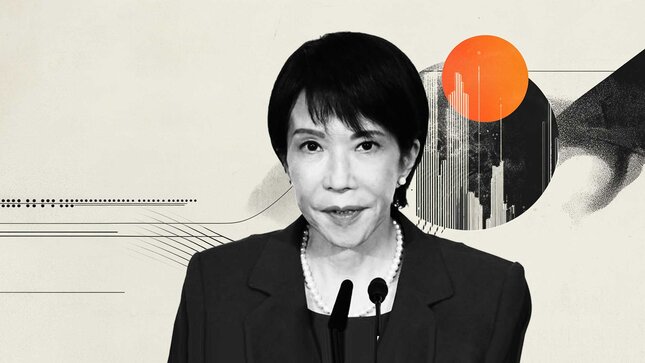
Japanese PM Takaichi nabs unprecedented victory – US data eyed this week
I do not think I would be exaggerating to say that Japanese Prime Minister Sanae Takaichi’s snap general election gamble paid off over the weekend – and then some. This secured the Liberal Democratic Party (LDP) an unprecedented mandate just three months into her tenure.
RECOMMENDED LESSONS
Making money in forex is easy if you know how the bankers trade!

I’m often mystified in my educational forex articles why so many traders struggle to make consistent money out of forex trading. The answer has more to do with what they don’t know than what they do know. After working in investment banks for 20 years many of which were as a Chief trader its second knowledge how to extract cash out of the market.
5 Forex News Events You Need To Know

In the fast moving world of currency markets where huge moves can seemingly come from nowhere, it is extremely important for new traders to learn about the various economic indicators and forex news events and releases that shape the markets. Indeed, quickly getting a handle on which data to look out for, what it means, and how to trade it can see new traders quickly become far more profitable and sets up the road to long term success.
Top 10 Chart Patterns Every Trader Should Know

Chart patterns are one of the most effective trading tools for a trader. They are pure price-action, and form on the basis of underlying buying and selling pressure. Chart patterns have a proven track-record, and traders use them to identify continuation or reversal signals, to open positions and identify price targets.
7 Ways to Avoid Forex Scams

The forex industry is recently seeing more and more scams. Here are 7 ways to avoid losing your money in such scams: Forex scams are becoming frequent. Michael Greenberg reports on luxurious expenses, including a submarine bought from the money taken from forex traders. Here’s another report of a forex fraud. So, how can we avoid falling in such forex scams?
What Are the 10 Fatal Mistakes Traders Make
Trading is exciting. Trading is hard. Trading is extremely hard. Some say that it takes more than 10,000 hours to master. Others believe that trading is the way to quick riches. They might be both wrong. What is important to know that no matter how experienced you are, mistakes will be part of the trading process.
The challenge: Timing the market and trader psychology

Successful trading often comes down to timing – entering and exiting trades at the right moments. Yet timing the market is notoriously difficult, largely because human psychology can derail even the best plans. Two powerful emotions in particular – fear and greed – tend to drive trading decisions off course.