It sounds too good to be true – earning a good second income from just thirty to sixty minutes trading a day. It is a classic less is more scenario, and it fits perfectly around other commitments.
Intuitively however it doesn’t seem to make sense. Making money as a trader, one feels, is about trading, snatching opportunities to get into the market and keeping one’s eyes peeled for the flow of set-ups. How on earth do you make time to do anything else?
Well, yes, you can spend your time glued to the charts, and if you trade small time frames then in front of the charts for a good part of the day you will be. But this comes at a cost for the inexperienced trader. You will be exposed to multiple small price movements that have only a limited pay-off. It will inevitably result in over-trading, a term used to describe jumping in and out of the market chasing set-ups that shouldn’t be traded, higher stress levels, resentment as you start to blame everything for the ongoing losing streak you seem to be stuck in, over analysis and a sense of being paralysed and not quite knowing how to break the cycle. Eventually your account will be bled dry, or you may simply stop before that happens. It sounds dramatic, but it happens all too often. People teaching themselves to trade, diving in and out of the market without a proper trading strategy and sense of discipline, becoming increasingly frustrated as they witness their account being slowly drained.
Now the beauty of trading an End of Day strategy is that it takes all this pressure away! You only look at the market twice a day, first thing in the morning when you review what has happened overnight and whether any of your price action set-ups formed in line with the trend, and again in the evening before bed asking the same questions and performing the same logical analysis as you did in the morning. Between these twice-daily routines you are at work and pursuing your normal daily commitments away from the charts and the temptations of meddling and overanalysing. Your daily life continues normally.
The advantages of this approach, particularly for the novice trader, is that you get clearer signals, mental clarity and piece of mind that is not really feasible for novice traders on small time frames, and your daily life and commitments continue normally. The result is that you are far more likely to grow your account.
First things first however, and a solid understanding of price action trading patterns together with an overall understanding of price action strategy are essential. The higher time frames (daily and weekly) are our speciality so leaning these key price action strategies is easily achievable. It genuinely offers a pleasurable and relaxed approach to trading that doesn’t encroach on your normal daily work and commitments.
Intuitively however it doesn’t seem to make sense. Making money as a trader, one feels, is about trading, snatching opportunities to get into the market and keeping one’s eyes peeled for the flow of set-ups. How on earth do you make time to do anything else?
Well, yes, you can spend your time glued to the charts, and if you trade small time frames then in front of the charts for a good part of the day you will be. But this comes at a cost for the inexperienced trader. You will be exposed to multiple small price movements that have only a limited pay-off. It will inevitably result in over-trading, a term used to describe jumping in and out of the market chasing set-ups that shouldn’t be traded, higher stress levels, resentment as you start to blame everything for the ongoing losing streak you seem to be stuck in, over analysis and a sense of being paralysed and not quite knowing how to break the cycle. Eventually your account will be bled dry, or you may simply stop before that happens. It sounds dramatic, but it happens all too often. People teaching themselves to trade, diving in and out of the market without a proper trading strategy and sense of discipline, becoming increasingly frustrated as they witness their account being slowly drained.
Now the beauty of trading an End of Day strategy is that it takes all this pressure away! You only look at the market twice a day, first thing in the morning when you review what has happened overnight and whether any of your price action set-ups formed in line with the trend, and again in the evening before bed asking the same questions and performing the same logical analysis as you did in the morning. Between these twice-daily routines you are at work and pursuing your normal daily commitments away from the charts and the temptations of meddling and overanalysing. Your daily life continues normally.
The advantages of this approach, particularly for the novice trader, is that you get clearer signals, mental clarity and piece of mind that is not really feasible for novice traders on small time frames, and your daily life and commitments continue normally. The result is that you are far more likely to grow your account.
First things first however, and a solid understanding of price action trading patterns together with an overall understanding of price action strategy are essential. The higher time frames (daily and weekly) are our speciality so leaning these key price action strategies is easily achievable. It genuinely offers a pleasurable and relaxed approach to trading that doesn’t encroach on your normal daily work and commitments.
Editors’ Picks

EUR/USD climbs to two-week highs beyond 1.1900
EUR/USD is keeping its foot on the gas at the start of the week, reclaiming the 1.1900 barrier and above on Monday. The US Dollar remains on the back foot, with traders reluctant to step in ahead of Wednesday’s key January jobs report, allowing the pair to extend its upward grind for now.

GBP/USD hits three-day peaks, targets 1.3700
GBP/USD is clocking decent gains at the start of the week, advancing to three-day highs near 1.3670 and building on Friday’s solid performance. The better tone in the British Pound comes on the back of the intense sekk-off in the Greenback and despite re-emerging signs of a fresh government crisis in the UK.

USD/JPY plummets to 156.00 amid rising intervention jitters
USD/JPY retreats markedly and revisits the 156.00 neighbourhod at the beginning of the week amid growing speculation that authorities could step in to curb further currency weakness. That chatter picked up after PM S. Takaichi secured a landslide victory in Sunday’s election, fuelling expectations of a firmer stance on the Yen.
Editors’ Picks
EUR/USD climbs to two-week highs beyond 1.1900
EUR/USD is keeping its foot on the gas at the start of the week, reclaiming the 1.1900 barrier and above on Monday. The US Dollar remains on the back foot, with traders reluctant to step in ahead of Wednesday’s key January jobs report, allowing the pair to extend its upward grind for now.
USD/JPY plummets to 156.00 amid rising intervention jitters
USD/JPY retreats markedly and revisits the 156.00 neighbourhod at the beginning of the week amid growing speculation that authorities could step in to curb further currency weakness. That chatter picked up after PM S. Takaichi secured a landslide victory in Sunday’s election, fuelling expectations of a firmer stance on the Yen.

Gold treads water around $5,000
Gold is trading in an inconclusive fashion around the key $5,000 mark on Monday week. Support is coming from fresh signs of further buying from the PBoC, while expectations that the Fed could turn more dovish, alongside concerns over its independence, keep the demand for the precious metal running.

Crypto Today: Bitcoin steadies around $70,000, Ethereum and XRP remain under pressure
Bitcoin hovers around $70,000, up near 15% from last week's low of $60,000 despite low retail demand. Ethereum delicately holds $2,000 support as weak technicals weigh amid declining futures Open Interest. XRP seeks support above $1.40 after facing rejection at $1.54 during the previous week's sharp rebound.
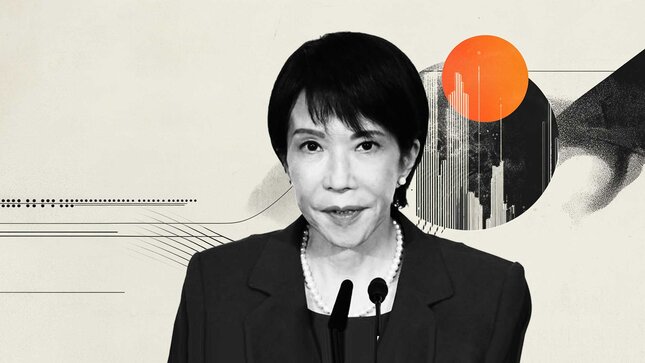
Japanese PM Takaichi nabs unprecedented victory – US data eyed this week
I do not think I would be exaggerating to say that Japanese Prime Minister Sanae Takaichi’s snap general election gamble paid off over the weekend – and then some. This secured the Liberal Democratic Party (LDP) an unprecedented mandate just three months into her tenure.
RECOMMENDED LESSONS
Making money in forex is easy if you know how the bankers trade!

I’m often mystified in my educational forex articles why so many traders struggle to make consistent money out of forex trading. The answer has more to do with what they don’t know than what they do know. After working in investment banks for 20 years many of which were as a Chief trader its second knowledge how to extract cash out of the market.
5 Forex News Events You Need To Know

In the fast moving world of currency markets where huge moves can seemingly come from nowhere, it is extremely important for new traders to learn about the various economic indicators and forex news events and releases that shape the markets. Indeed, quickly getting a handle on which data to look out for, what it means, and how to trade it can see new traders quickly become far more profitable and sets up the road to long term success.
Top 10 Chart Patterns Every Trader Should Know

Chart patterns are one of the most effective trading tools for a trader. They are pure price-action, and form on the basis of underlying buying and selling pressure. Chart patterns have a proven track-record, and traders use them to identify continuation or reversal signals, to open positions and identify price targets.
7 Ways to Avoid Forex Scams

The forex industry is recently seeing more and more scams. Here are 7 ways to avoid losing your money in such scams: Forex scams are becoming frequent. Michael Greenberg reports on luxurious expenses, including a submarine bought from the money taken from forex traders. Here’s another report of a forex fraud. So, how can we avoid falling in such forex scams?
What Are the 10 Fatal Mistakes Traders Make
Trading is exciting. Trading is hard. Trading is extremely hard. Some say that it takes more than 10,000 hours to master. Others believe that trading is the way to quick riches. They might be both wrong. What is important to know that no matter how experienced you are, mistakes will be part of the trading process.
The challenge: Timing the market and trader psychology

Successful trading often comes down to timing – entering and exiting trades at the right moments. Yet timing the market is notoriously difficult, largely because human psychology can derail even the best plans. Two powerful emotions in particular – fear and greed – tend to drive trading decisions off course.