How to build a manual trading system

It's very necessary to translate our manual trading logic into a system to improve working efficiency and reduce mistakes of manual judgment.
There are some key factors which should be taken into account.
I'll make a brief introduction and use my own "Tendency Forex" system as an example.
1. The system should be Backtestable.
Backtesting is the only reliable method to assess any trading system.
Most of us have experience of backtesting automated trading system.
But for a manual trading system, backtesting is always ignored or omitted.
To a simple "moving average cross-over" system, 20 period MA cross-over 50 period MA and 50 period MA cross-over 100 period MA, which one is better?
MACD cross-over and Slow Stoch cross-over, which one is more accurate?
The price closed above 100 period MA and 200 period MA, which one is more likely to indicate a trend reversal?
100 period Simple MA and 100 period Smoothed MA, which one is more reliable?
Ichimoku Cloud is very useful in USDJPY and other Yen-cross, does it work well in other USD majors and Commodities? ...
All these questions need backtesting to tell us an answer.
Video 1: Backtest of Tendency Forex System
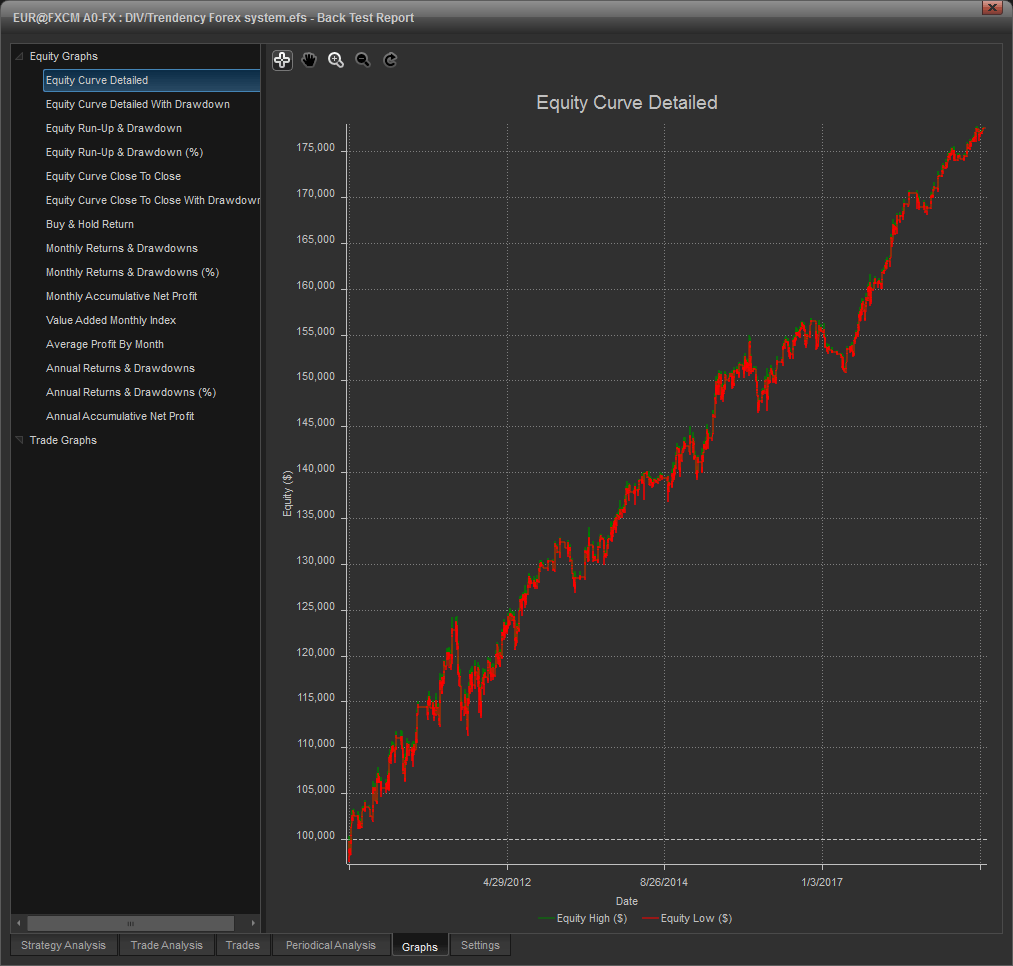
Chart 1: Backtest of ‘Tendency Forex’ System for EURUSD ( Fixed 1.0 lot per trade from 2010 )
2. Key Logic:
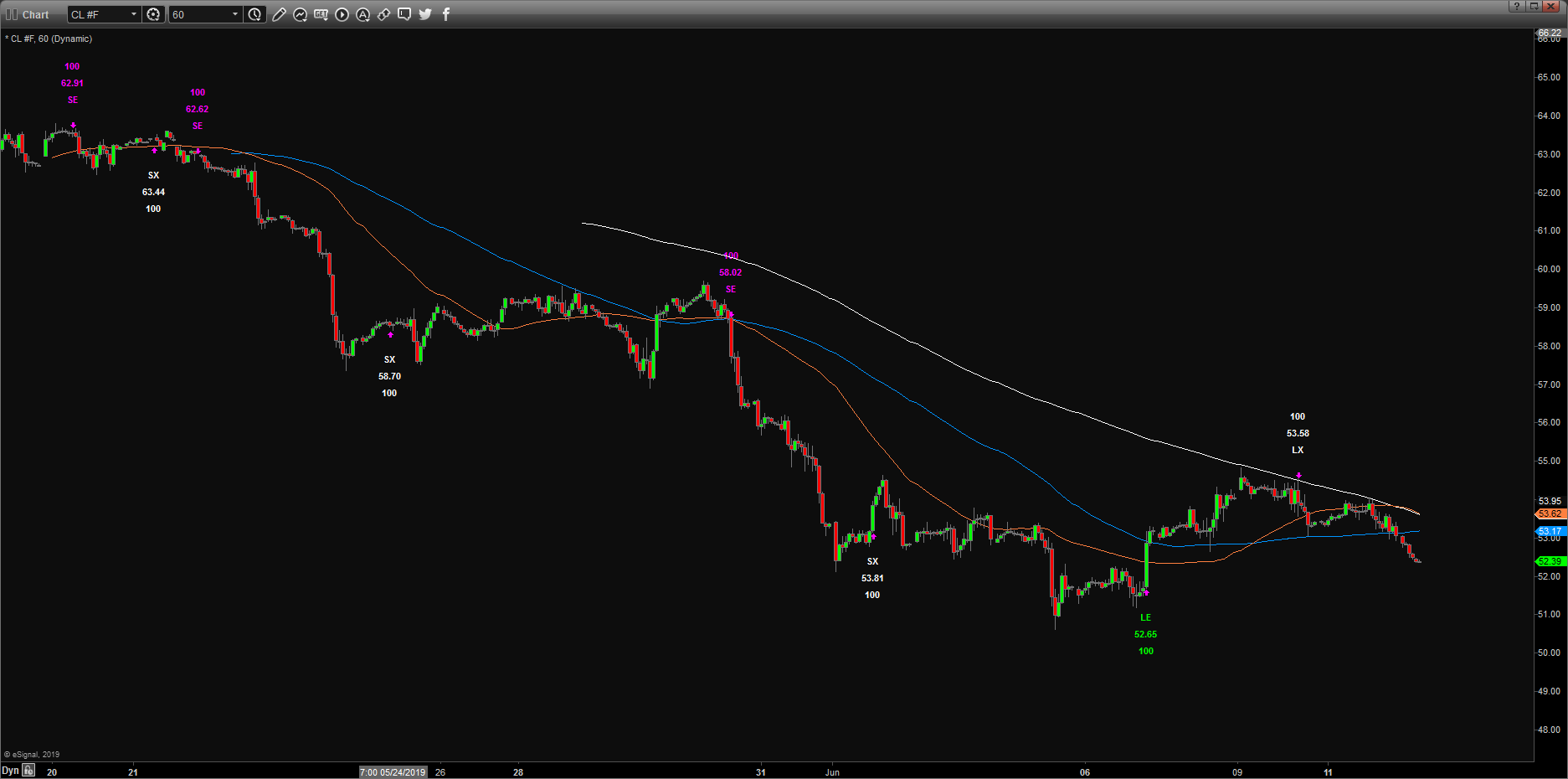
①Trend following logic is preferred. But when the market is consolidated, the Trend Following Logic may not work well.
Chart 2: Real time trading signal for EURUSD
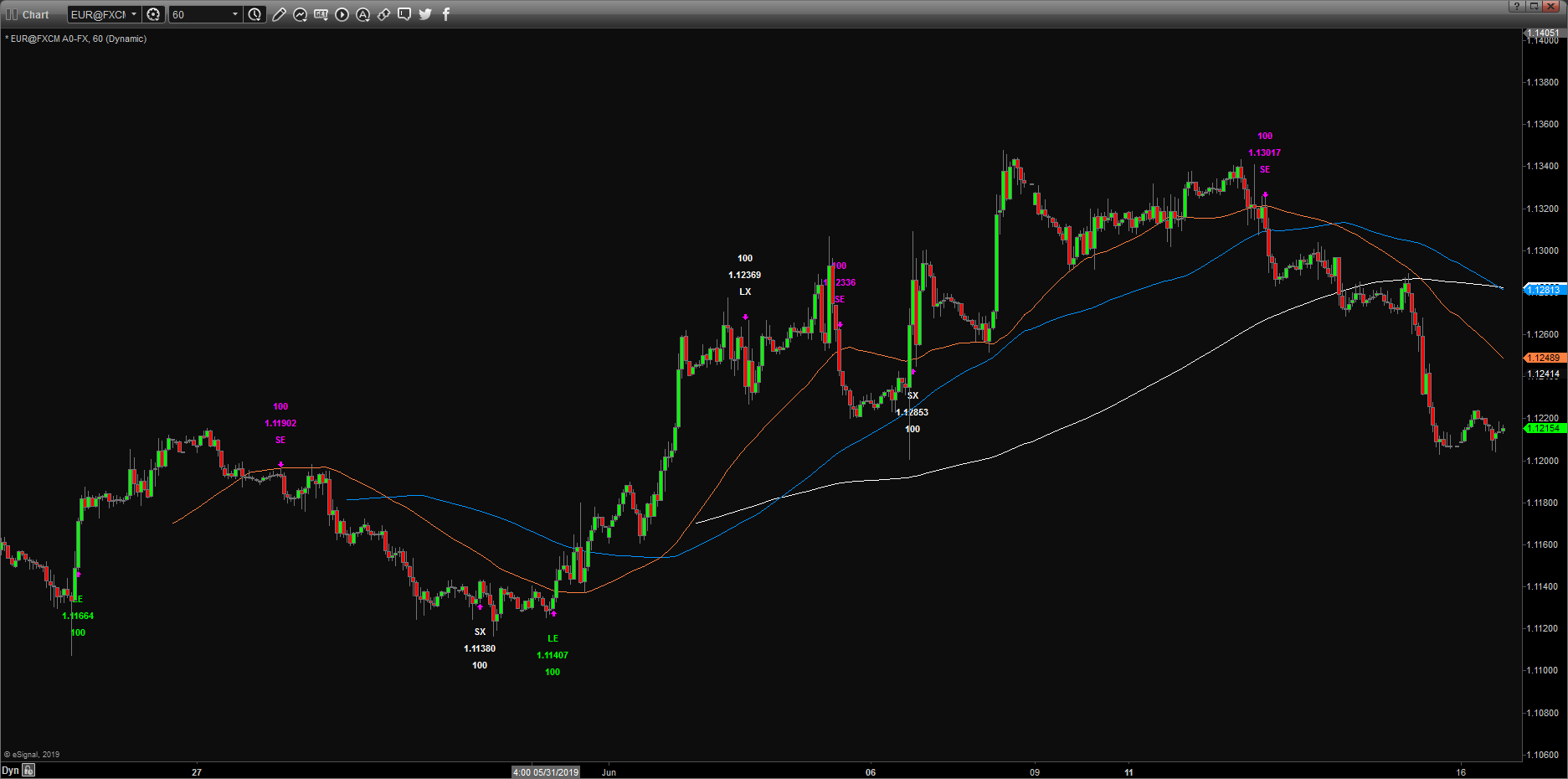
Chart 3: Real time trading signal for WTI Oil
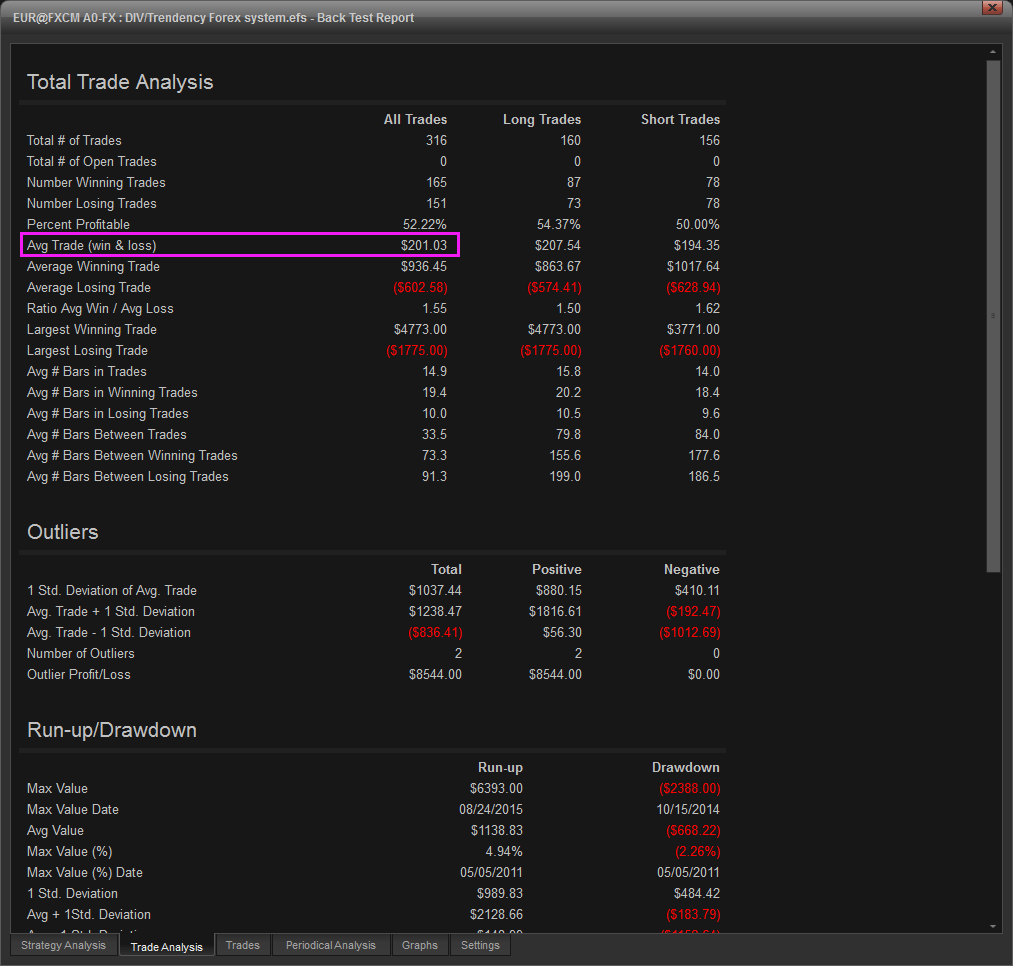
②For manual scalping strategy, if the expected pay-off for each trade is below 5 pips, you must consider whether you could enter and exit the trade in time.
Chart 4: Backtest of ‘Tendency Forex’ System for EURUSD ( Fixed 1 lot per trade, $200 means 20 pips )
③Grid and martingale strategy is very risky for both manual and automated system.
3. Data Feed:
For volume based indicator, we must use Futures data feed. There is no accurate volume calculation in the spot FX market.
4. Over-optimization:
I suggest using default parameters of all indicators in building your system.
Most over-optimized system could work well in backtest, but always failed in live forward test.
5. Alert:
This is a very useful function, we could not sit ahead of the desk 24 hours per trading day.
The alert function could make the work easy.
Chart 5: Email Alert

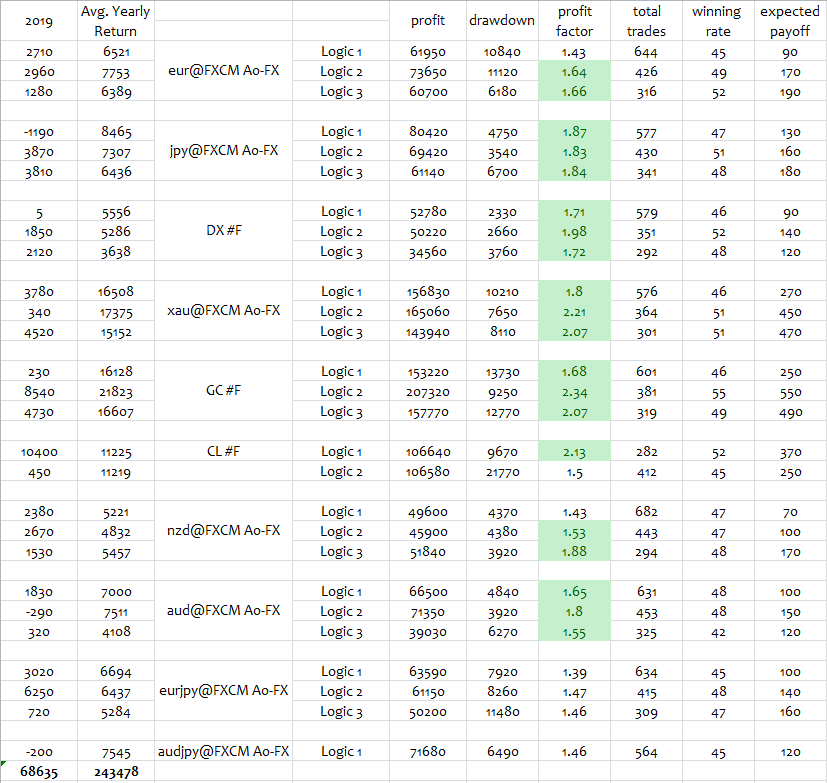
6. Profit Factor:
Above 1.50 is preferred, means that if I invest 1 dollar I can expect to get 1.5$ back from trading that model.
The higher the better.
Chart 6: Profit Factor of different logic of Forex,Gold and Oil
7. Risk Control:
"Tendency Forex" system was created by myself in later 2017 for USD majors, Gold, Oil and LME base metals, when the work was finished, I was very excited.
However, the harassment was coming soon.
I'm a manual trader and mainly trade on Elliottwave theory and my own trend following method.
I always wanted to manually select some signals to follow, just like a "manual filter", but it did not work well.
Until several months ago, I could not concentrate on the market due to some other issues.
Then I told my wife and my brother to follow all the trading signals generated by "Tendency Forex" system.
The results were much better than my own trading!
Then I understand the"Tendency Forex" system is focused on the short term trend of 15-20 four hourly bars, but my manual trading is focused on 10-20 daily bars. It's hard to combine them well unless we are in a strong trend market.
So, it's better to follow all of them with good risk control, such as fixed lot size ( no higher than 1:2 leverage ) or fixed risk (no higher than 0.5% risk).
Author

Yue Wang
LinoCapital
Master's Degree in Hepatobiliary Surgery.