 Dr. Woody Johnson
Independent Analyst
Well, it’s January and the New Year is still fresh. In fact, some people are moving along with all deliberate speed on New Year’s resolutions. However, unfortunately many more are experiencing a severe slowdown in momentum towards actualizing those resolutions…already! Did you make a promise to yourself about losing 20 lbs. or beginning an exercise regimen or following all of your trading rules? And, how’s that working for you? Which group are you in? Regrettably, for all too many, it doesn’t matter because eventually, no matter how gung-ho they are in the beginning of the year and regardless of how enthusiastically they declare their intention, follow-through starts to wane in the first few weeks. Then, before-you-know-it they are back in that same rut and getting those same dismal results because they didn’t really change anything in the first place.

Don’t get me wrong, there are those who make resolutions that actually follow-through and achieve new aims. The difference between those who hit the target and those who don’t is simple. Those who accomplish their resolutions follow a plan that includes:
-
Identifying a purpose for the change
-
Setting goals to manifest the purpose
-
Constructing a vision of the success
-
Identifying a role model or mentor to support the endeavor
-
Making a plan that maps a clear path to achievement
-
Identifying any new items to learn
-
Identifying strategies to ensure that they persist and persevere until they prevail.
On the surface, these items may sound like a lot, but to the contrary, if you are serious about your claim to a new you in the New Year then it’s a small price to pay vs. doing the same thing you’ve always done and expecting a different result.
Let’s look a little more closely at these steps to making what begins as a resolution into a successful accomplishment by briefly examining an example. Consider this:
All last year after a particularly gnarly string of losses, Kevin found that he had become quite fearful of allowing his trade plans to play out. As one of my colleagues, Michelle Volmering, would say, Kevin was unwilling to allow the market to prove his plan wrong or right. This resulted in a bad habit of prematurely exiting trades at either break-even or small profits that did not hit his first target and therefore did not justify the plan risk.
One fateful day towards the end of the year he became so tired of this consistent rule violation that he became determined to seriously address the issue. He realized that to be the successful trader he wanted to be he had to make a real change. To set this commitment in motion he thought, “Why is this change so important?” He came up with several compelling reasons, not the least of which was his desire to not let his family down as their dreams were tied to his ability to effectively perform.
Armed with his new ferocious “why” he set out to identify what he was aiming for…his goal; i.e., to allow his plan to play out and let his winners to run. Next, he sequestered himself in a quiet place, closed his eyes and envisioned what this goal would look, sound and feel like. He saw himself using tools to support his ability to follow-through, such as taking deep breaths to relax his anxiety and employing a set-and-forget bracket order strategy, to name a couple. He then consulted with his trading buddies and instructors to identify who had successfully dealt with a similar issue and modeled his behavior to match what they had done. He knew if they could do it so could he. He then constructed a daily trading plan (DTP) with routines and identified the thoughts, emotions and behaviors that contributed to this rule violation so that he could be proactive and preemptive in dealing with distractions before they became too big to stop. After that, he streamlined his DTP, he considered if there were anything new that he could learn to support his DTP. As he reflected, he grasped that he could use more help in drawing chart levels in order to increase his confidence in the trade plan to be executed and got some additional instruction.
Now, Kevin appreciated that in order to effectively change this bad habit it would be prudent to include a strategy to maintain persistence and perseverance because change is not easy. He knew that every time he activated his vision for success in this change he felt energized and fiercely focused on what he must do, so he made a point of using his vision several times per day, not only as he traded, to “plug” into his hunger and want-it-so-bad-I-can-taste-it desire forging an internal tenacity to stay the course. With these steps under his belt he made an iron-clad commitment to not just a New Year’s resolution but what amounted to a pledge to remain “resolute” until he had reached the top of his trading mountain.
Making New Year’s resolutions can be a great way to begin a year, but unless you are serious about them so often they become relegated to the pile of discarded white elephant gifts and trashed noise makers that are just so many remnants of another soon forgotten year. Take a stand. If you’re going to go for a change then be “effective”. This is what we teach in Mastering the Mental Game on-location and online courses. Ask your Online Trading Academy representative for more information. Also, get my book, From Pain to Profit: Secrets of the Peak Performance Trader.
Note: All information on this page is subject to change. The use of this website constitutes acceptance of our user agreement. Please read our privacy policy and legal disclaimer. Opinions expressed at FXstreet.com are those of the individual authors and do not necessarily represent the opinion of FXstreet.com or its management. Risk Disclosure: Trading foreign exchange on margin carries a high level of risk, and may not be suitable for all investors. The high degree of leverage can work against you as well as for you. Before deciding to invest in foreign exchange you should carefully consider your investment objectives, level of experience, and risk appetite. The possibility exists that you could sustain a loss of some or all of your initial investment and therefore you should not invest money that you cannot afford to lose. You should be aware of all the risks associated with foreign exchange trading, and seek advice from an independent financial advisor if you have any doubts.
Editors’ Picks

EUR/USD extends its optimism past 1.1900
EUR/USD retains a firm underlying bid, surpassing the 1.1900 mark as the NA session draws to a close on Monday. The pair’s persistent uptrend comes as the US Dollar remains on the defensive, with traders staying cautious ahead of upcoming US NFP prints and CPI data.

GBP/USD tilts bullish as markets barrel toward mid-week NFP print
GBP/USD is holding a broader bullish structure on the daily chart, with price trading well above the 50 Exponential Moving Average at 1.3507 and the 200 EMA at 1.3310, confirming the intermediate uptrend that has been in place since the November 2025 low near 1.2300.

USD/JPY slumps below 156.00 as Japanese Yen strengthens after Takaichi's landslide victory
The USD/JPY pair tumbles to near 155.90 during the early Asian session on Tuesday. The Japanese Yen strengthens against the US Dollar after Japanese Prime Minister Sanae Takaichi led the ruling Liberal Democratic Party to a historic landslide win. Traders braced for key US economic data that could offer more clues on the Federal Reserve's monetary policy.
Editors’ Picks

AUD/USD taps three-year highs on broad US Dollar weakness
AUD/USD is trading near three-year highs after a strong break above the 0.7000 psychological level for the first time since February 2023, supported by the Reserve Bank of Australia's surprise 25 basis point rate hike to 3.85% at its February meeting. The daily chart shows the pair in a well-defined uptrend, holding above both the 50-day Exponential Moving Average near 0.6970 and the 200-day EMA around 0.6700.

Gold pushes back above $5,000
The daily chart shows spot Gold in a parabolic uptrend that accelerated sharply from the $4,600 area in late January, printing a record high at $5,598.25 before a violent reversal erased nearly $1,000 in value during the final days of the month.
USD/JPY slumps below 156.00 as Japanese Yen strengthens after Takaichi's landslide victory
The USD/JPY pair tumbles to near 155.90 during the early Asian session on Tuesday. The Japanese Yen strengthens against the US Dollar after Japanese Prime Minister Sanae Takaichi led the ruling Liberal Democratic Party to a historic landslide win. Traders braced for key US economic data that could offer more clues on the Federal Reserve's monetary policy.

Litecoin eyes $50 as heavy losses weigh on investors
Following a strong downtrend across the crypto market over the past week, Litecoin holders are under immense pressure. The Bitcoin fork has trimmed about $1.81 billion from its market capitalization since the beginning of the year, sending it below the top 20 cryptos by market cap.
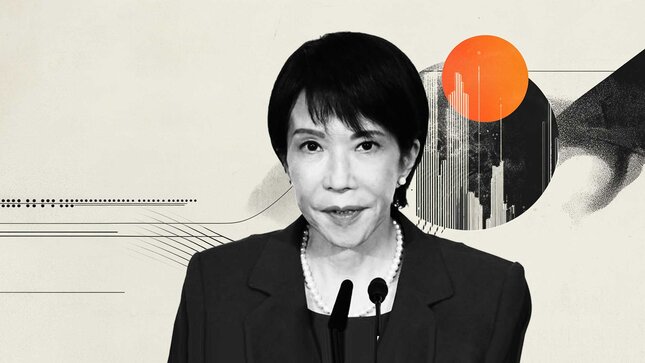
Japanese PM Takaichi nabs unprecedented victory – US data eyed this week
I do not think I would be exaggerating to say that Japanese Prime Minister Sanae Takaichi’s snap general election gamble paid off over the weekend – and then some. This secured the Liberal Democratic Party (LDP) an unprecedented mandate just three months into her tenure.
RECOMMENDED LESSONS
Making money in forex is easy if you know how the bankers trade!

I’m often mystified in my educational forex articles why so many traders struggle to make consistent money out of forex trading. The answer has more to do with what they don’t know than what they do know. After working in investment banks for 20 years many of which were as a Chief trader its second knowledge how to extract cash out of the market.
5 Forex News Events You Need To Know

In the fast moving world of currency markets where huge moves can seemingly come from nowhere, it is extremely important for new traders to learn about the various economic indicators and forex news events and releases that shape the markets. Indeed, quickly getting a handle on which data to look out for, what it means, and how to trade it can see new traders quickly become far more profitable and sets up the road to long term success.
Top 10 Chart Patterns Every Trader Should Know

Chart patterns are one of the most effective trading tools for a trader. They are pure price-action, and form on the basis of underlying buying and selling pressure. Chart patterns have a proven track-record, and traders use them to identify continuation or reversal signals, to open positions and identify price targets.
7 Ways to Avoid Forex Scams

The forex industry is recently seeing more and more scams. Here are 7 ways to avoid losing your money in such scams: Forex scams are becoming frequent. Michael Greenberg reports on luxurious expenses, including a submarine bought from the money taken from forex traders. Here’s another report of a forex fraud. So, how can we avoid falling in such forex scams?
What Are the 10 Fatal Mistakes Traders Make
Trading is exciting. Trading is hard. Trading is extremely hard. Some say that it takes more than 10,000 hours to master. Others believe that trading is the way to quick riches. They might be both wrong. What is important to know that no matter how experienced you are, mistakes will be part of the trading process.
The challenge: Timing the market and trader psychology

Successful trading often comes down to timing – entering and exiting trades at the right moments. Yet timing the market is notoriously difficult, largely because human psychology can derail even the best plans. Two powerful emotions in particular – fear and greed – tend to drive trading decisions off course.