Will altcoin investments pay out in third quarter of 2023?

In this article, we will discuss if it is a good time to invest in altcoins or not. But before diving into the main topic, let’s also take a look at Bitcoin, which will set the foundation for analyzing altcoins’ performance.
Read more: Is the alt season in jeopardy as Bitcoin slides below $30,000?
Bitcoin fractals
Analyzing Bitcoin price action from 2021 and 2023 reveals a bearish setup. As the image below shows, if the 2021 formation plays out, BTC could undergo a steep correction.
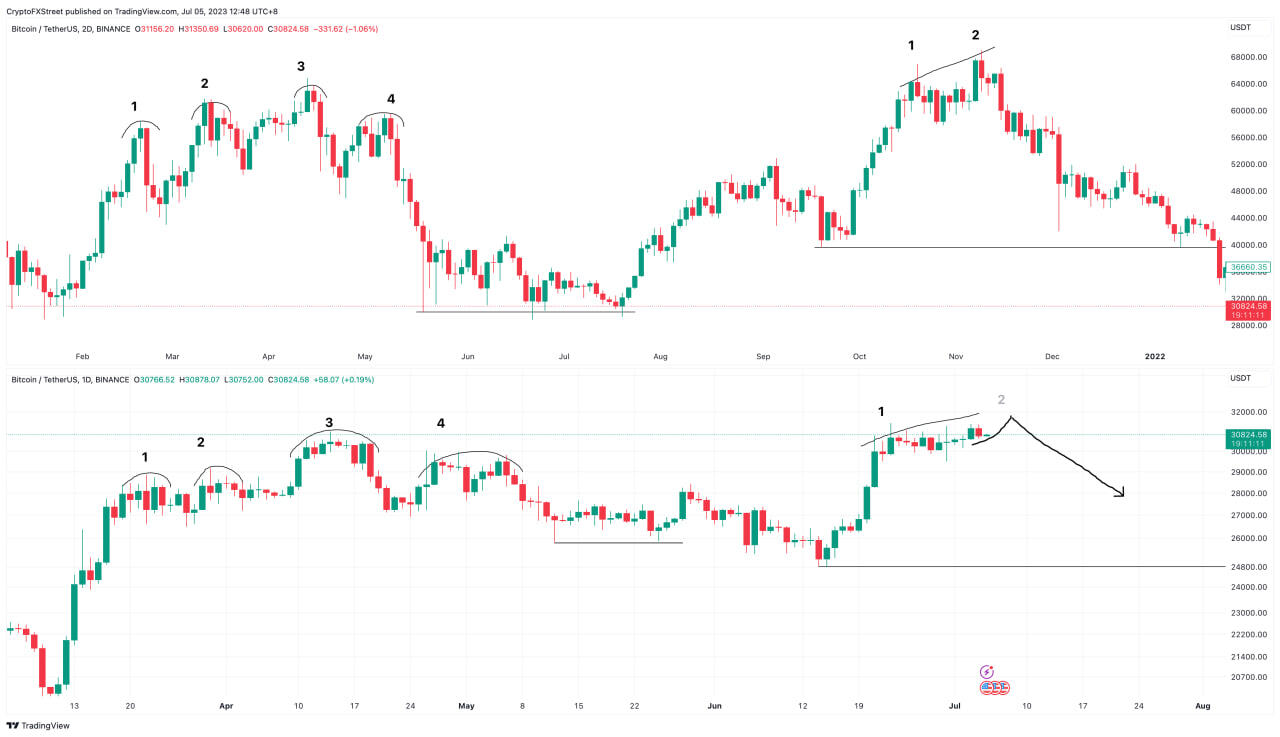
BTC/USDT fractal 1 chart
The second fractal, pointed out by Twitter user ColdBloodedShiller, shows that a bearish divergence was followed by a minor correction and a massive breakout.
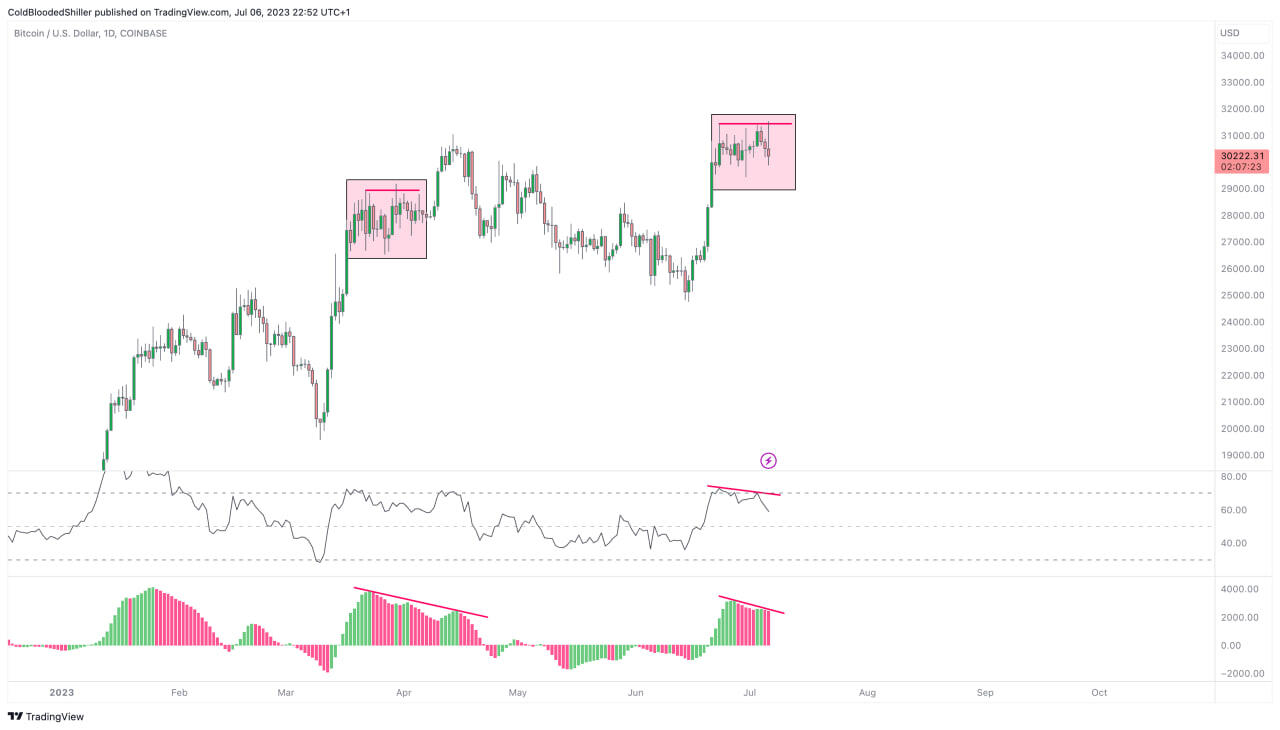
BTC/USDT fractal 1 chart
While both scenarios are likely, the first outlook seems more plausible to me. Why? Here are a few reasons:.
Bitcoin price hasn’t lived up to the approval of long-delayed ETFs despite their benefits to the Bitcoin ecosystem. In other words, this bullish news hype is already priced in.
The historical Bitcoin returns reveal that the third quarter of the year (Q3) is typically associated with bear markets or profit-taking. Hence, the total returns for Q3 or the individual months is not impressive.
There is, however, a chance for Bitcoin bulls to kickstart an uptrend by cementing their position above $32,000. Such a development could push BTC back to $35,000 and $41,000 resistance levels.
Also read: Top 3 altcoins to buy for next alt season: PEPE, OP, BNB
A failure, however, will lead to a steep correction to $28,100 and $27,300 support levels. If this second scenario plays out, the chances of an altcoin rally are slim. But if Bitcoin price continues to rally higher, then altcoins have a better chance at kickstarting a mini alt season.
Read more: What is alt season
Top Three Reads
XRP holders want to write letters to Judge Torres, lawyer says no good can come from it
Bitcoin ETFs are not a winner take all, experts say, as influence on crypto exhausts
Like this article? Help us with some feedback by answering this survey:
Author

Akash Girimath
FXStreet
Akash Girimath is a Mechanical Engineer interested in the chaos of the financial markets. Trying to make sense of this convoluted yet fascinating space, he switched his engineering job to become a crypto reporter and analyst.