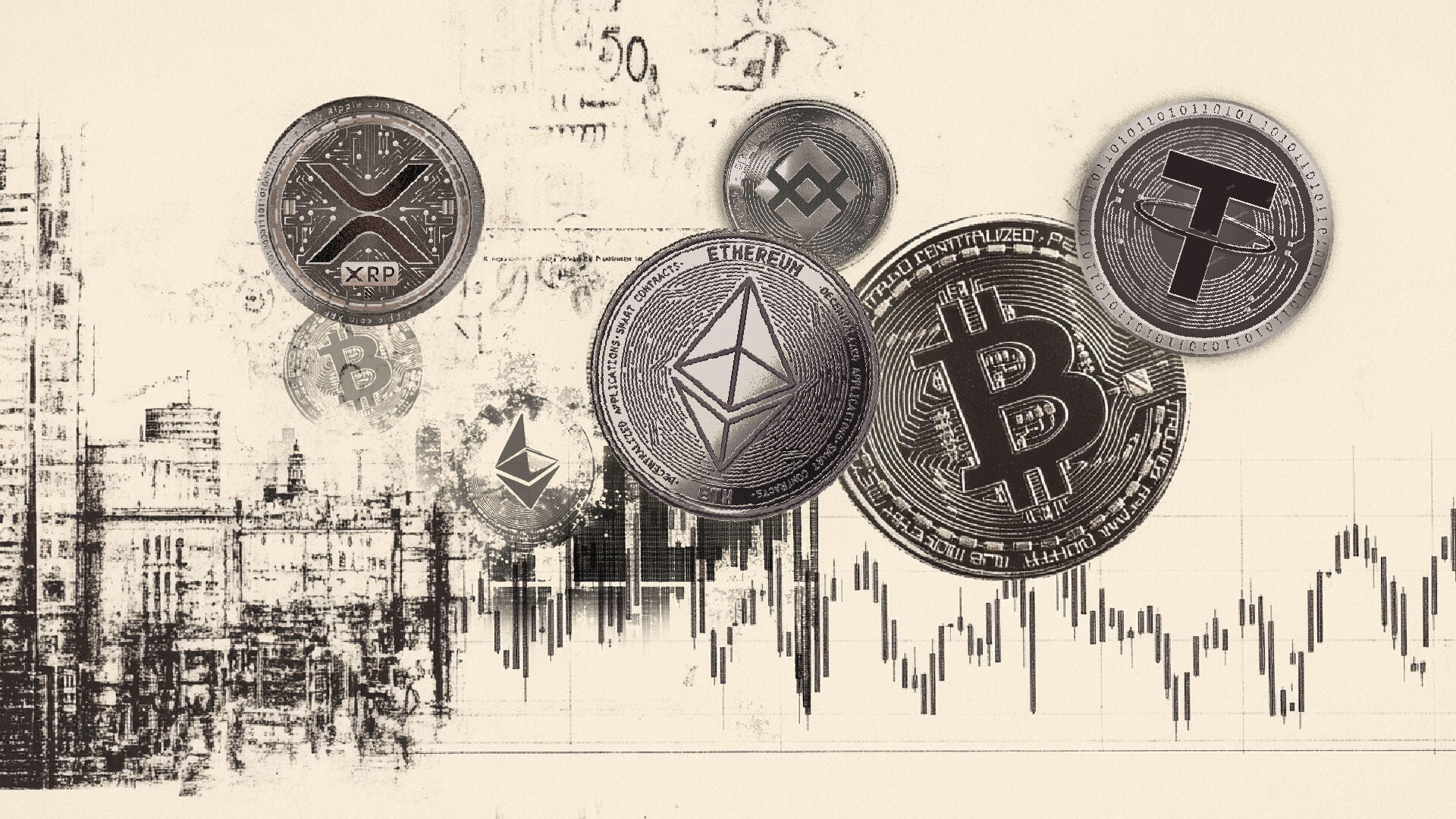
PayPal’s stablecoin launch on Ethereum fails to catalyze ETH price rally for this reason
- XRP and Ethereum prices fail to rally despite recent bullish catalysts, experts conclude that BTC drives the crypto market.
- PayPal’s PYUSD issuance on Ethereum and XRP’s regulatory clarity failed to drive a rally in the altcoins’ prices.
- Attorney John Deaton argues that Bitcoin influences the state of the crypto ecosystem and sentiment among market participants.

PayPal issued a US Dollar-pegged stablecoin PYUSD on the Ethereum blockchain. PayPal’s stablecoin issuance failed to catalyze a recovery in ETH price as the altcoin continues to trade below the $1,900 level.
Also read: When is EIP-4844, and why is it considered the biggest game changer for Ethereum?
Why Ethereum and XRP prices fail to rally despite recent bullish catalysts
Ethereum and XRP noted key bullish catalysts within the past month. In the case of XRP, Ripple’s partial win against the US Securities and Exchange Commission (SEC), was expected to catalyze an XRP price rally and send the altcoin to a new all-time high.
In the case of Ethereum, PayPal’s issuance of a USD-pegged stablecoin, in association with Paxos, on the ETH blockchain was considered a bullish announcement. Unlike market participants’ expectations, these events failed to push the prices of these altcoins higher.
XRP price climbed to a multi-month peak, and Ethereum continued to linger below the $1,900 level, post the bullish announcements. John Deaton, a pro-XRP attorney and leading cryptocurrency expert, has an explanation for this phenomenon.
Deaton argues that Bitcoin, the largest crypto asset by market capitalization, determines the direction of the price trend for most altcoins. For XRP price to hit its all-time high or Ethereum to rally in response to PayPal’s announcement, the ecosystem needs a Bitcoin bull market.
If I had told you #XRP would get regulatory clarity but not hit $1, many wouldn’t have believed it. Likewise, if I had told you PayPal would issue a stable coin on Ethereum but #ETH wouldn’t increase at all, many wouldn’t have believed it. Like it or not, #Bitcoin drives this…
— John E Deaton (@JohnEDeaton1) August 8, 2023
Bitcoin price has remained largely unchanged, and the market is uneventful as BTC traders wait and watch or engage in accumulating the asset. This has acted as a barrier for altcoins to witness massive price rallies in the ongoing market cycle.
Bitcoin dominance has climbed by nearly 2% over the past two months, according to CoinGecko. At the time of writing, BTC dominance is 46.96% and the asset is trading at $29,582.95, below the key psychological barrier of $30,000.
Ethereum FAQs
What is Ethereum?
Ethereum is a decentralized open-source blockchain with smart contracts functionality. Serving as the basal network for the Ether (ETH) cryptocurrency, it is the second largest crypto and largest altcoin by market capitalization. The Ethereum network is tailored for scalability, programmability, security, and decentralization, attributes that make it popular among developers.
What blockchain technology does Ethereum use?
Ethereum uses decentralized blockchain technology, where developers can build and deploy applications that are independent of the central authority. To make this easier, the network has a programming language in place, which helps users create self-executing smart contracts. A smart contract is basically a code that can be verified and allows inter-user transactions.
What is staking?
Staking is a process where investors grow their portfolios by locking their assets for a specified duration instead of selling them. It is used by most blockchains, especially the ones that employ Proof-of-Stake (PoS) mechanism, with users earning rewards as an incentive for committing their tokens. For most long-term cryptocurrency holders, staking is a strategy to make passive income from your assets, putting them to work in exchange for reward generation.
Why did Ethereum shift from Proof-of-Work to Proof-of-Stake?
Ethereum transitioned from a Proof-of-Work (PoW) to a Proof-of-Stake (PoS) mechanism in an event christened “The Merge.” The transformation came as the network wanted to achieve more security, cut down on energy consumption by 99.95%, and execute new scaling solutions with a possible threshold of 100,000 transactions per second. With PoS, there are less entry barriers for miners considering the reduced energy demands.
Like this article? Help us with some feedback by answering this survey:
Author

Ekta Mourya
FXStreet
Ekta Mourya has extensive experience in fundamental and on-chain analysis, particularly focused on impact of macroeconomics and central bank policies on cryptocurrencies.