Here is how Bitcoin may react to the new $1 billion US Pandemic Relief Plan
- Lawmakers in the US are set to end the stalemate over the $1 billion COVID-19 relief plan.
- Bitcoin is believed to have rallied from $6,000 to $11,000 following the first stimulus check.
- Money supply in the US has gone up by 55% from February amid the rocketing BTC prices.

The Coronavirus pandemic has wreaked havoc across the world, changing how people live and how businesses run. Unemployment figures shot up significantly, warranting governments to consider relief plans for their citizens. The first stimulus check in the United States, worth $1,200, saw Bitcoin rally extensively from $6,000 to $11,000.
It was clear that Americans were using part of their relief package to buy Bitcoin and other cryptocurrencies. Bitcoin offers an investment alternative that is almost inflation-free. On the other hand, the Federal Reserve has been on a printing spree for dollar bills, which increase the money supply and inflation.
Bitcoin rally commenced following the United States stimulus check
The Fed committed to keeping interest rates at the lowest besides the stimulus check. Several institutions that have been inherently dominant in the traditional investment sector have also dived into Bitcoin. For instance, in September, MicroStrategy increased its holdings in BTC by $175 million to $425 million.
Cryptocurrency exchanges reported an upsurge in Bitcoin purchases following the first check. In about five months, Bitcoin skyrocketed from price levels around $6,000 to highs above $11,000. The US citizens would prefer to bet on Bitcoin with their relief packed, which has been massively yielding.
-637429969129350948.png)
BTC/USD daily chart
How might Bitcoin react to a $1 billion relief plan?
A vaccine to help curb the spread of COVID-19 is likely to be distributed in the first quarter of 2021. However, the damage caused by the pandemic has been disastrous, and its impact is set to be long lasting. Republicans and Democratic negotiators are currently conversing about the ballooning government spending bill and the COVID-19 relief plan.
In the meantime, talks regarding the proposed $1 billion COVID-19 relief seem to have hit a barrier, with legislators squabbling over the $1.4 trillion omnibus bill set to fund the US economy in 2021. The $1 billion relief is set to be attached to the same gigantic bill.
Time is running out for US lawmakers, especially with the prevailing funding set to expire on December 11. Some legislators like the Senate Leader Mitch McConnell have resorted to allowing a funding extension to avoid shutting down. The Relief plan is likely to remain unchanged but will encompass $160 billion for states and local governments.
Details about when this package will start being redistributed remain unknown, mainly due to the 2021 funding bill's disagreements. A funding formula is being developed at the moment; however, it will focus on getting the money to the states with the greatest need.
Bitcoin price status quo
Bitcoin is holding above $19,000 as consolidation becomes dominant. The flagship cryptocurrency dropped to levels near $18,000 last week but made a considerable recovery. In the meantime, BTC is struggling to sustain the uptrend to $20,000 due to the acute resistance at $19,500.
%20(1)-637429970023032881.png)
BTC/USD 4-hour chart
Consequently, Bitcoin is likely to scale to higher levels on the release of the COVID-19 relief fund. A good number of lawmakers, both Democratic and Republican, want the relief plan to include an individual check. For now, talks have stalled over business support, extended unemployment benefits, and funding for COVID-19 vaccines.
A correlation is likely when the relief fund starts distribution. Cryptocurrency exchanges are expected to experience a higher volume of BTC purchases. Eventually, the attention will create enough tailwind to kick start another rally. Besides, as we have covered before, Bitcoin is nowhere near its peak, even in the ongoing bull run.
The correlation between money supply and Bitcoin
The United States M1 money supply is said to have risen by 55%% since February this year. In other words, 35% of all the circulating US dollar bills have been released into the economy in just ten months.
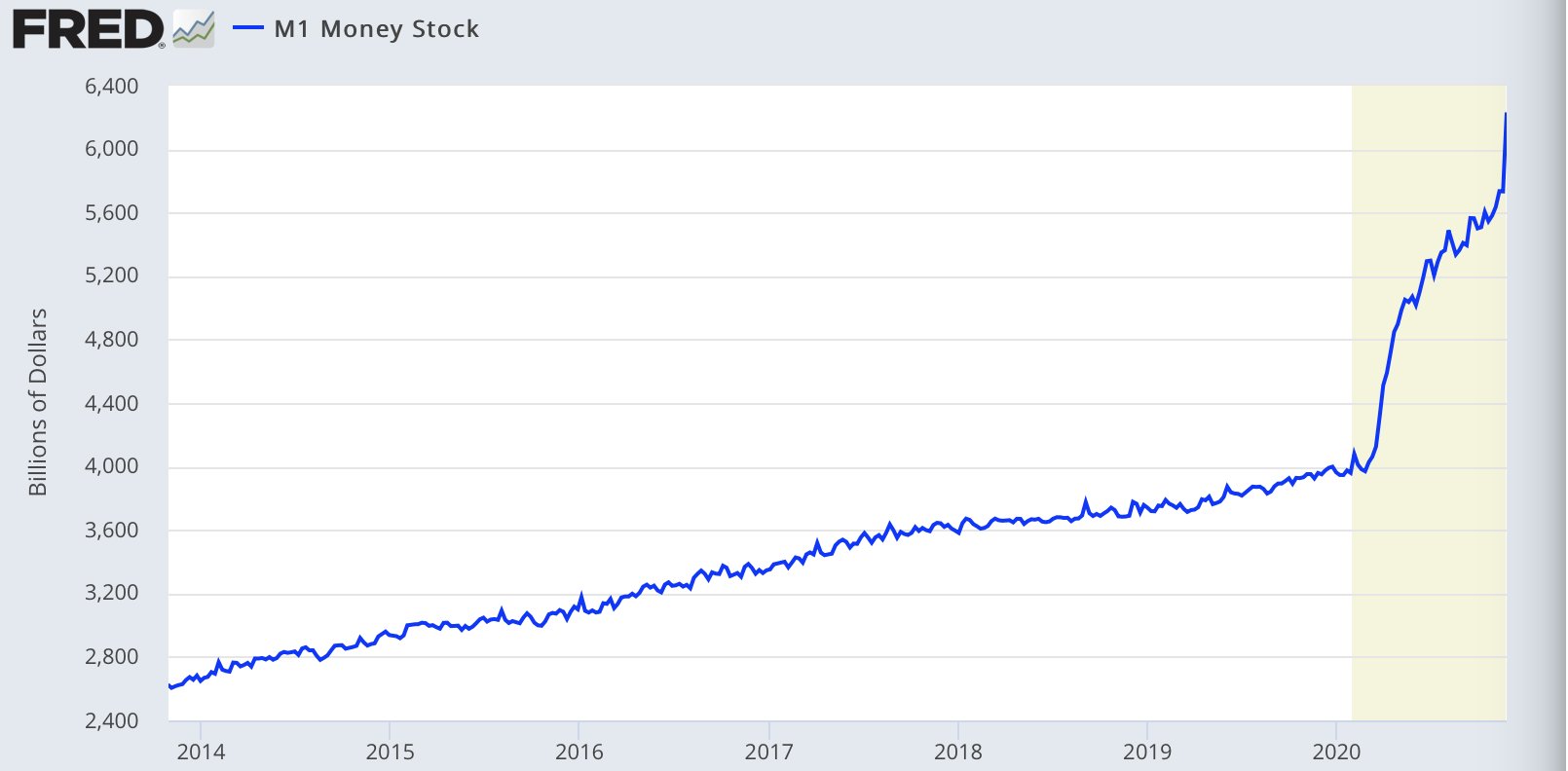
US M1 money supply
As the money supply shot up to astronomical figures, Bitcoin rallied to new yearly highs from March lows of around $4,800. However, it is essential to note that this is a correlation but not causation. Therefore, it cannot be used on its own to predict where Bitcoin is heading.
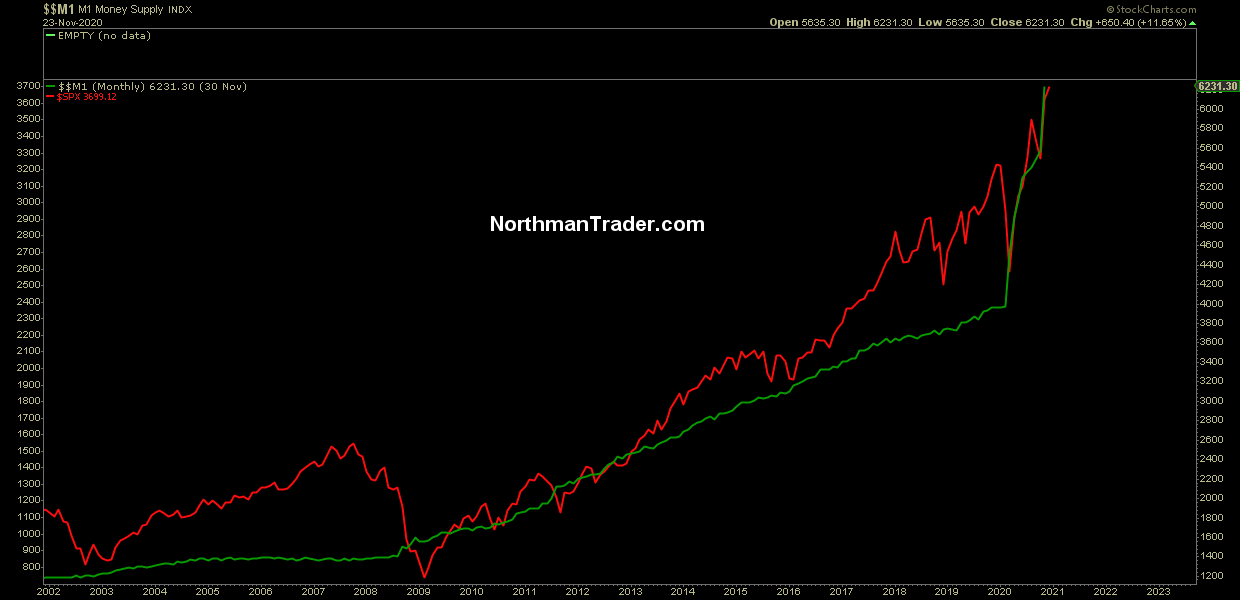
US M1 money supply
The current money supply figures are likely to increase with the proposed COVID-19 relief fund. A higher money supply leads to inflation, which pushes investment companies, retail investors, and individuals to seek alternative noninflationary assets such as Bitcoin and gold.
In other words, if the Fed continues with the printing spree, Bitcoin, and other cryptocurrencies are likely to continue getting the investors' attention, hence the potential to spike to higher price levels.
Author

John Isige
FXStreet
John Isige is a seasoned cryptocurrency journalist and markets analyst committed to delivering high-quality, actionable insights tailored to traders, investors, and crypto enthusiasts. He enjoys deep dives into emerging Web3 tren