Bitcoin's open interest hits $34 billion: Why the Dollar decline masks stable leverage demand
- Bitcoin futures open interest drops 28% in dollar terms but remains flat in BTC.
- Forced liquidations total $5.2 billion over two weeks, explaining the nominal contraction.
- Options bearish skew hits 22% and funding rates remain below the 12% threshold.

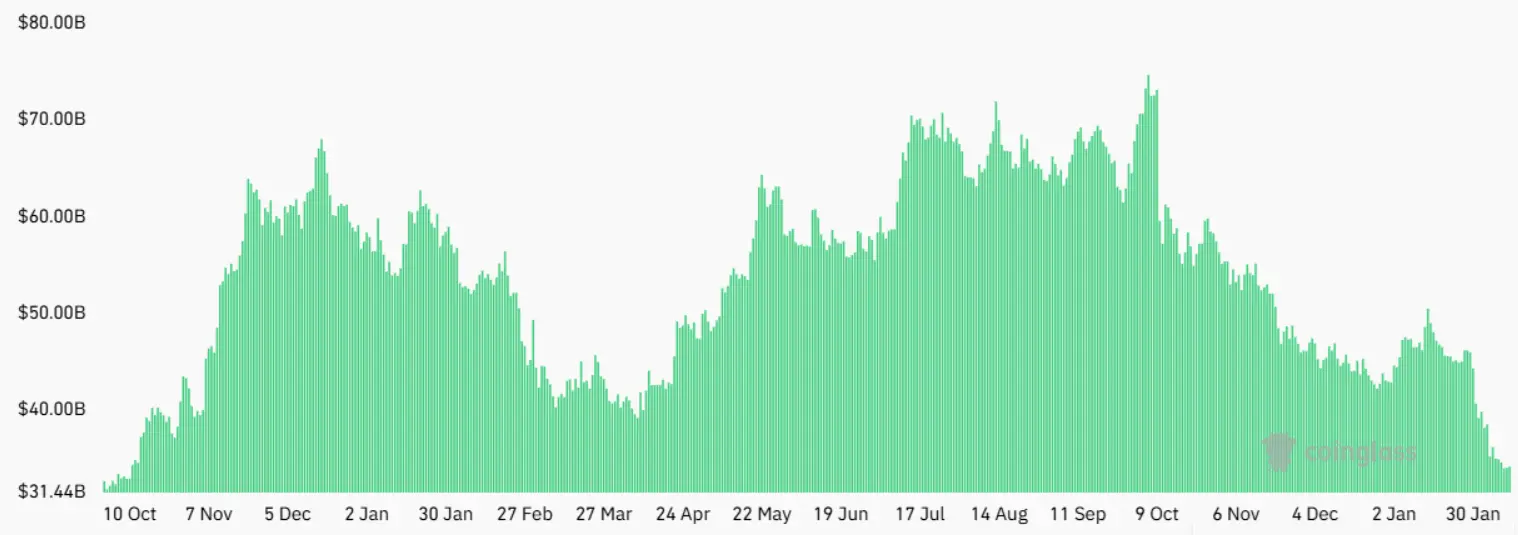
Aggregate Bitcoin futures open interest plummeted to $34 billion on Thursday, reflecting a 28% decline over the past thirty days. Yet the dollar figure masks a different reality when measured in Bitcoin terms: the amount remains virtually flat at 502,450 BTC, showing that leverage demand has not actually decreased. Forced liquidations totaled $5.2 billion over the past two weeks, explaining part of the contraction in dollar terms.
Bitcoin's decoupling from traditional markets
Bitcoin has fallen 28% over the past month while gold reclaimed the $5,000 psychological level and the S&P 500 trades merely 1% below its all-time high. Investors search for reasons explaining the divergence. Weak US labor market data provide a clue: the economy added just 181,000 jobs in 2025, below expectations.
 vs-1770956000393-1770956000394. BitcoinUSD (right).webp)
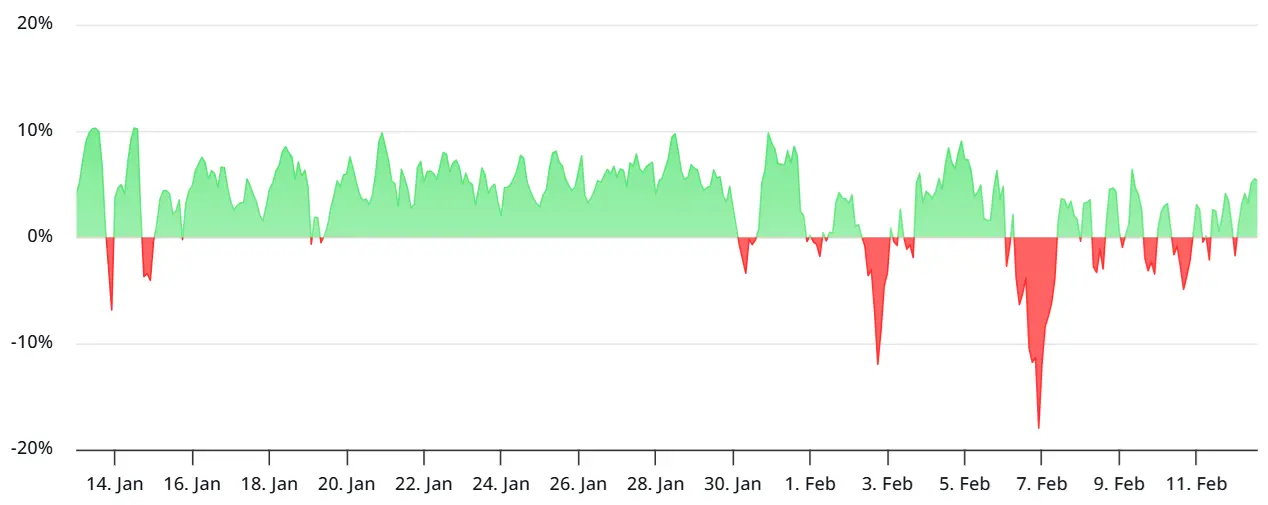
The annualized funding rate on Bitcoin futures remained below the neutral 12% threshold for four consecutive months, signaling widespread fear. Options markets reveal even greater concern: the options delta skew at Deribit hit 22%, indicating that traders buy put options at elevated premiums. Under normal conditions, the indicator ranges between -6% and +6%, reflecting balance in risk aversion.
Despite bearish derivative signals, the average daily volume of $5.4 billion in US-listed Bitcoin ETFs contradicts reports of weakened institutional demand. Bitcoin's recovery likely depends on greater clarity regarding US labor market conditions.
Author

Isai Alexei
Independent Analyst
I am Isai Alexei. I work as a journalist and financial analyst covering cryptocurrency markets and traditional securities. I have spent ten years analyzing digital assets, trading activity, and market structure.