Bitcoin’s next big move: Has wave three begun?

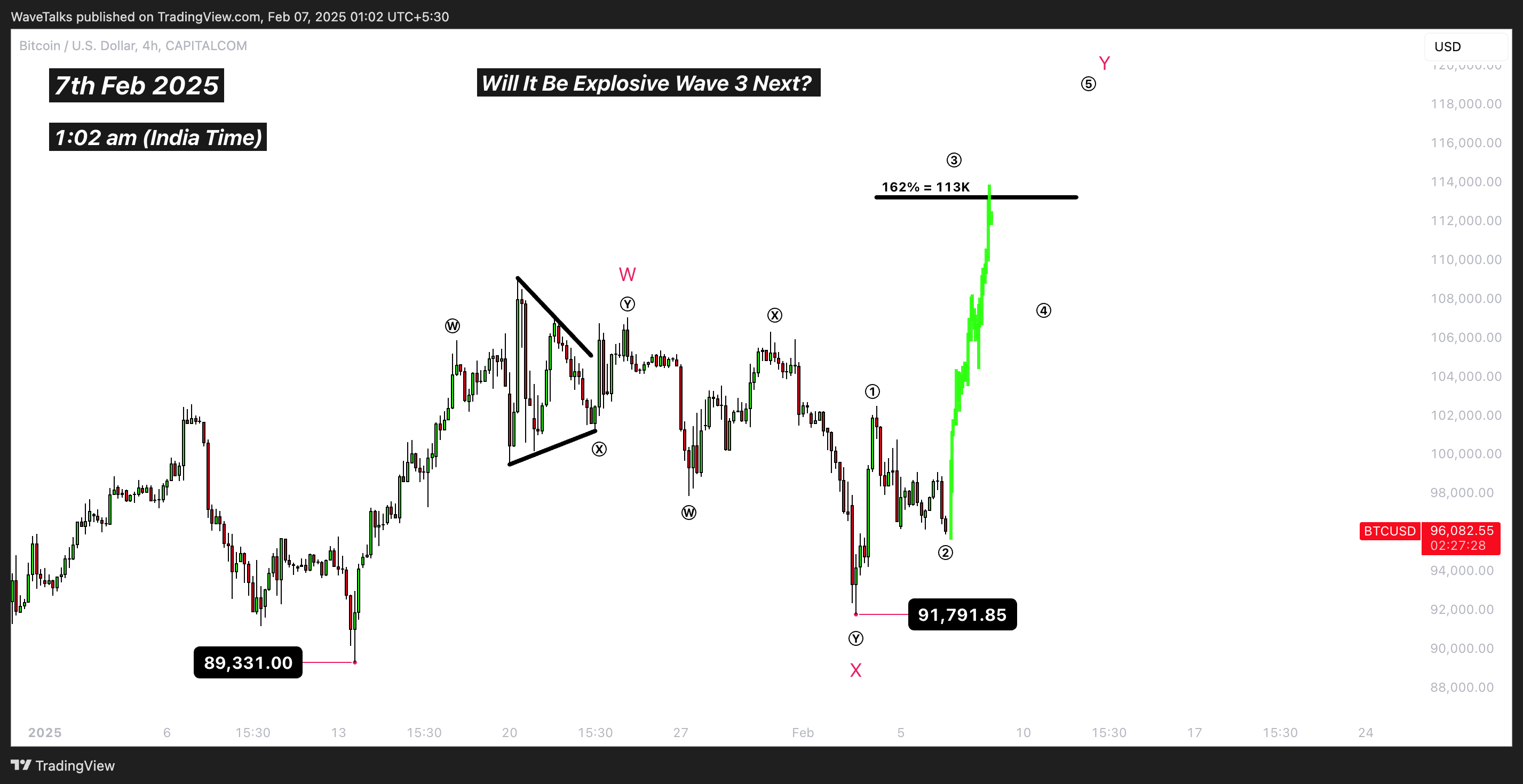
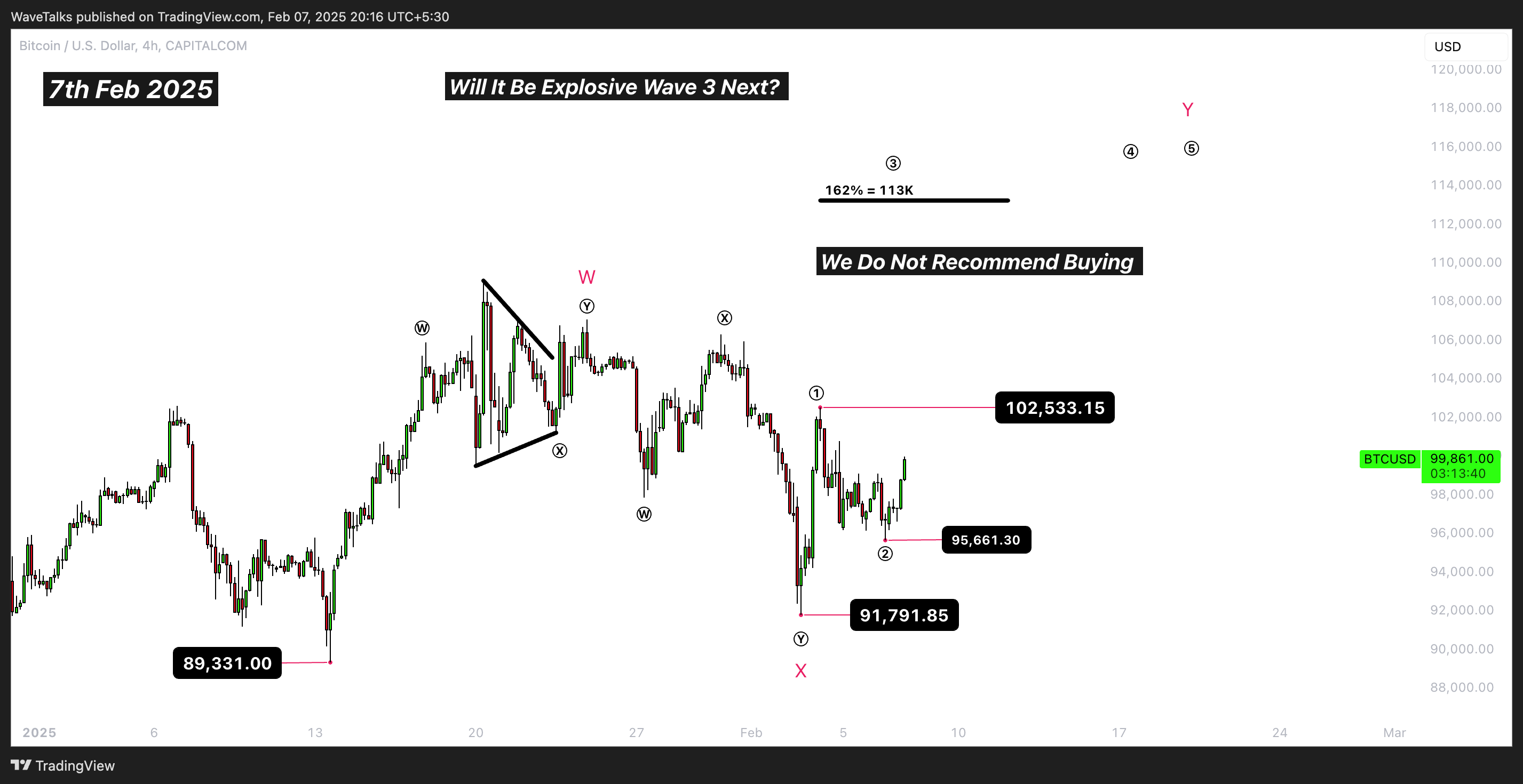
In our previous analysis, Bitcoin struggled to break past 107K and 109K, eventually dipping near the holy level of 90K, touching 91,791 on February 3, 2025. However, from that low, Bitcoin made an impressive Wave 1 rally to 102,533, followed by a prolonged Wave 2 consolidation throughout the week.
As we approach the week’s end on February 7, 2025, Bitcoin appears to have completed Wave 2 near 95,661 and is now rising past 100K—the key question is: Has Wave 3 begun? If Bitcoin clears 107K and 109K, we could see an explosive rally toward the 113K–115K zone, aligning with the 162% Fibonacci extension of Wave 1.
Snapshot 1 - 1:02 am (India time)
Snapshot 2 - 8:16 pm ( India time)
Key observations
-
Wave 1 rally from 91,791 to 102,533
-
Bitcoin’s initial recovery was strong, indicating a potential impulse wave formation.
-
-
Wave 2 ronsolidation (February 3–7, 2025)
-
Bitcoin spent most of the week correcting and stabilizing near 95,661.
-
-
Wave 3 setup – 107K & 109K Are Key Breakout Levels
-
If Bitcoin crosses 107K–109K, it could trigger a strong move toward 113K–115K, completing 162% of Wave 1.
-
Trading strategy
-
Breakout sonfirmation:
-
A clear move above 107K signals Wave 3 acceleration, targeting 113K–115K.
-
Above 115K, the rally could extend further, depending on momentum.
-
-
Downside risk:
-
If Bitcoin fails to hold 100K, a retest of the 95K–96K range is possible before the next move.
-
What’s next?
-
Scenario 1: Bitcoin crosses 107K–109K, leading to a rapid rally toward 113K–115K in Wave 3.
-
Scenario 2: A temporary rejection at 107K–109K could extend consolidation before the breakout.
-
Scenario 3: A pullback below 95K would delay the rally but keep the bullish structure intact.
Conclusion
Bitcoin’s Wave 3 potential is unfolding right before us. After dipping to 91,791 and consolidating near 95,661, the stage is set for an explosive rally. Will Bitcoin break past 107K–109K and surge toward 113K–115K, confirming Wave 3? Or is another twist in store?
Author

Abhishek H. Singh
WaveTalks
Abhishek is a seasoned financial analyst with over a decade of experience specializing in Elliott Wave Theory.