Bitcoin falls into defensive range with next floor at $54,900
- The $60,000 to $69,000 demand cluster absorbs selling pressure.
- ETF flows turn persistently negative and spot CVD collapses.
- Funding rates compress and implied volatility drops to 47%.


Bitcoin broke below the True Market Mean near $79,000, entering a defensive range with the Realized Price at approximately $54.9K defining the lower structural boundary. In the absence of a macro trigger, the corridor likely frames mid-term market structure. Sell pressure absorbs within the $60,000 to $69,000 demand cluster formed during H1 2024, where medium-term holders near breakeven moderate incremental selling.
-1771466544772-1771466544772.png&w=1536&q=95)
The Accumulation Trend Score (ATS), measuring balance changes across wallet cohorts with greater weight on larger entities, shifted from strong distribution below 0.1 following the True Market Mean loss toward a fragile equilibrium near 0.43. The 7-day moving average indicates aggressive selling eased but conviction-driven accumulation has yet to fully re-emerge. A sustained rise toward 1 would signal renewed large-entity buying potentially extending the range, while failure to strengthen reinforces underlying fragility.
-1771466649433-1771466649433.png&w=1536&q=95)
The 90-day Realized Profit/Loss Ratio declined back into the 1 to 2 range, historically characterizing transitions from early bear phases toward more stressed conditions where realized losses begin dominating.
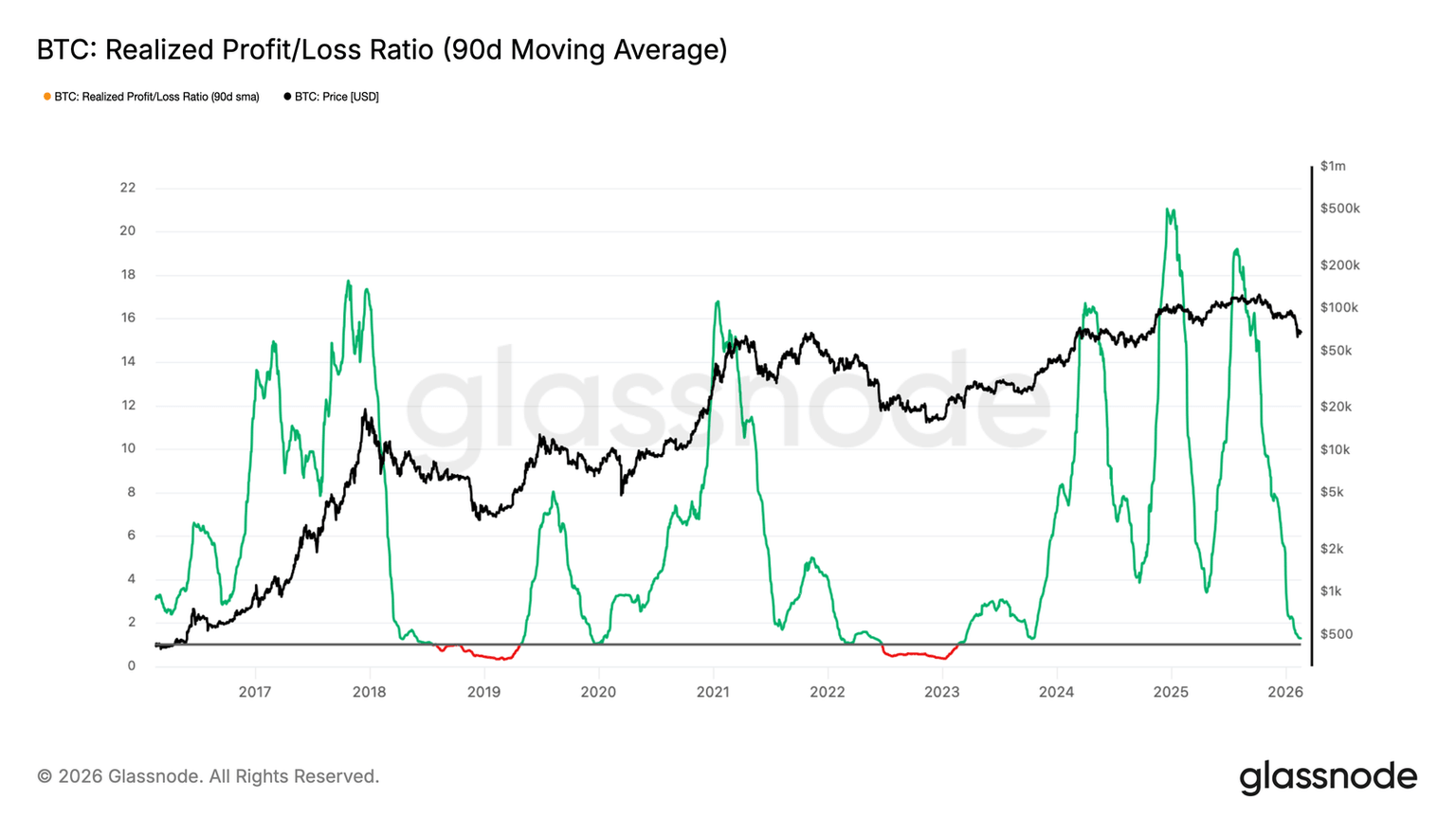
The compression indicates profit-taking remains subdued and capital rotation limited. Until the ratio decisively reclaims levels above 2, signaling renewed profitability and stronger liquidity inflows, the broader market bias likely remains structurally negative.
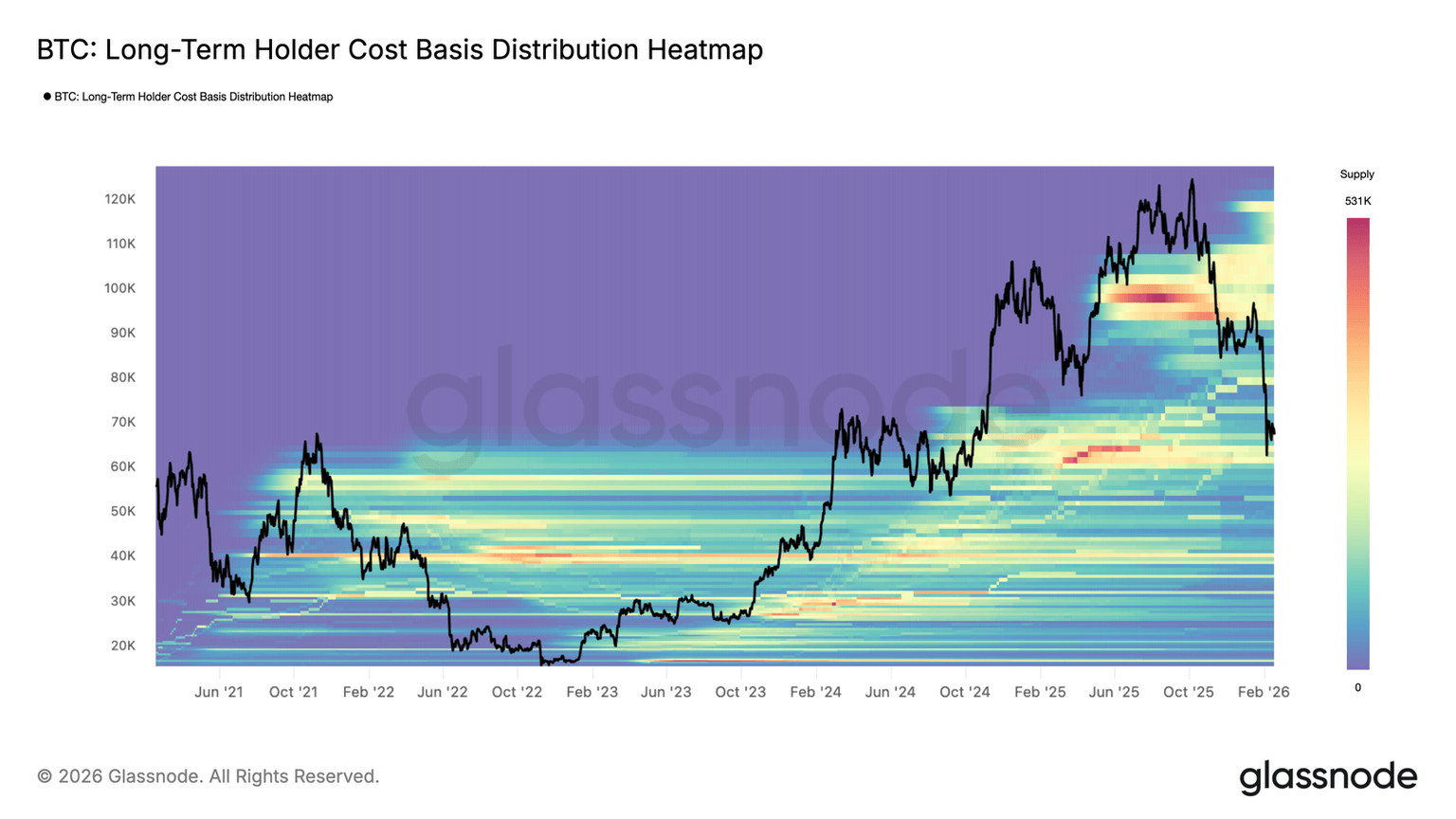
The defense of $60K-$69K suggests medium-term holders remain resilient, allowing the market to shift from impulsive decline into range-bound absorption. The positioning of investors who accumulated during prolonged H1 2024 consolidation and held positions for over a year now sits near breakeven levels.
ETF outflows, negative spot CVD, and compressed funding rates signal demand weakness across venues
Demand across US Spot ETFs deteriorated materially, with the 7-day moving average of net flows rotating back into persistent outflows as BTC retraced toward $70,000. What previously acted as steady structural support has softened, signaling contraction in marginal institutional demand. Capital allocators step back rather than deploy into weakness. With ETF demand no longer providing reliable cushion, downside risk remains elevated.
![US Spot ETF Net Flows [BTC]](/_next/image?url=https%3A%2F%2Feditorial.fxsstatic.com%2Fmiscelaneous%2Fimage-1771466769682-1771466769682.png&w=1536&q=95)
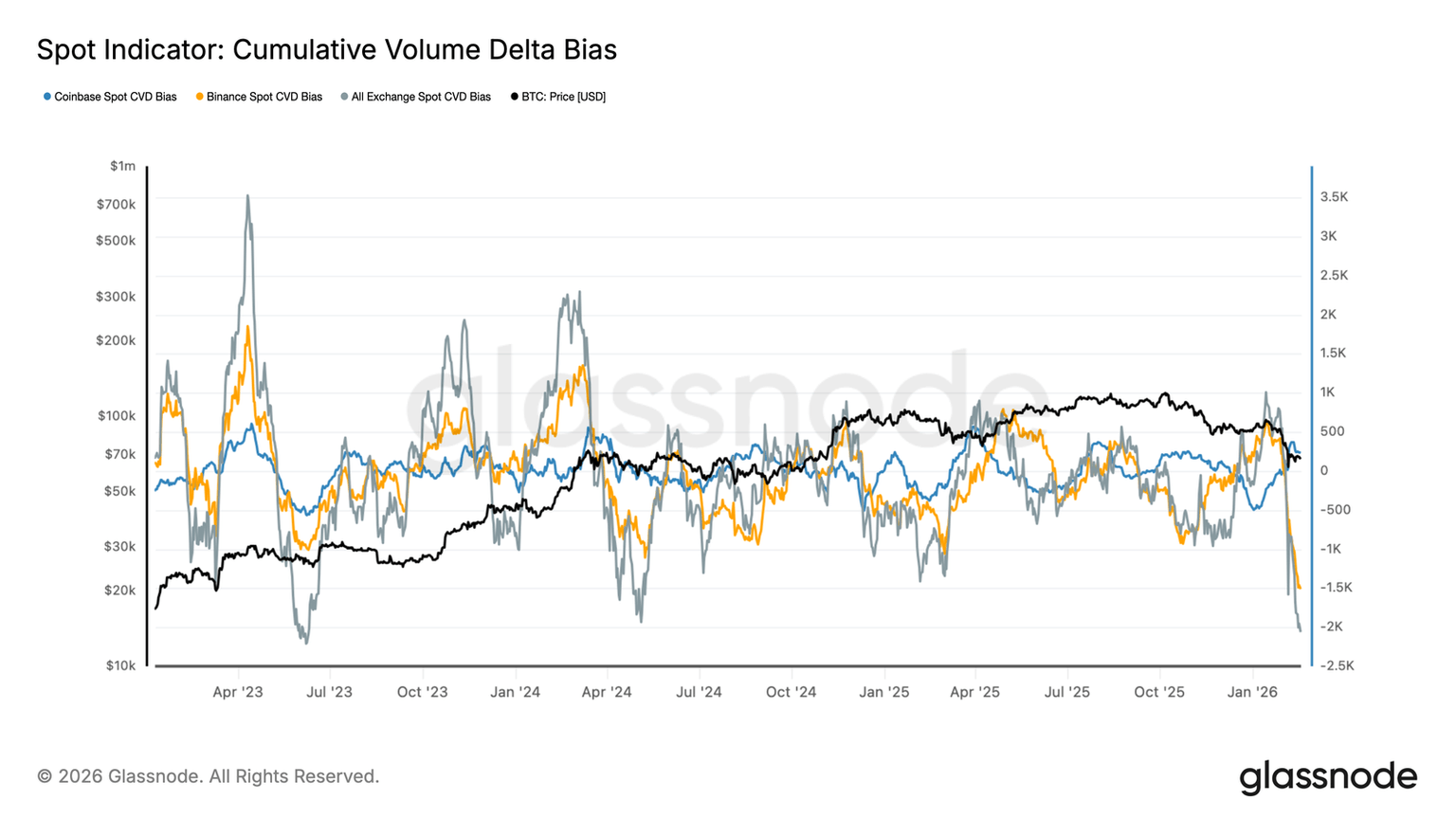
Spot Cumulative Volume Delta (CVD) across major exchanges rolled over sharply. Both Binance and broader all-exchange CVD bias flipped decisively negative, reflecting acceleration in aggressive sell-side activity as market orders increasingly lift bids rather than offers. Coinbase spot CVD also softened, signaling US-based demand no longer provides consistent counterbalance to global sell pressure. The alignment of negative CVD across venues suggests recent weakness stems from active distribution rather than passive liquidity gaps.
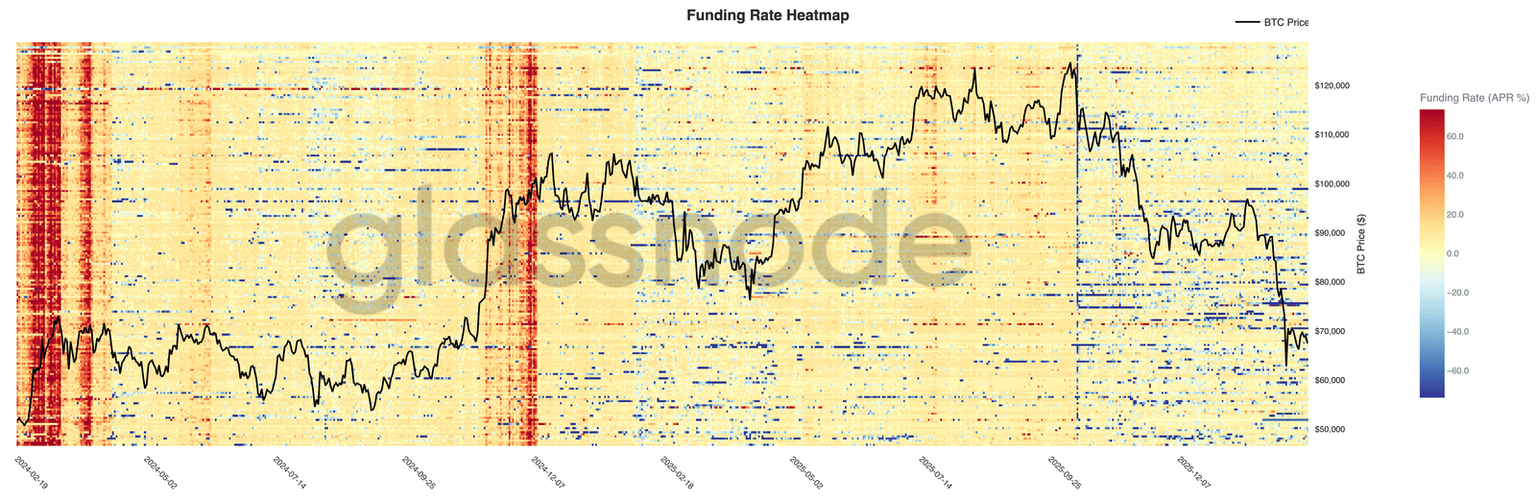
Perpetual funding rates compressed sharply across venues, showing broad shift from sustained positive funding during the advance toward $120K to increasingly neutral and negative prints. Earlier expansion phases showed persistent positive funding signaling aggressive long positioning. Current regime marks episodic negative funding spikes, suggesting traders either hedge downside exposure or position tactically short into weakness. Derivatives complex shifted into more defensive posture.
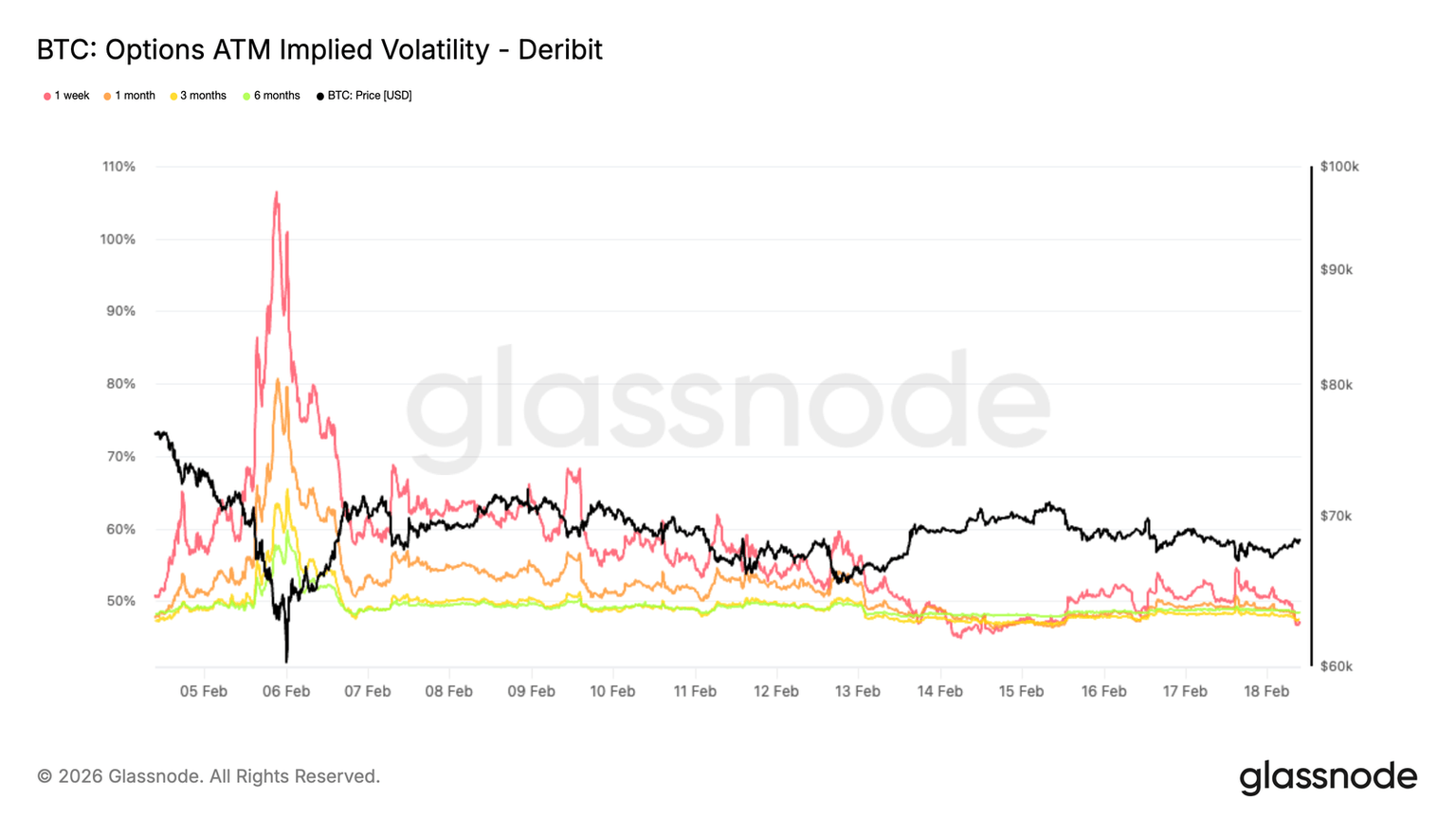
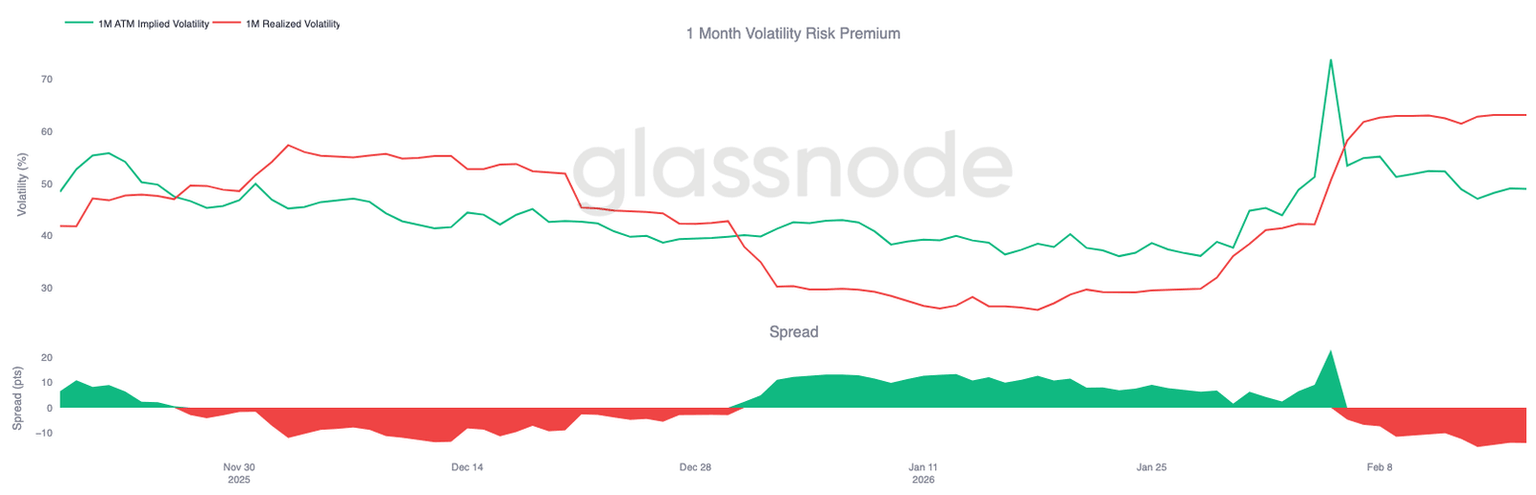
One-month ATM implied volatility compressed from panic highs reaching 80% for one-month tenor and 65% for three-month to roughly 47% across both maturities. The decline reflects meaningful reduction in immediate downside hedging demand. During liquidation phase, traders aggressively paid for short-term protection. Urgency faded. The volatility risk premium unwinds as defensive positioning reduces. Markets no longer price imminent crash scenario, instead reflecting expectations of consolidation with volatility contained within narrower range.
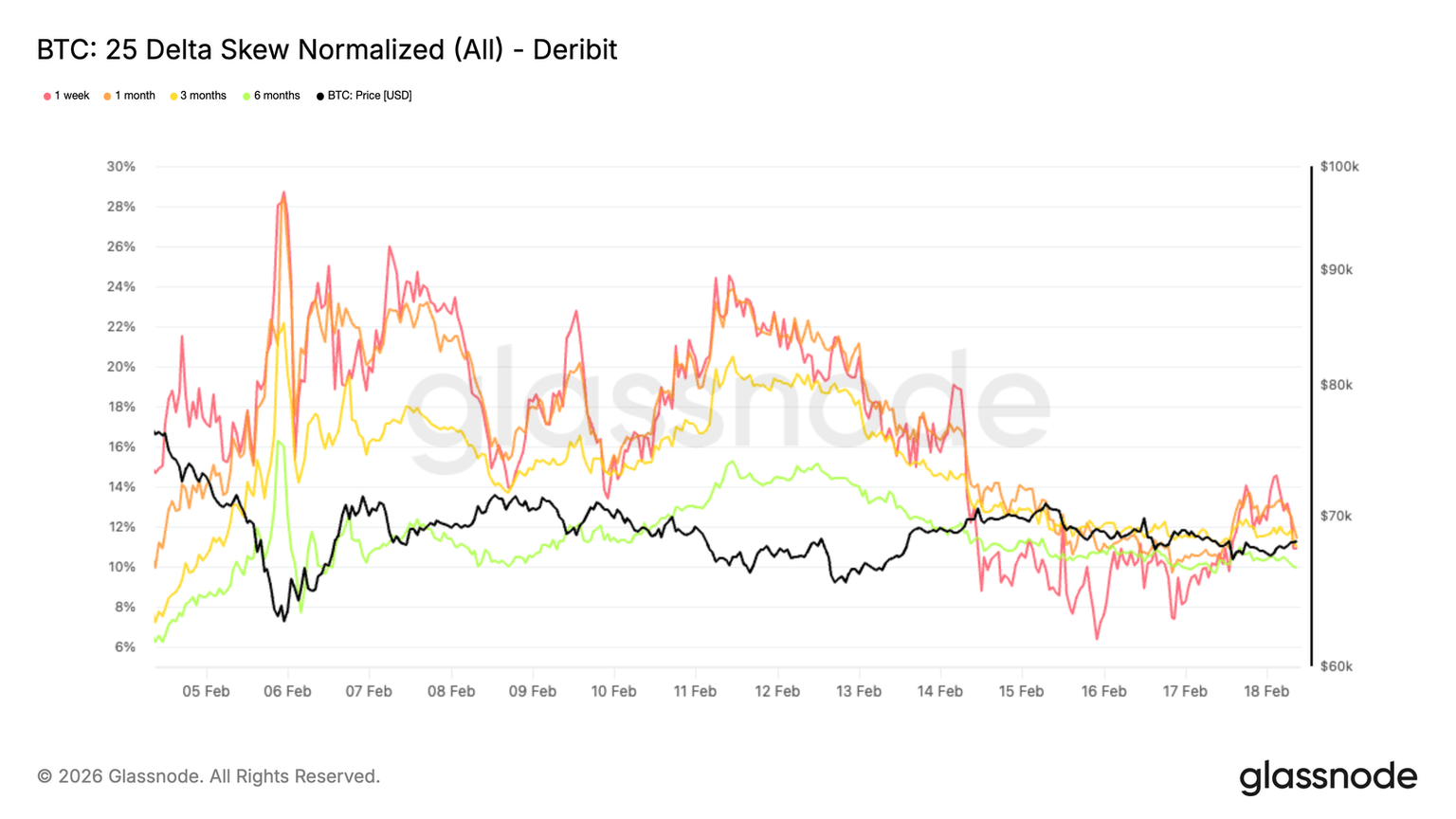
The 25-delta skew compressed meaningfully from near 20% following the $60K retest to roughly 11% across tenors. Positive readings indicate puts priced richer than calls, signaling stronger demand for downside protection. The 9-point moderation shows traders scaling back extreme tail hedges, though skew remains elevated relative to pre-selloff levels. Positioning remains cautious rather than constructive, with downside hedging still favored over upside exposure.
$60K put premium evolution shows clear behavioral shift
During and after the crash, put premium bought dominated as traders aggressively accumulated downside protection. As price stabilized, hedges gradually unwound with put premium sold increasing meaningfully.
The gap widened in favor of sellers, pushing net premium lower. Participants monetize previously acquired protection while volatility at the strike remains elevated.
Author
Isai Alexei
Independent Analyst
I am Isai Alexei. I work as a journalist and financial analyst covering cryptocurrency markets and traditional securities. I have spent ten years analyzing digital assets, trading activity, and market structure.