Winds of change blow into the Fed, and don’t favor Warsh

The FOMC released the minutes of the last Federal Reserve monetary policy meeting, and the document shed some light on what Kevin Warsh would face as the next Chair. Spoiler: it won’t be easy for him to please Trump’s goal of having lower interest rates.
The document showed policymakers agreed to maintain the benchmark interest rate floating between 3.50% and 3.75%. But the more you read into the document, the more you can understand what may come next. It seems that, among policymakers, the tide is slowly changing.
What did the latest Minutes show?
The one thing that is clear Committee remains divided: While several officials said additional cuts will “likely be appropriate” if inflation continues to decline, some of them favored keeping rates unchanged “for some time.”
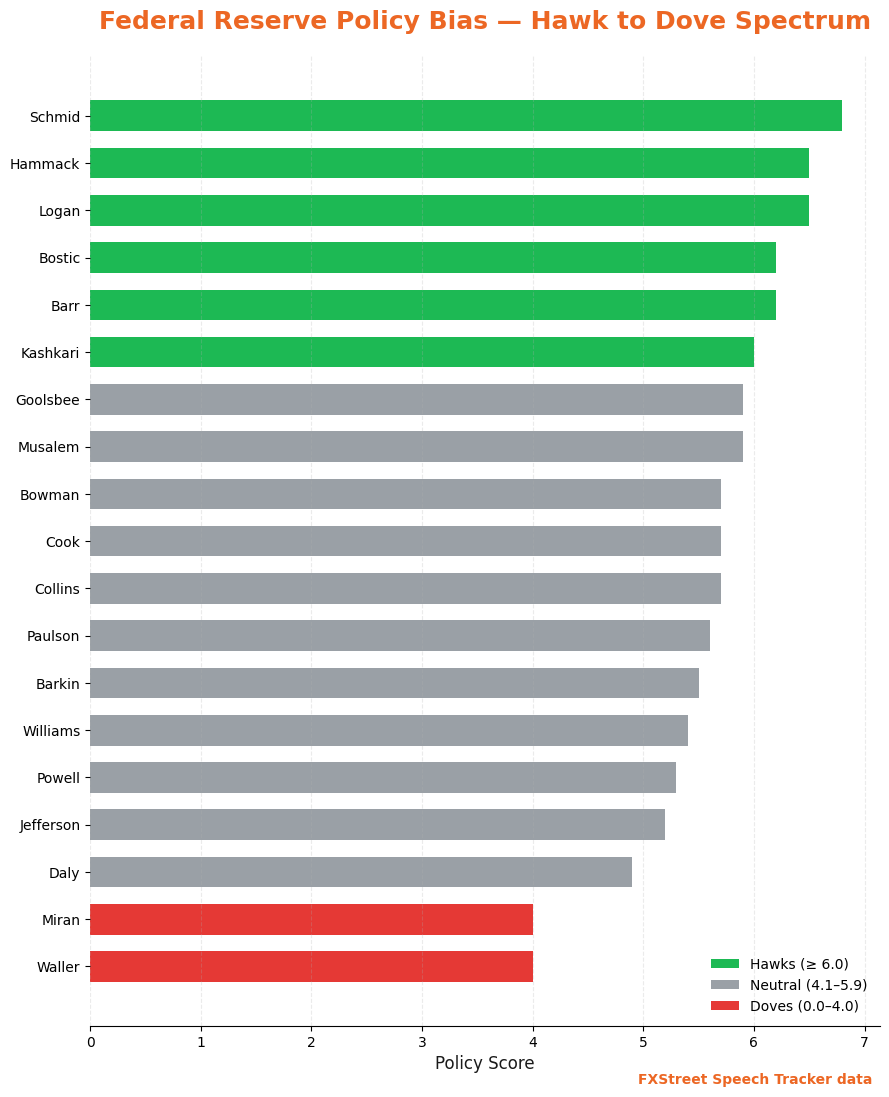
But there’s one extra: Participants noted that “a two-way description of the path of policy could be supported,” which opened the door for potential rate hikes. Even further, some members directly argued in favor of considering rate hikes amid rising inflation. And, no, rate hikes are not on the table, at least with the current inflation levels.
But not only is the door open for rate hikes, but also officials are clearly indicating that they are still data-dependent, something that Kevin Warsh would like to take off when deciding monetary policy.
Trump's desired rate cuts still look far
In the last few months, and even before US President Donald Trump nominated him, Warsh advocated “shifting the focus from macroeconomic data”, which he believes is affected by temporal factors that should not be included, to more long-term “structural factors.” The FOMC minutes showed that he would face significant headwinds in implementing this idea.
Not to mention, the whole idea of having Warsh as the Fed’s head comes from President Trump's desire for much lower interest rates. And go figure, policymakers opened the door for hikes.
The document also showed that a vast majority of voting members acknowledged the downside risks to employment moderated in recent months, saying that there are signs the job market has stabilized. That’s clearly a shift from the previous concerns about the labor market.
They changed direction in yet another subject, stating that “the risk of inflation remaining persistently higher than desired remained a concern.”
So, officials are becoming less worried about employment and more worried about inflation. That translates to decreased odds of additional cuts, and, at a minimum, growing chances of rate hikes before the year is over. I know, it's a way too early call, but hey, everything and anything is on the table at this point, as uncertainty is likely to persist until Warsh takes the Fed’s Chair and delivers his official word.
Author

Valeria Bednarik
FXStreet
Valeria Bednarik was born and lives in Buenos Aires, Argentina. Her passion for math and numbers pushed her into studying economics in her younger years.