USD/JPY Weekly Forecast: Yield spreads rule the day
- Fed hikes 0.5%, to begin passive balance sheet reduction in June.
- Wednesday’s Fed inspired USD/JPY dip, reverses on Thursday.
- Treasury yields jump on Thursday to four-year highs.
- Fed policy and the dollar receive a boost from April NFP.
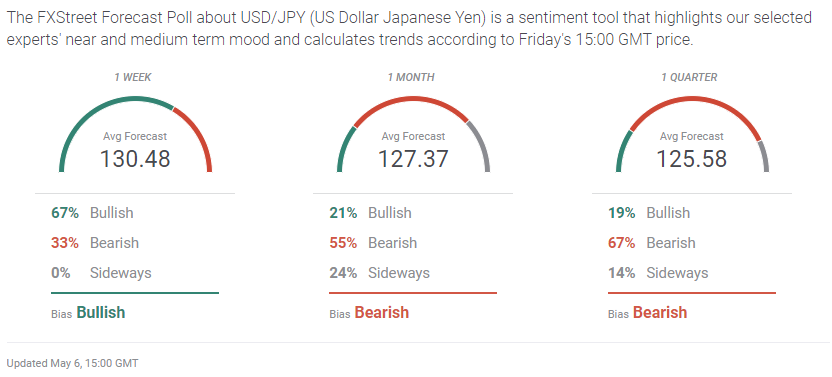
- FXStreet Forecast Poll predicts a retreat from 130.00.

Uncertainty was rife in the markets this week. On Wednesday, Fed Chairman Jerome Powell’s disavowal of a 75 basis point hike in June and a less than aggressive balance sheet reduction plan relieved equities and to a lesser degree the currency and credit markets of the fear that the bank might push rates even faster than anticipated. Stocks soared with the Dow gaining nearly 1,000 points, Treasury yields fell and the USD/JPY dropped more than a figure to close at 129.08.
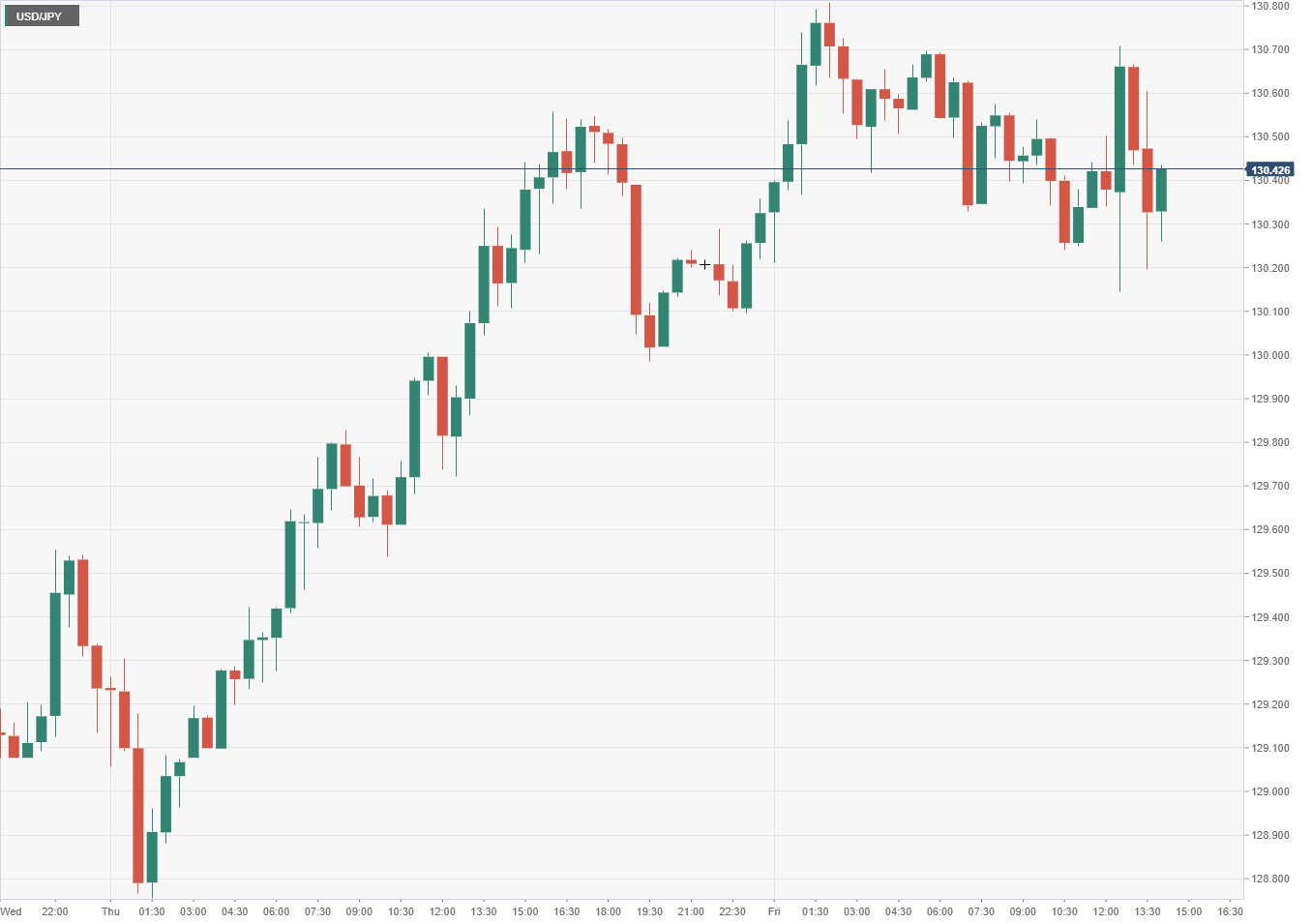
Thursday everything changed. Equities were crushed with the Dow plunging 1,063.09 points, 3.12% to 32,997.97. The S&P 500 lost 153.30 points, 3.56% and the Nasdaq was decimated losing 647.16 points 4.99% to 12,317.69. The 10-year Treasury yield rocketed as much as 17 points, to above 3.10% before closing at 3.035%, its first finish above 3.0% since November 2018. Dollar Yen rose from 129.08 to 130.22 in a general greenback resurgence.
What happened? At the very least markets reconsidered Wednesday's conclusion that the Fed’s 0.5% hike and $47.5 billion start to balance reduction were a sign of a less than eager anti-inflation policy. Chair Powell had said in his Wednesday news conference that several 0.5% increases are likely and the bond roll-off will rise to $95 billion in three months.
Perhaps it was the first quarter Nonfarm Productivity that plummeted 7.5%, far more than the 5.2% forecast, the largest drop in 75 years, combined with a rise in Unit Labor Costs of 11.2%, the biggest jump since 1982.
Maybe it was a concern that the steep drop in Employment PMIs earlier in the week presaged a far weaker payroll report on Friday, in one of the few bright spots in the economy. Behind the equity plunge is the knowledge that every recession since 1950 has been fronted by a Fed tightening cycle and only three of 13 prolonged rate increases were not followed by economic slowdowns.
Finally, with West Texas Intermediate (WTI) well above $100, the Ukraine war and Russian sanctions grinding on, China doubling-down on its zero Covid policy lockdowns, and the Fed trailing the price curve by a wide margin, inflation seems certain to reach double digits shortly. How much longer can the US consumer sustain the steady decline in purchasing power without pulling back on spending? When and if that happens a recession is all but assured.
There was no shortage of worries.
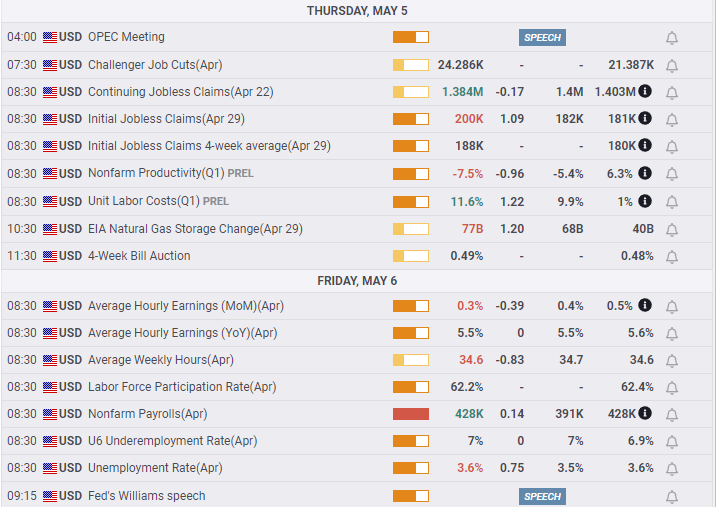
Friday’s April US payroll report, added 428,000 jobs, slightly more than forecast, and provided markets with a shot of confidence. Equities continued to fall, worried that the endpoint of a Fed tightening campaign will be a US recession but Treasury yields and the dollar remained firm. The USD/JPY rose about 40 points to 130.71 after the NFP data, but was unable to move above 131.00. The 10-year Treasury yield climbed to 3.111% in early trading.
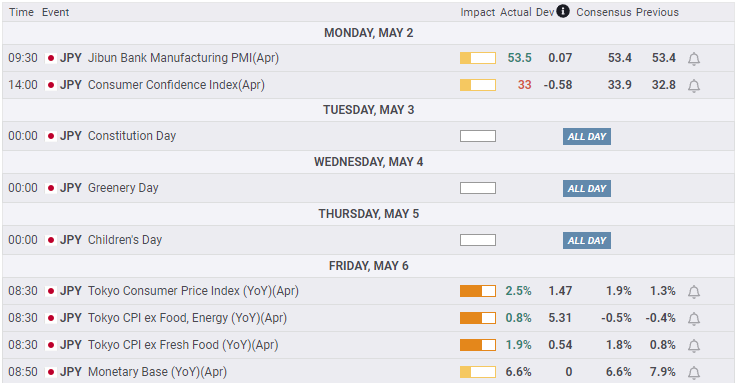
Japanese inflation jumped to 2.5% in April, almost doubling from the March rate of 1.3%, as global prices, especially for energy, struck the economy. Core CPI data climbed from -0.4% in March to 0.8% in April. Headline CPI was the highest in eight years, the core rate in two, neither will have the slightest impact on Bank of Japan policy.
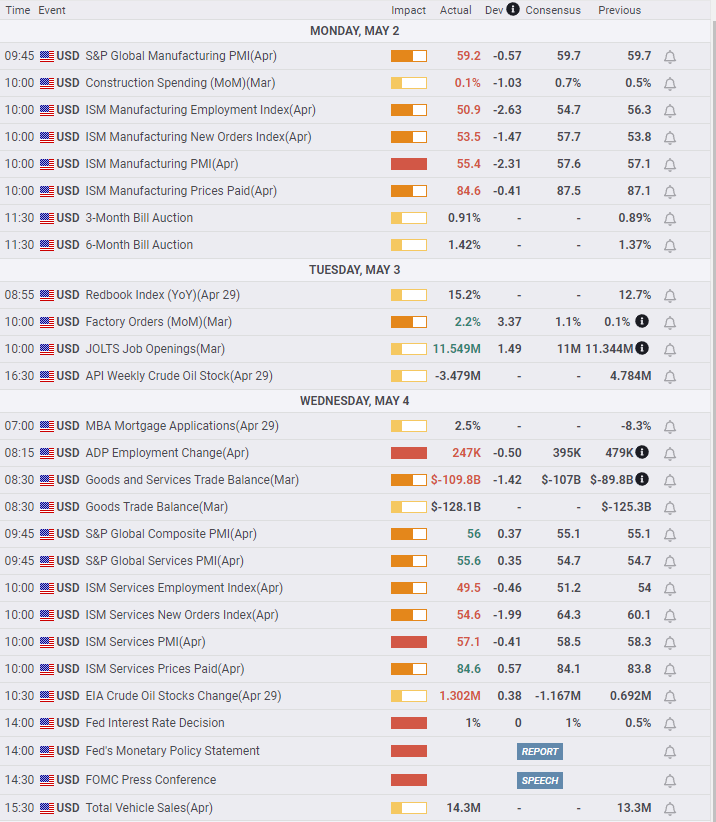
In the US, purchasing managers indexes show a decided weakening of sentiment with all April surveys dropping below their March readings and missing forecasts, except the services Prices Paid gauge which rose to an all time high. The service employment index slipped into contraction at 49.5, its second negative in four months. Private firms in the ADP listing hired half as many people in April as they had in March. Jobless Claims rose to 200,000 in the April 29 week, their highest level in seven weeks.
USD/JPY outlook
The diverging Bank of Japan (BoJ) and Fed rate policies are the bedrock of the USD/JPY ascent. The yield on the 10-year Treasury added more than 20 basis points (24 to early Friday New York action) on the week, while its Japanese Government Bond (JGB) equivalent rose 4 points to 0.259%. That differential overrides all other considerations.
Federal Reserve policy has been affirmed by April’s payroll report. Had job creation faltered or reversed market’s would have likely revised the outlook for the year’s rate program lower, taking the dollar and Treasury yields down with it. A US recession remains the greatest threat to the Fed’s inflation control. Overt market concerns about US economic growth have probably been put off until April Retail Sales are issued on May 17.
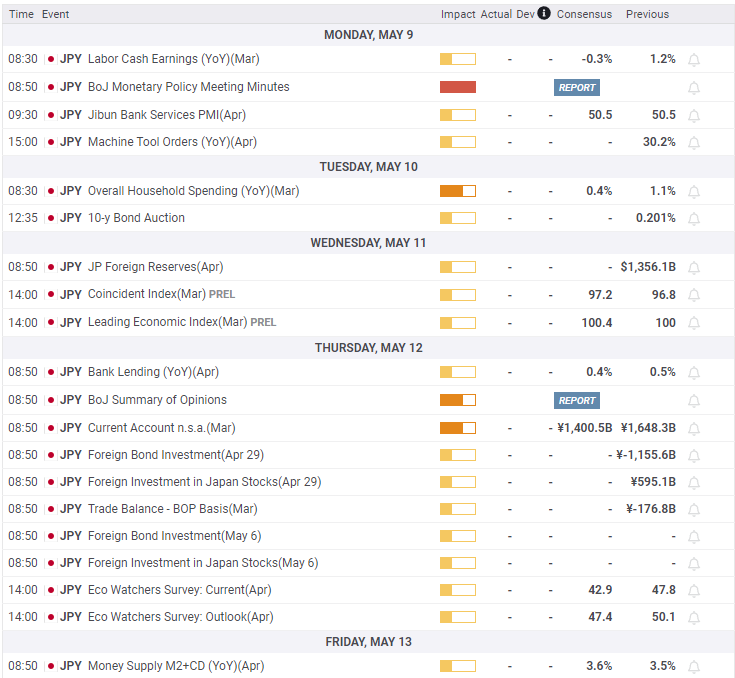
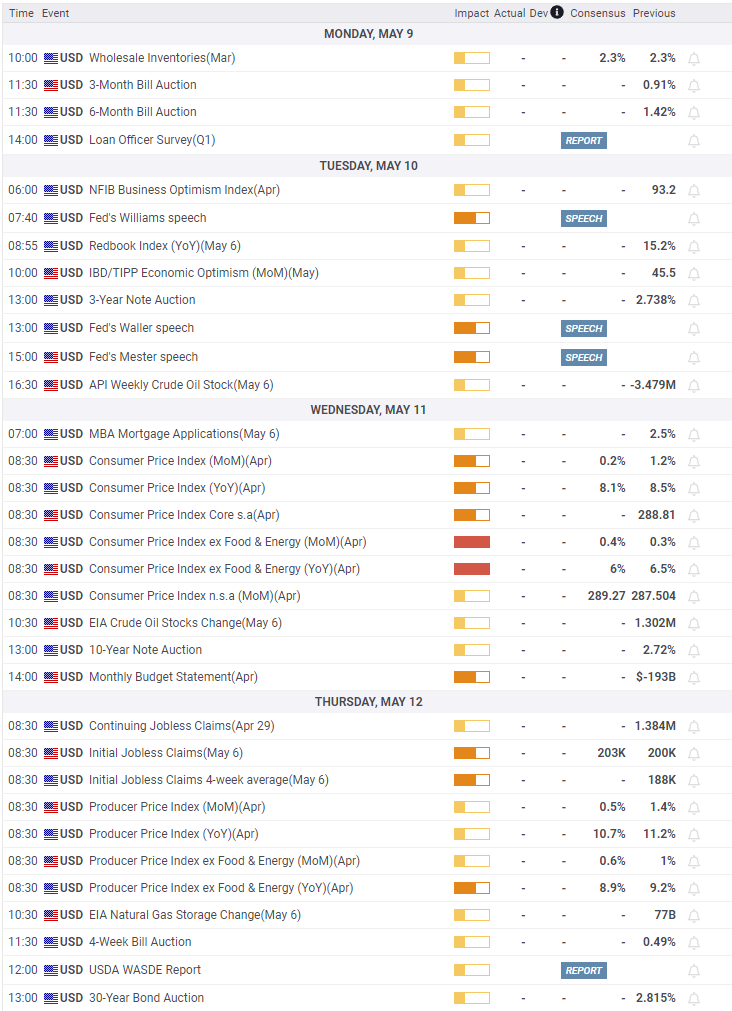
The US April Consumer Price Index (CPI), to be released on Wednesday, is expected to moderate slightly to 8.4% from 8.5%. It and the Producer Price Index (PPI), which is forecast to rise to 12.2% from 11.2%, issued on the following day, are the statistical highlights. Any unforeseen strength in either index will play to higher Treasury yields and the dollar.
Japanese Household Cash Earnings and Household Spending for March are expected to deteriorate and the Leading Economic Index to improve, neither will have market impact. The Eco Watcher Surveys for April are predicted to show continuing economic slippage.
The USD/JPY outlook is higher, particularly as long as the yield spreads widen and the fundamental dollar strength continues to accrue.
Japan statistics May 2–May 6
US statistics May 2–May 6
FXStreet
Japan statistics May 9–May 13
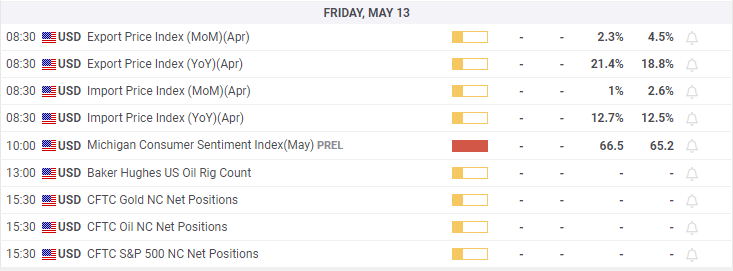
US statistics May 9–May 13
USD/JPY technical outlook
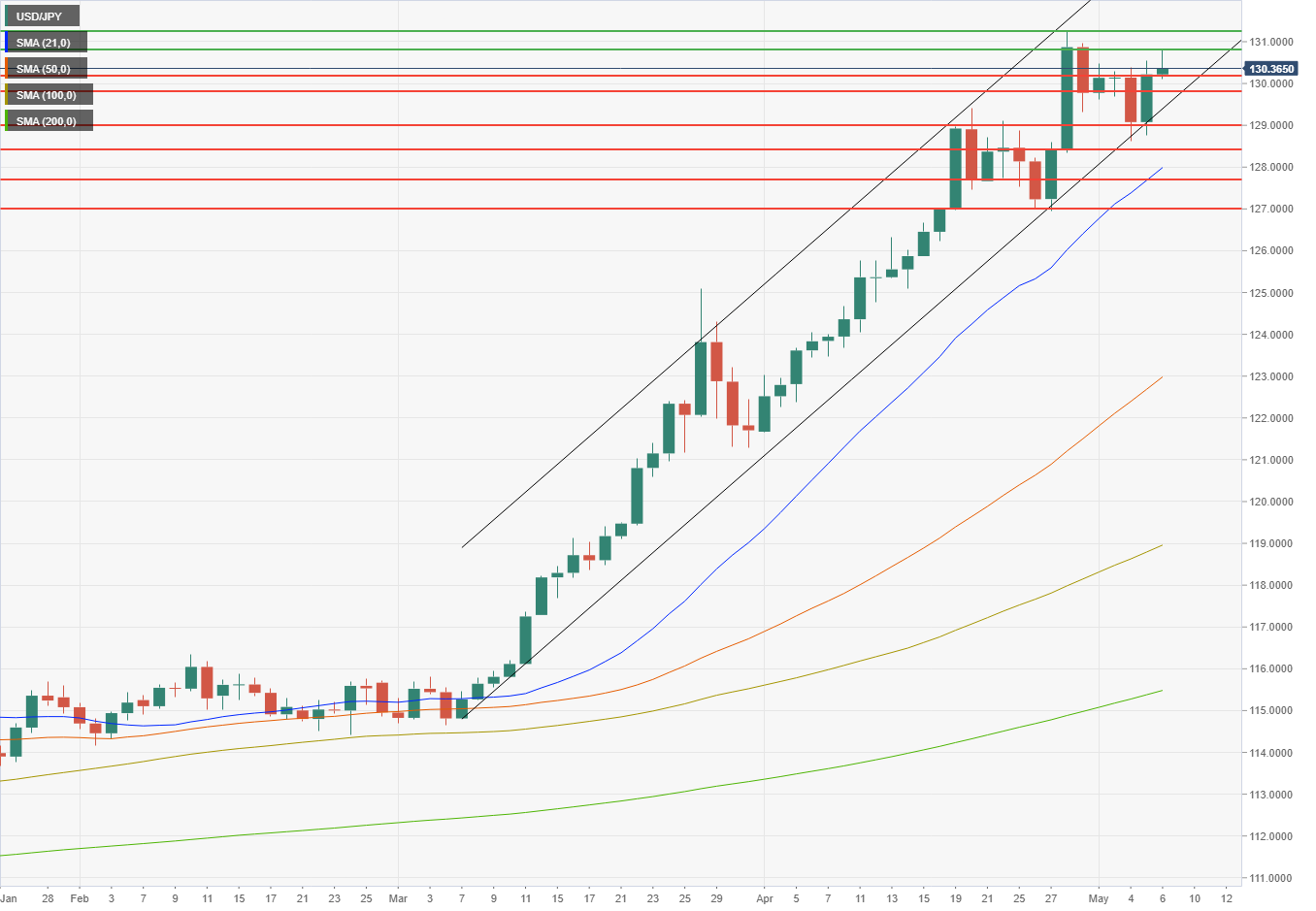
The USD/JPY remains within the channel that originated in the first week of March. The range from March 19 to March 27 traversed the width of the channel as did the range from March 28 to May 6. The division at 129.00 has turned from resistance into support.
The MACD (Moving Average Convergence Divergence) price line crossed beneath the signal line on Wednesday but until a larger divergence opens, especially one that coincides in timing with an approach to the lower side of the channel, it is not a sale warning. Likewise, the Relative Strength Index (RSI) dipped out of overbought territory on Wednesday without providing a convincing argument for a turn in the USD/JPY's fortunes. Average True Range (ATR) predicts continued volatility, though it will likely occur at the intersections of the channel formation.
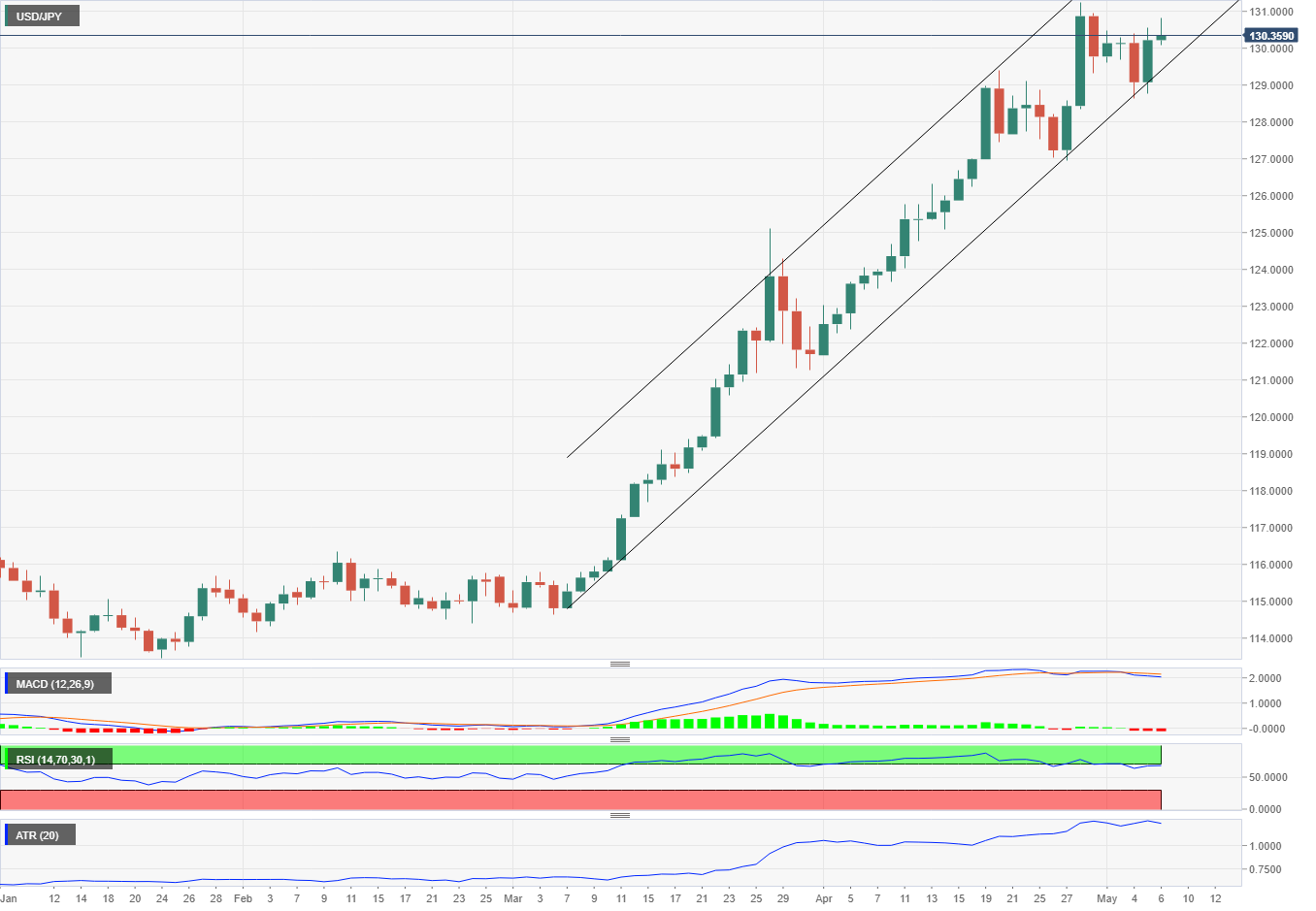
Resistance: 130.80, 131,25
Support: 130.15, 129.80, 128.40, 127.70, 127.00
Moving Averages: 21-day 127.99, 50-day 122.98, 100-day 118.96, 200-day 115.48
FXStreet Forecast Poll
The FXStreet ForecastPoll is doubtful that the USD/JPY can maintain 130.00. Technically, that view has validity though it is easily negated by widening yield spreads.
Author

Joseph Trevisani
FXStreet
Joseph Trevisani began his thirty-year career in the financial markets at Credit Suisse in New York and Singapore where he worked for 12 years as an interbank currency trader and trading desk manager.