US NFP Quick Analysis: A grim future partially foretold
- Non-farm payrolls lose 701,000 despite incomplete accounting.
- Initial jobless claims show 10 million filings in two weeks.
- US dollar continue to gain on safety trade from global virus economic impact.

American non-farm payrolls shed 701,000 jobs in March, close to the worst loss during the financial crisis and surprising markets with the Labor Department’s ability to capture the rapid job losses. Economists had predicted just 100,000 firings, expecting the full accounting to be delayed until April as the US slows drastically from the economic impact of the Coronavirus.
Non-Farm Payrolls
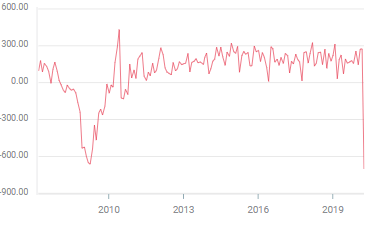
Almost 10 million people sought unemployment compensation for losing their jobs in the last two weeks of March, an explosion of discontent never before experienced by the US labor force.
Payroll surveys
Though the two surveys for the employment report, the establishment which produces the payroll numbers and the household which provides the unemployment rate were conducted before many states issued stay-at-home order and closed non-essential businesses, employers have clearly included at least some of their recent layoffs.
With the overhang of 10 million claims and more to come in weeks ahead, the question for April’s payrolls and revision to the March numbers will be how many of those remain to be counted?
Labor Department criteria for payrolls and the unemployment rate will prevent the inclusion of all the recently fired but the numbers are sure to rise as employers provide updated information.
Unemployment rates
Unemployment rose from a fifty year low of 3.5% to 4.4% in March but here also the speed of the changes in the labor force outpaced the ability of statisticians to capture it. Labor Department rules stipulate that in order to be counted as unemployed an individual had to have looked for work in the prior month. In the case of many of the March layoffs that would have been impossible.
The less restrictive underemployment rate jumped to 8.7% from 7.1%. This record only requires than an unemployed individual had sought work sometime in the previous year.
Dollar reaction
The dollar's safety status was underlined as traders sought its safe-haven status despite the worst payroll report in modern history.
The greenback gained modestly on the release rising from 1.0800 to 1.0778 against the euro and to 108.56 against the yen from 108.40.
Author

Joseph Trevisani
FXStreet
Joseph Trevisani began his thirty-year career in the financial markets at Credit Suisse in New York and Singapore where he worked for 12 years as an interbank currency trader and trading desk manager.