US Manufacturing PMI July Preview: Confirmation of decline?
- Manufacturing PMI forecast to rise to 54.0 in July.
- New orders and employment indexes predicted to fall.
- Second wave of Covid cases expected to inhibit recovery, but recent data suggests peak is past.
- PMI could confirm weakening US economy and dollar.

Manufacturing sentiment which just recovered from its lowest levels since the financial crisis may be hard pressed to remain positive as a second wave of Covid cases washes over several US states.
The purchasing managers’ index from the Institute for Supply Management is forecast to climb to 54 in July from 52.6 in June.
The new orders index is predicted to fall sharply to 46.8 from June’s surprise jump to 56.4. Employment is also forecast to reverse gains dropping to 34.4 in July from 42.1 in June. Prices are projected to rise to 52 in July from 51.3.
Manufacturing and China
Sentiment in the manufacturing sector peaked two years ago in August 2018 at 60.8. The US-China trade argument prompted the long decline to last December’s low at 47.8.
Manufacturing PMI
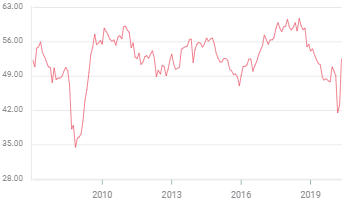
Almost no sooner than the trade pact was signed in January with the index back into expansion at 50.9 than the pandemic arrived and the outlook collapsed. The April score of 41.5 was the lowest reading since May 2009.
New orders followed the same path peaking at 58.5 in September 2018 slipping to 45.2 last December then climbing to 46.9 by February. This index’s low of 27.5 in April is the all-time record by a nose—February 2009 saw 28.0, May 1982 27.8 and February 1958 27.9.
The employment index has not been above the 50 demarcation between expansion and contraction since 51.3 in July 2019 as the factory hiring in the first two years of the Trump administration faded under the escalating trade confrontation with China. The March recovery to 43.8 vanished in April at 27.5 another level not reached since the financial crisis of a decade ago.
A stalling labor recovery
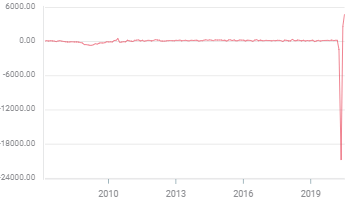
The May and June active employment rebound of 7 .5 million jobs is expected to drastically slow in July with only 1.36 million hires. The rise in Covid cases has forced several early opening states to curtail or reverse their economic plans.
Non-farm payrolls
Initial jobless claims have been climbing for two week and while the increases are small they signal the economy and the labor market has stopped improving.
The concern is that the lengthening slowdown and poor consumer traffic for many businesses is forcing small stores into bankruptcy, permanently ending employment for their workers. The longer consumer life remains weak the more business will fail and the greater the number of employees thrown back onto jobless benefits.
Conclusion and the dollar
It was the acceleration of Covid case in many Sun Belt states, particularly California, Texas, Arizona and Florida that slowed the economic reopening of these states.
The most recent data, with the seven-day moving average of new cases in Arizona down 40% over the past three weeks, Florida 19% over two weeks and California lower though not consistently, suggests that the peak of the infections may be past. Economic activity has leveled off or increased slightly. The Richmond Fed's manufacturing index jumped to 10 in July from flat in June and is up from -53 in April. The New York Fed's weekly index improved in late July as did as did most regional Fed activity indexes on the month.
The PMI numbers point directly at the July non-farm payrolls on August 7. If the deterioration in outlook and especially in employment is steeper than expected the implications for the economy in the third quarter might be considerable.
Instead of the spending of returning workers fueling consumption and more hiring the reverse could begin—rising unemployment again cutting into consumer purchases leading to another round of firings.
The dollar’s July swoon was based on just such a scenario and the Fed’s likely response. If the PMI figures confirm economic weakness Friday’s profit taking bounce in the dollar might become an opportunity to reestablish those dollar short positions.
Author

Joseph Trevisani
FXStreet
Joseph Trevisani began his thirty-year career in the financial markets at Credit Suisse in New York and Singapore where he worked for 12 years as an interbank currency trader and trading desk manager.

















